
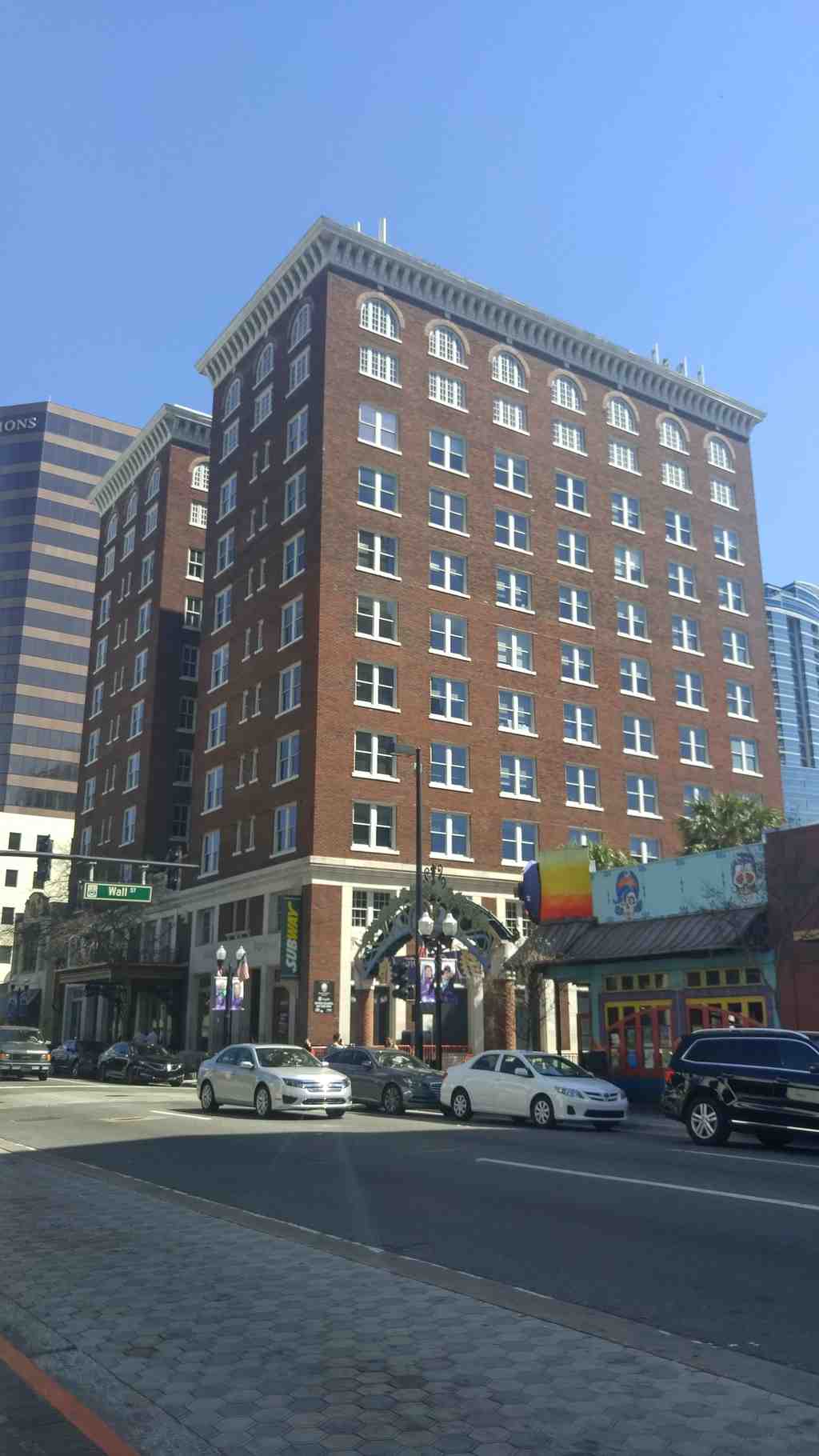
Look for a tall, classic red-brick building with white trim and rows of evenly spaced windows towering above the street-if you see a stately structure standing proudly on the corner and you’re near Wall Street, that’s the Angebilt Building!
Now, let’s step back in time together to the early 1920s, when Orlando’s downtown was alive with the buzz of new beginnings and a dash of rivalry fit for a soap opera. Imagine the air thick with the scent of fresh-cut timber and the clang of steel, as architect Murray S. King’s grand vision took shape for a hotel so luxurious it would dazzle the city. Joseph Fenner Ange, the man behind it all, had big dreams and deep pockets-he declared he’d build a million-dollar hotel right here. In fact, the prestigious Rosalind Club, formerly on this spot, packed its bags for Lake Eola to make way for Ange’s bold ambition.
The construction site was a hive of activity, but the drama didn’t stop there. Across the street, the owners of the San Juan Hotel, feeling the heat, scrambled to slap on an 8-story addition just to keep their reputation as top dog in Orlando. But Ange wasn’t phased-he opened the doors to the Angebilt Hotel in March 1923 with 250 sparkling rooms spread over 11 stories. The ribbon-cutting must have smelled of fresh paint and coffee, and maybe just a sprinkle of competitive spirit wafting over from across the street.
The excitement reached new heights-literally-when Harry Gardiner, a daredevil called “The Human Fly,” scaled the building to raise money for charity. Crowds cheered, necks craned, and Ange smiled-at least for a moment, until bankruptcy knocked just two months later. The hotel closed, then re-opened after a public auction, the first of many twists in its tale.
Life at the Angebilt was more than high-society dinners and jazz; it survived the Great Depression when others stumbled, and hosted banquets where folks belted out “Yes, Sir, That’s My Baby” long into the night. By the 1960s, the glamour faded, and shadows crept in-transients, broken fire alarms, even a rooftop ballroom turned storage closet.
The fire of 1983 brought even more drama. Flames licked the top two floors, smoke billowed, firefighters battled stubborn embers for hours-it was like a scene straight out of a suspense film. Eventually, the building rose from the ashes, transformed into offices, with lively shops and restaurants lining the ground floor.
Today, the Angebilt stands as a living patchwork of resilience, reinvention, and a little old Orlando mischief-so next time you pass by, just think: behind those red bricks are nearly a hundred years of scandal, spectacle, and the unbreakable spirit of a city that loves a good comeback story!


