
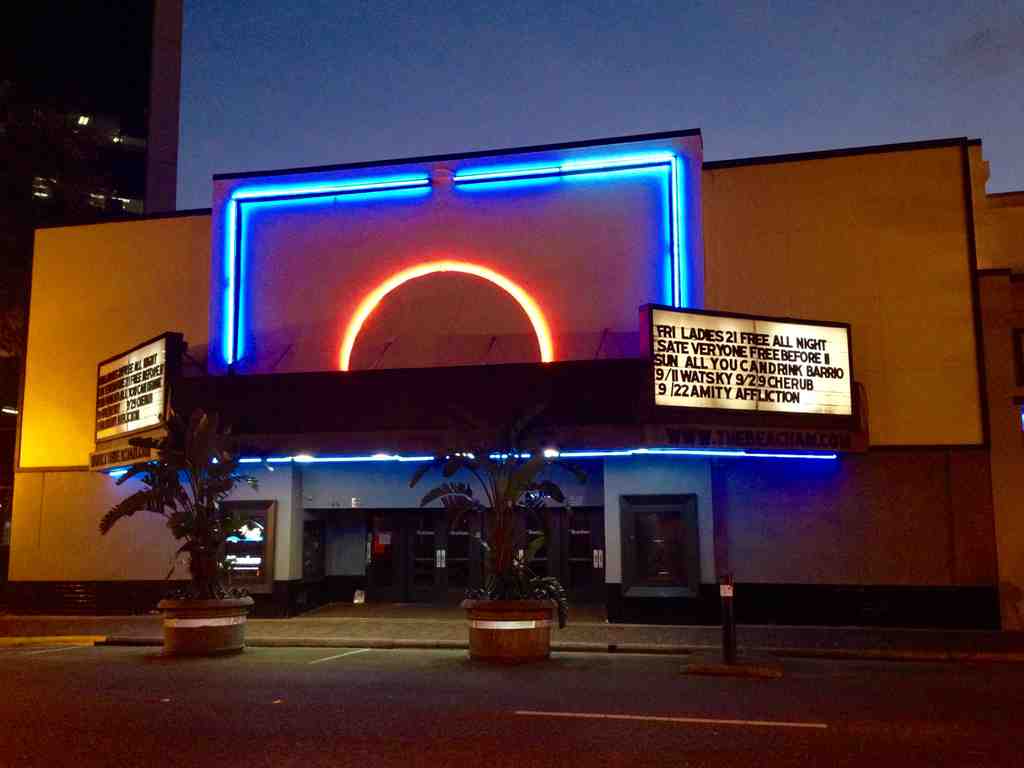
Directly ahead, you’ll spot a boxy building with a simple beige facade, but don’t miss the neon blue and orange glow outlining a broad half-circle above the entrance-plus two classic marquee signs announcing upcoming shows.
Alright, step right up! You’re standing in front of the legendary Beacham Theatre, 46 North Orange Avenue-though the outside might seem a bit plain, what happened inside these walls could fill a blockbuster trilogy. Built in 1921 by Braxton Beacham Sr., who was not only a theatre enthusiast but also Orlando’s mayor, this spot traded in a county jail and even some local ghost stories for a slice of arts and entertainment history. The Beacham’s foundations stretch over old jail grounds, with tunnels once running to nearby hotels-maybe for sneaky vaudeville stars or maybe for sneaking in a little 'prohibition refreshment.' If you ever feel a chill here, it might just be the local folklore saying hello.
Now, imagine the city almost a century ago: the hottest ticket in town was right here, with everyone dressed in their best, lined up for vaudeville acts and silent movies accompanied by the theater’s own glitzy pipe organ-played by both Mr. Herman Stuart and Mrs. Roberta Beacham herself. The auditorium, with its feathered columns and elegant high ceiling, drew crowds who oohed and aahed over ornate plasterwork and the unique ‘Midas Gold’ film screen. The Beacham was ahead of its time with a flashy electric marquee and a ticket machine that must have seemed like magic back then!
The bright lights and laughter weren’t all for show-famous acts from the Ziegfeld Follies to the legendary W.C. Fields graced its stage. Hey, rumor has it Fields even left his signature in a dressing room upstairs. Over the years, through the 1920s and 1930s, the Beacham was a social hub. Imagine summer promos with slogans like “Beat the heat in a Beacham seat!” and folks lining up for prizes or a shot at winning a shiny new roadster.
The times-and the sounds-changed. The theater was the neighborhood’s first to move from silent films into “talkies,” and folks marveled as newsreels and Hollywood dreams flickered onto the big screen. The Great Depression didn’t keep Orlando down for long; even after a legal tussle closed its doors briefly, the Beacham bounced back, staying independent, resilient, and beloved.
Through the mid-1900s, the Beacham kept evolving: witness to local film productions, radio broadcasts, and protestors during the Civil Rights era bravely demanding equality when only balcony seats were open for Black patrons. In fact, the struggle, the picket lines, and the eventual quiet integration in 1963 turned this unassuming building into a stage for social change.
By the 1970s, downtown Orlando’s sparkle had faded. The city’s rush to the suburbs hit local businesses hard, and the Beacham began showing B-movies before finally closing as a full-time cinema in 1975. But here’s where the real party starts: owners with big dreams brought dazzling murals, neon lights, and transformed the stage into The Great Southern Music Hall and then a wild ride of laser light shows, cabaret, and even dinner theater.
But maybe most legendary were the all-night dance parties of the late ‘80s and early ‘90s-if you listen closely, you might still catch a ghostly echo of the electronic beats from the famous Aahz nightclub, where DJs spun everything from acid house to trance until sunrise and beyond. This was the heart of Orlando’s Summer of Love: pulsating music, newfound freedom, and a scene that helped shape the rise of electronic dance music in the US. Some say the vibe was so electric, the walls themselves still buzz with memories.
The Beacham survived close calls with demolition thanks to its cultural legacy-think of it as Orlando’s own comeback kid. Every crack in the wall, every neon flicker, tells a story: from gala movie premieres to underground raves, from haunted tunnels to red velvet curtains, here stands a piece of living, breathing, ever-dancing city history. So next time you hear a beat thumping late at night, ask yourself-is it from a concert…or maybe, just maybe, one of those famous Beacham ghosts refusing to miss the party?


