
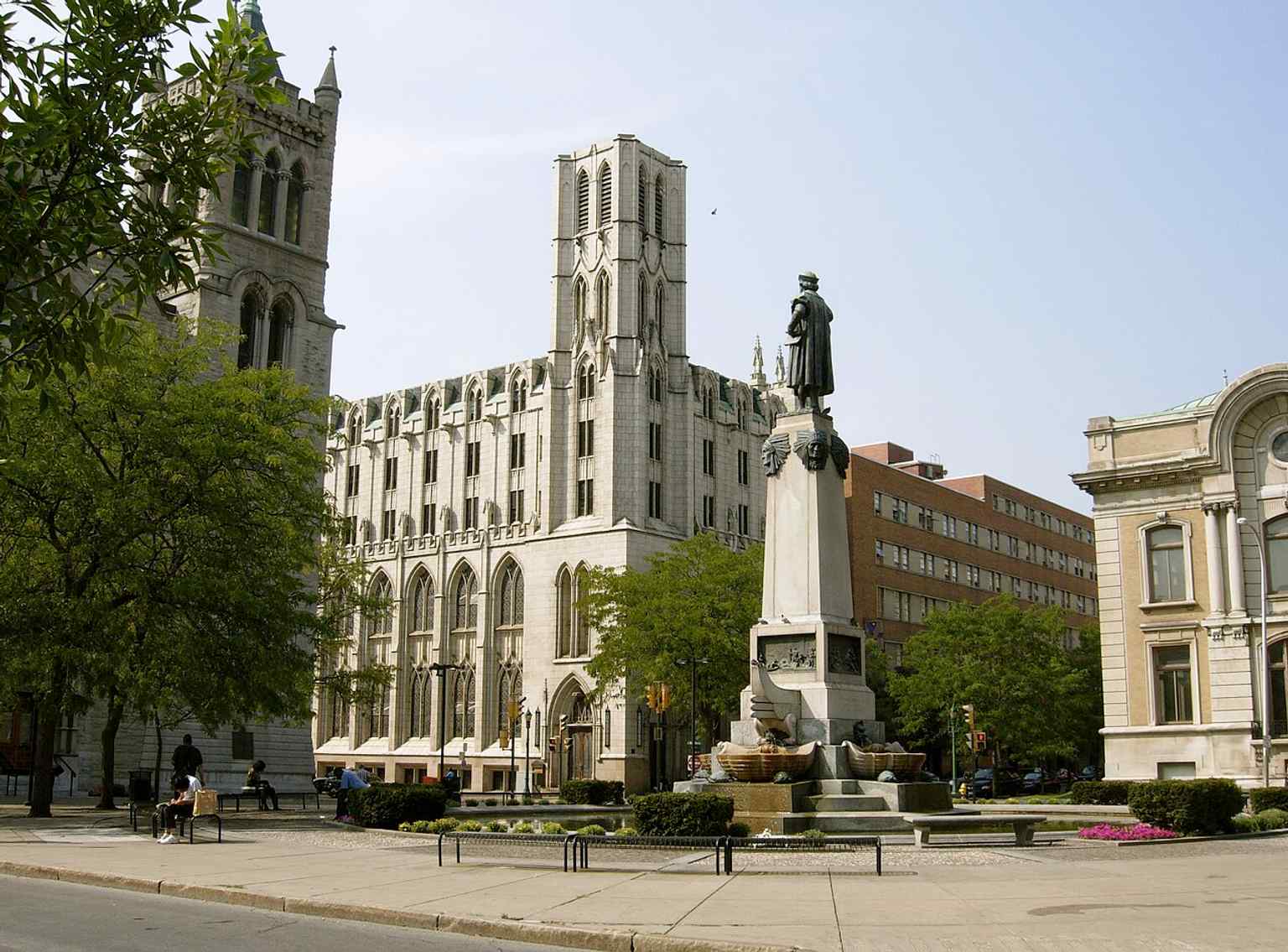
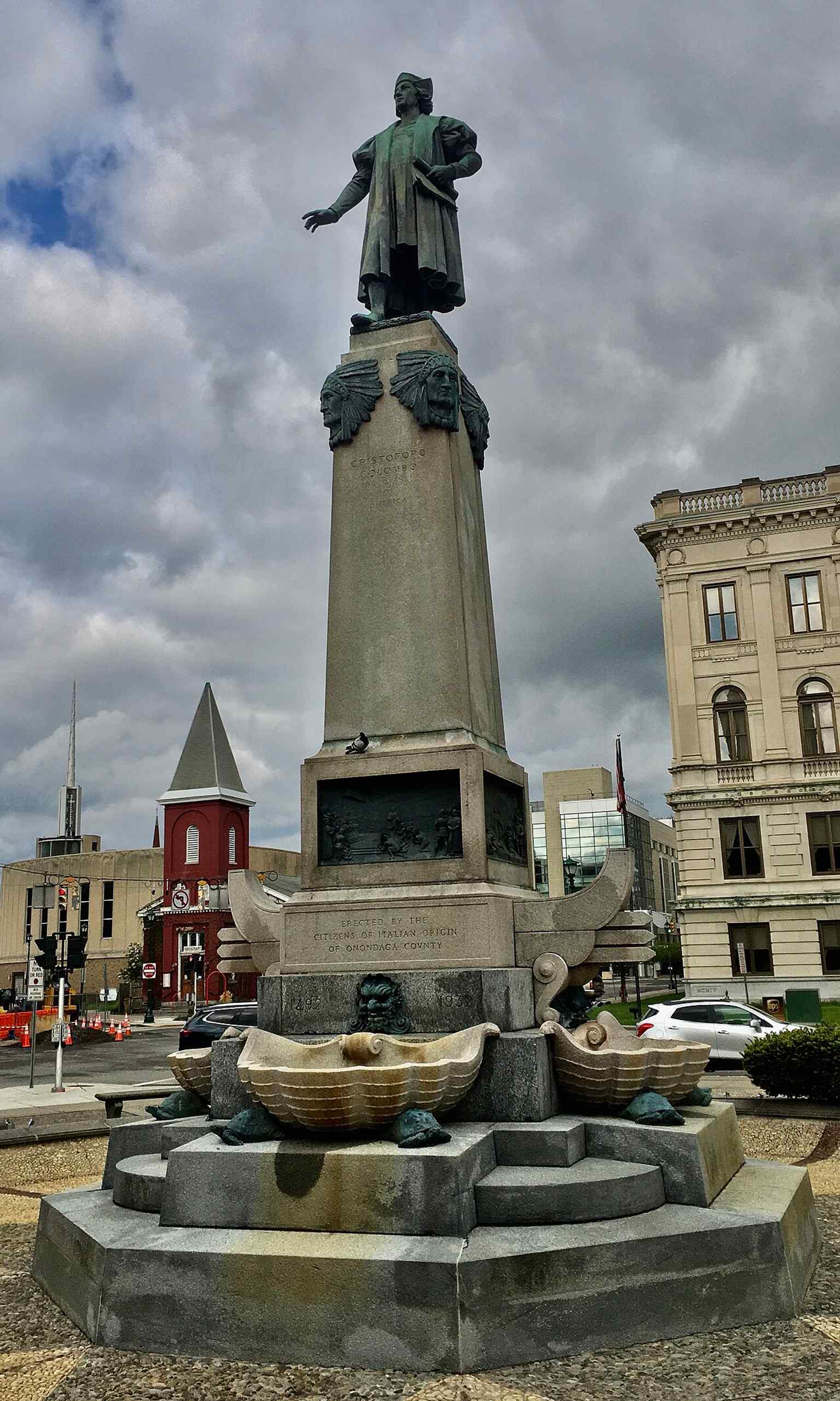
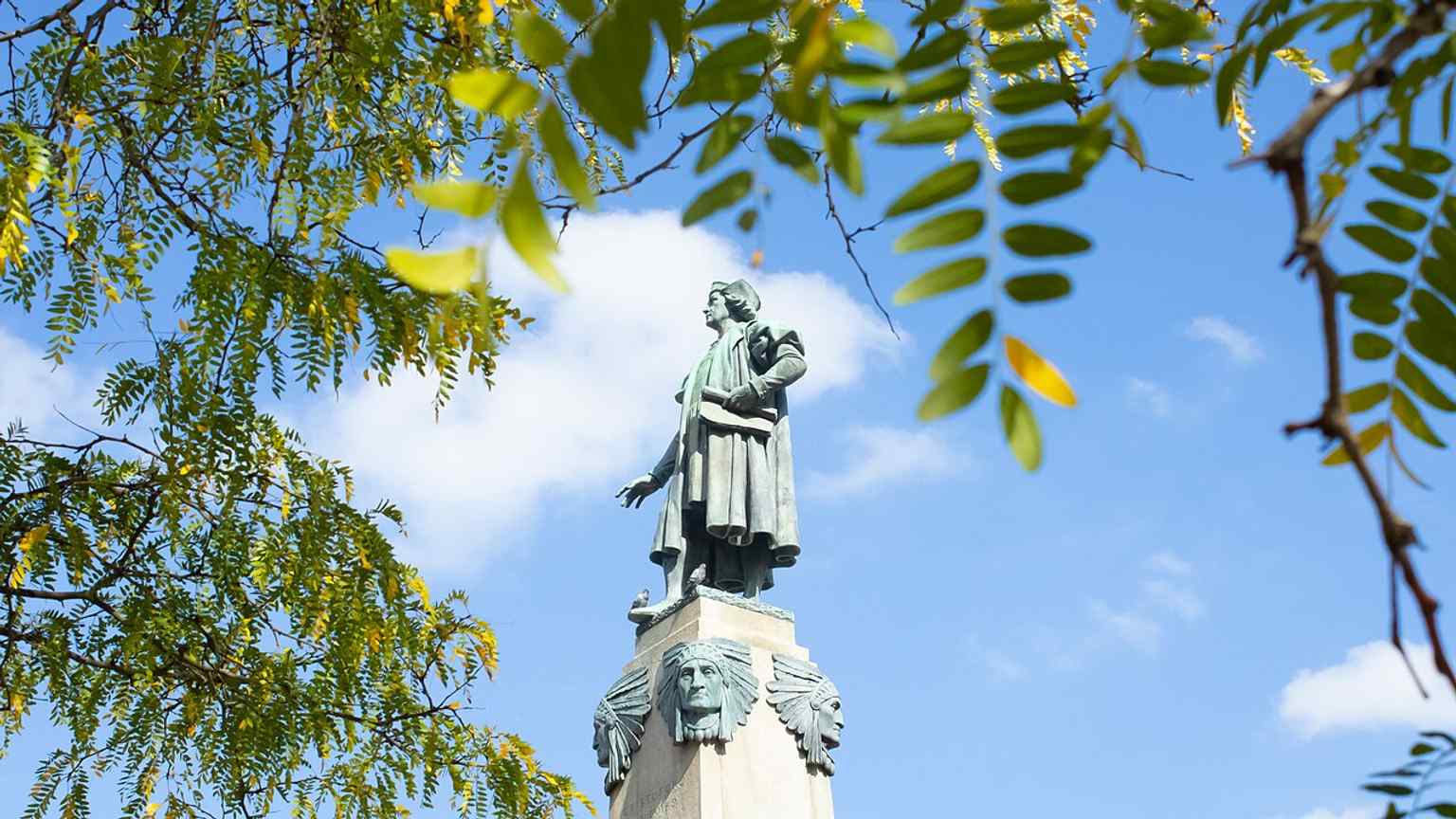
In front of you is a wide circular stone fountain with a tall granite pedestal rising from its center, topped by a dark bronze figure.
This is Columbus Circle, but that name arrived late. Before that, Syracuse called this place Library Circle, then St. Mary’s Circle, and at one point Courthouse Square. A city leaves clues in its names. Each one tells you what people wanted this space to mean... books, faith, law, then a monument at the very center of public life.
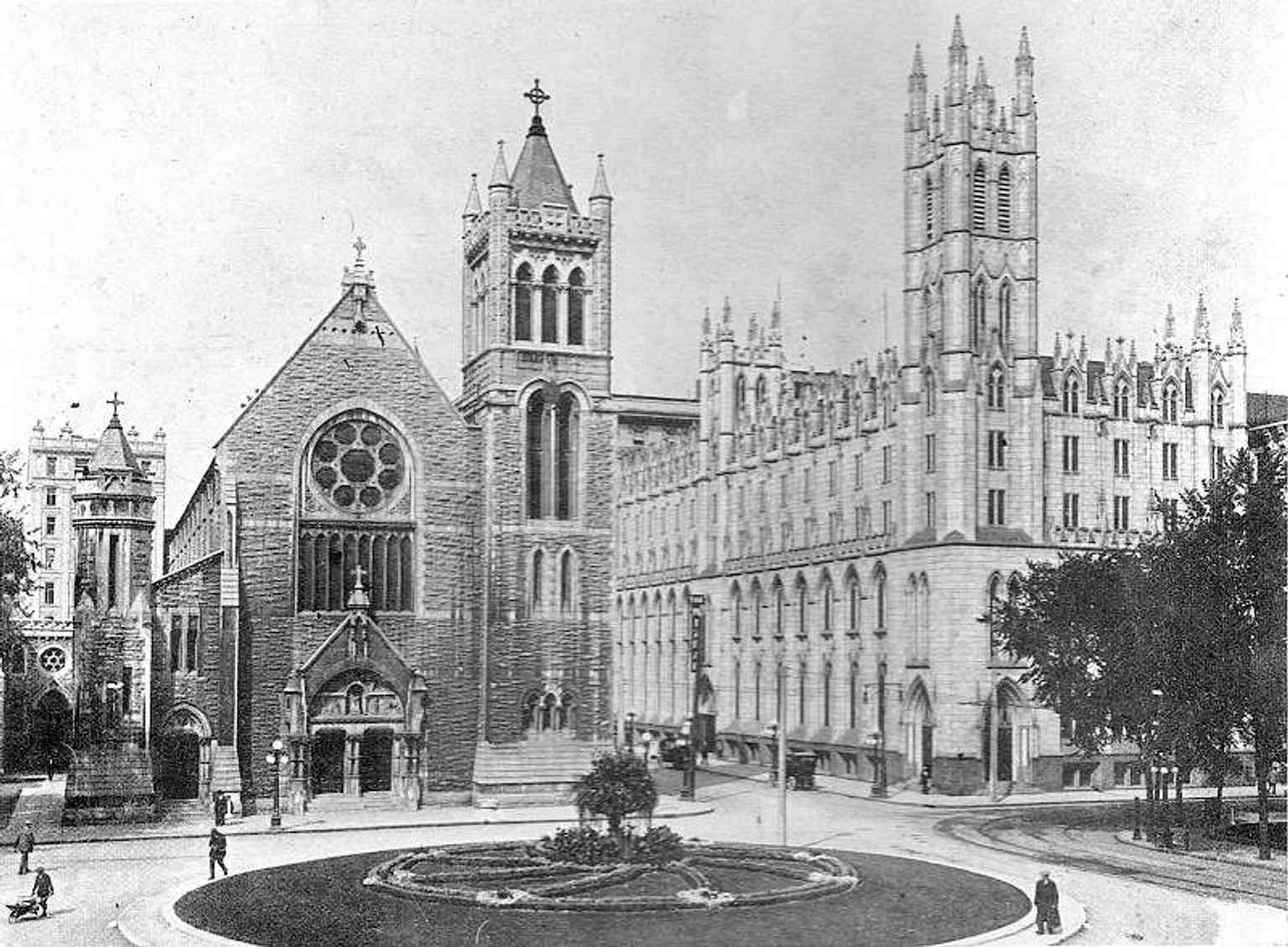
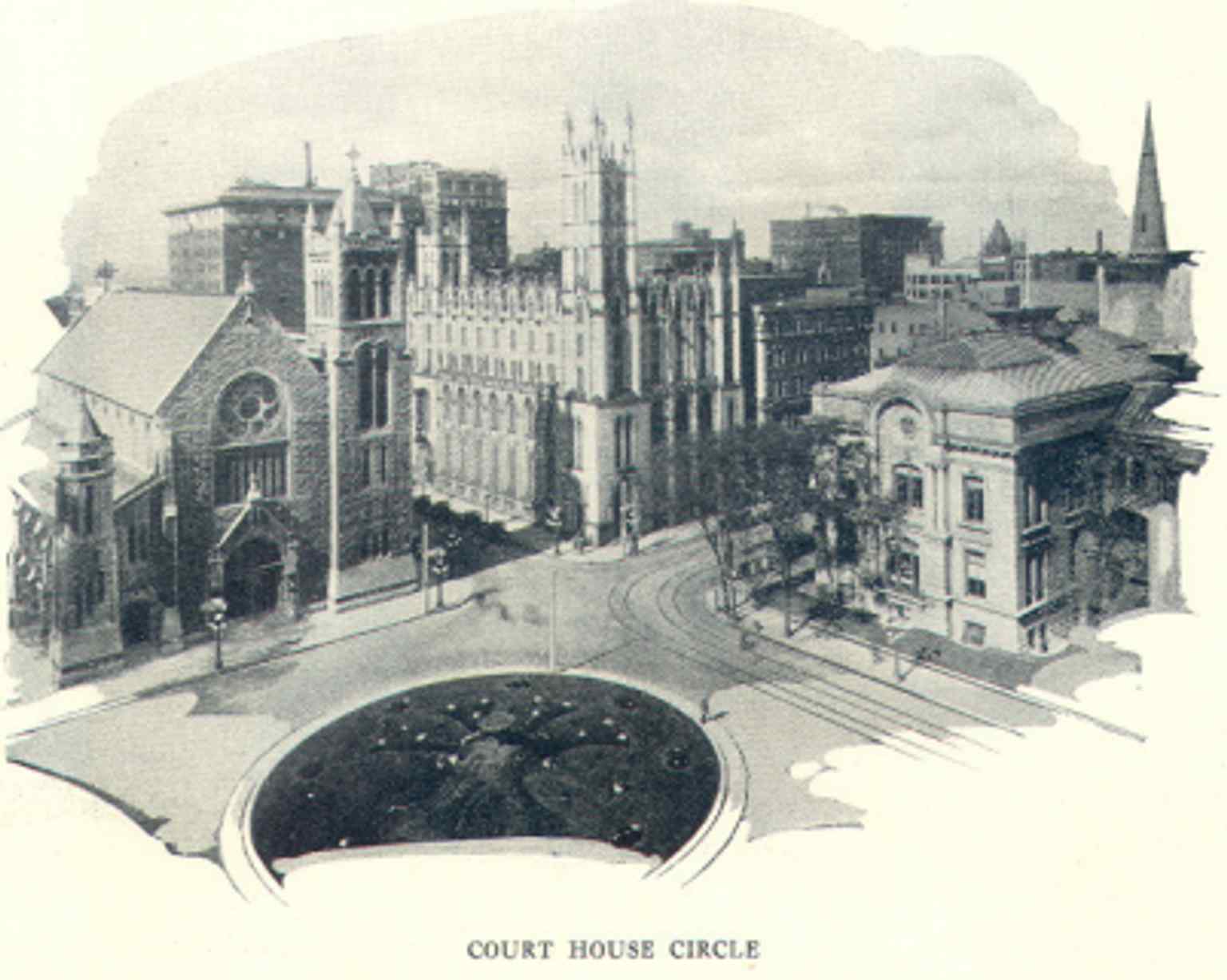
That shifting identity began in the ground around you. This started as a quiet residential district, close to churches and homes. In the early twentieth century, Syracuse recast it. The public library arrived. The Onondaga County Courthouse rose nearby. Government offices and commercial buildings followed. Without moving an inch, this circle changed costume, from neighborhood room to civic stage. If you want to see that change in one glance, check the before-and-after image in the app.
One of the people who pushed hardest for the monument was Torquato De Felice, a Syracuse University fine arts professor. Back in nineteen oh nine, he argued that Syracuse should honor Christopher Columbus here. For many local Italian Americans, this was not only about Columbus. It was about belonging. They spent roughly twenty-five years raising money, organizing, and insisting that their story deserved a place in stone and bronze, at a time when Italian immigrants still faced prejudice and anti-Catholic suspicion.
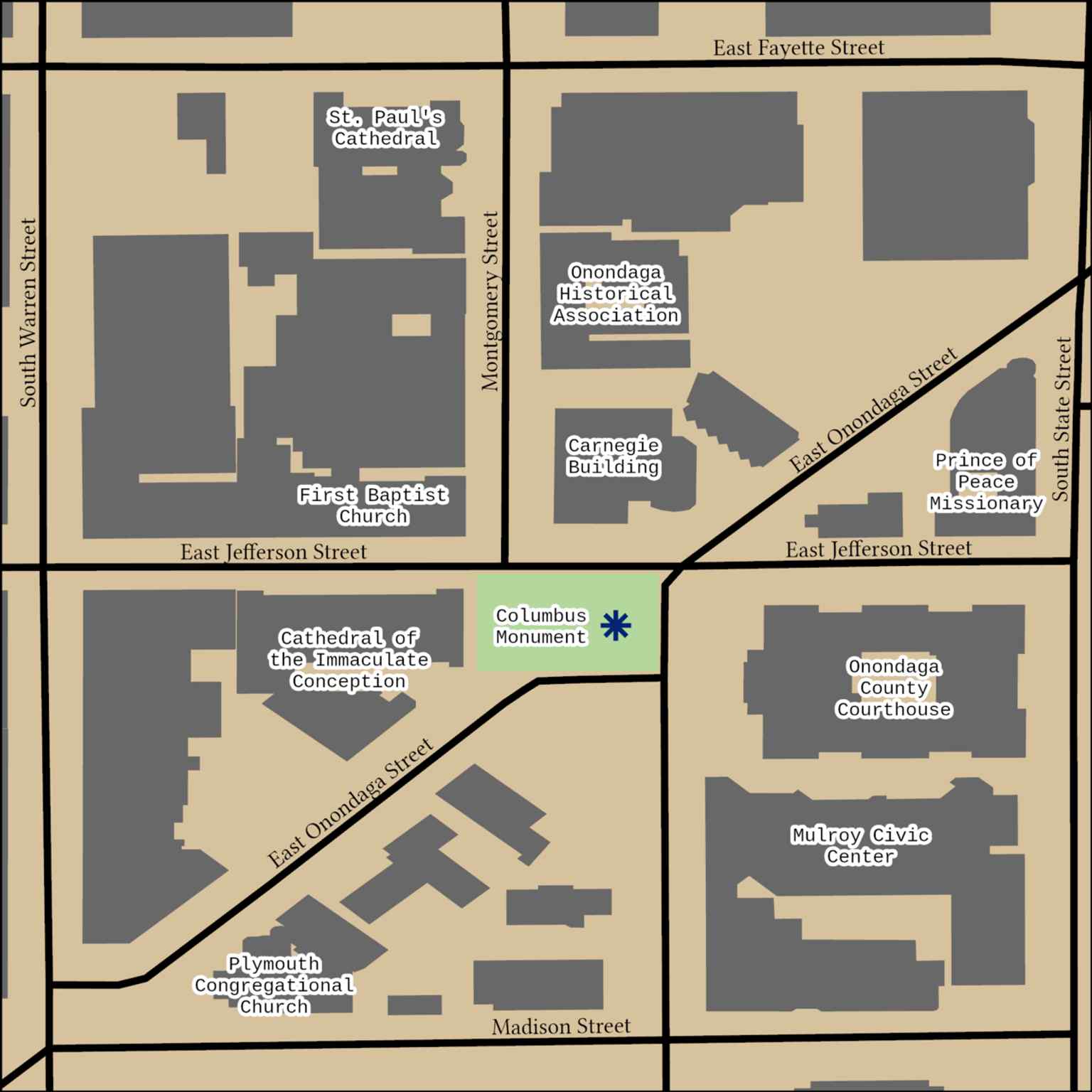
Look around the rim of the circle, then back to the center. Notice how the space asks you to admire the fountain and monument first, while the great public buildings stand watch around it. What does that arrangement say about what Syracuse wanted people to remember?
The monument you see now, designed by architect Dwight James Baum and dedicated in nineteen thirty-four, stands at the center of the fountain and rises about forty feet high. Baum even chose the inscription, turning the monument into a deliberate statement about discovery, identity, and who gets honored in the heart of a city.
And here is the detail locals love because it unsettles the whole picture a little: in nineteen ten, this circle held a grove of blue gum eucalyptus trees.
Imagine that for a moment. Not the formal plaza you see now, but an oddly planted circle, still trying out what it wanted to be.
That uncertainty never really disappeared. Annual tree lightings happened here from nineteen thirteen to nineteen thirty-three before moving to Clinton Square. Columbus Day memorials followed the dedication. Protesters later gathered here too, especially from the early nineteen nineties on, saying the statue honored a history of Indigenous pain. Supporters answered that it marked immigrant endurance and recognition. In twenty twenty, the city announced plans to remove the statue and remake the circle as Heritage Park. As of twenty twenty-five, the statue still remains.
So this first stop gives us Syracuse in miniature: a fountain, a monument, several names, and a ring of institutions all trying to say what belongs at the center. From here, the story widens into the streets that earned the city its confidence. When you are ready, head about five minutes to the South Salina Street Downtown Historic District. And since this circle is open all day, you can always return for another look.






%20c.%201926.png)
