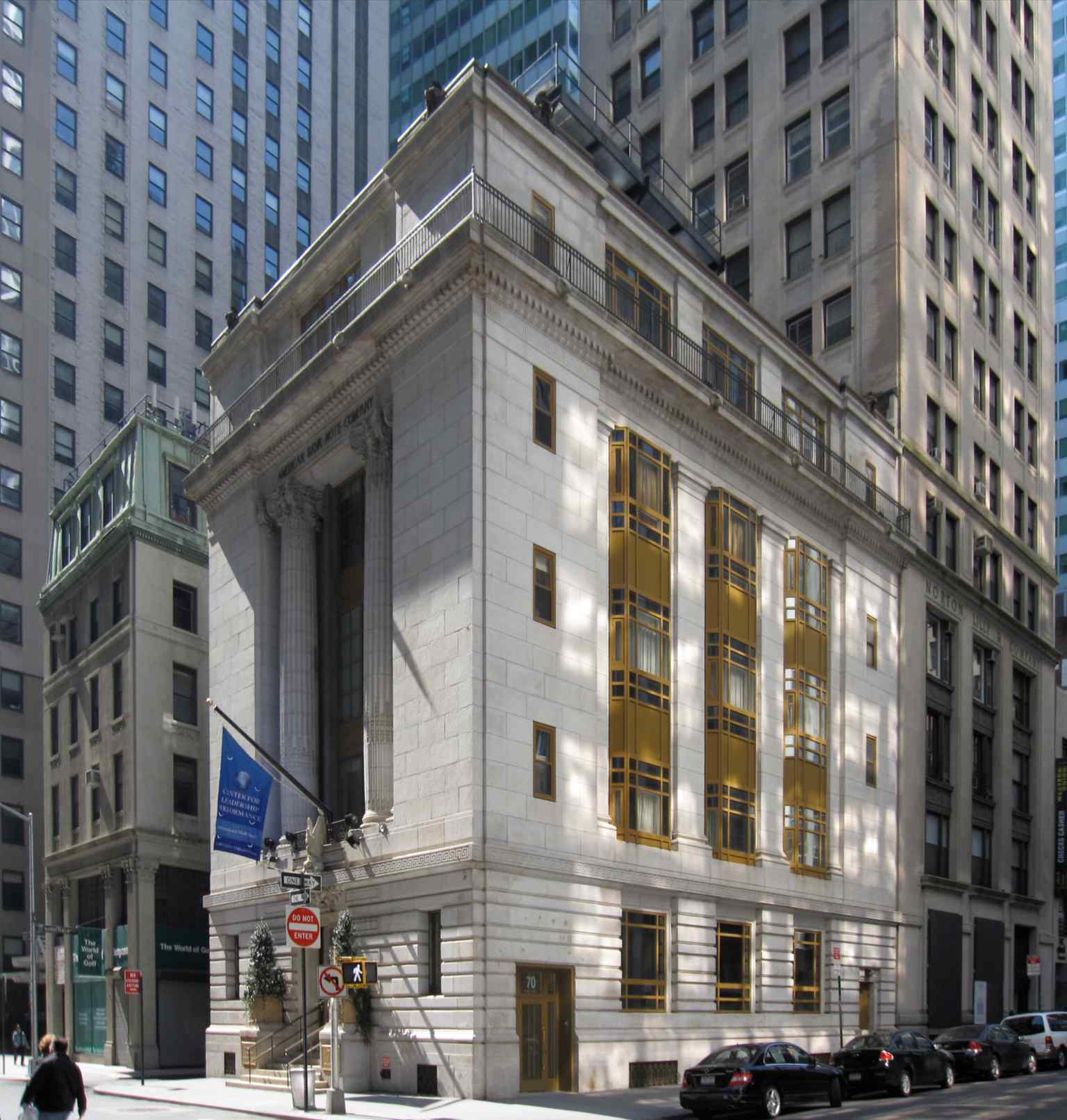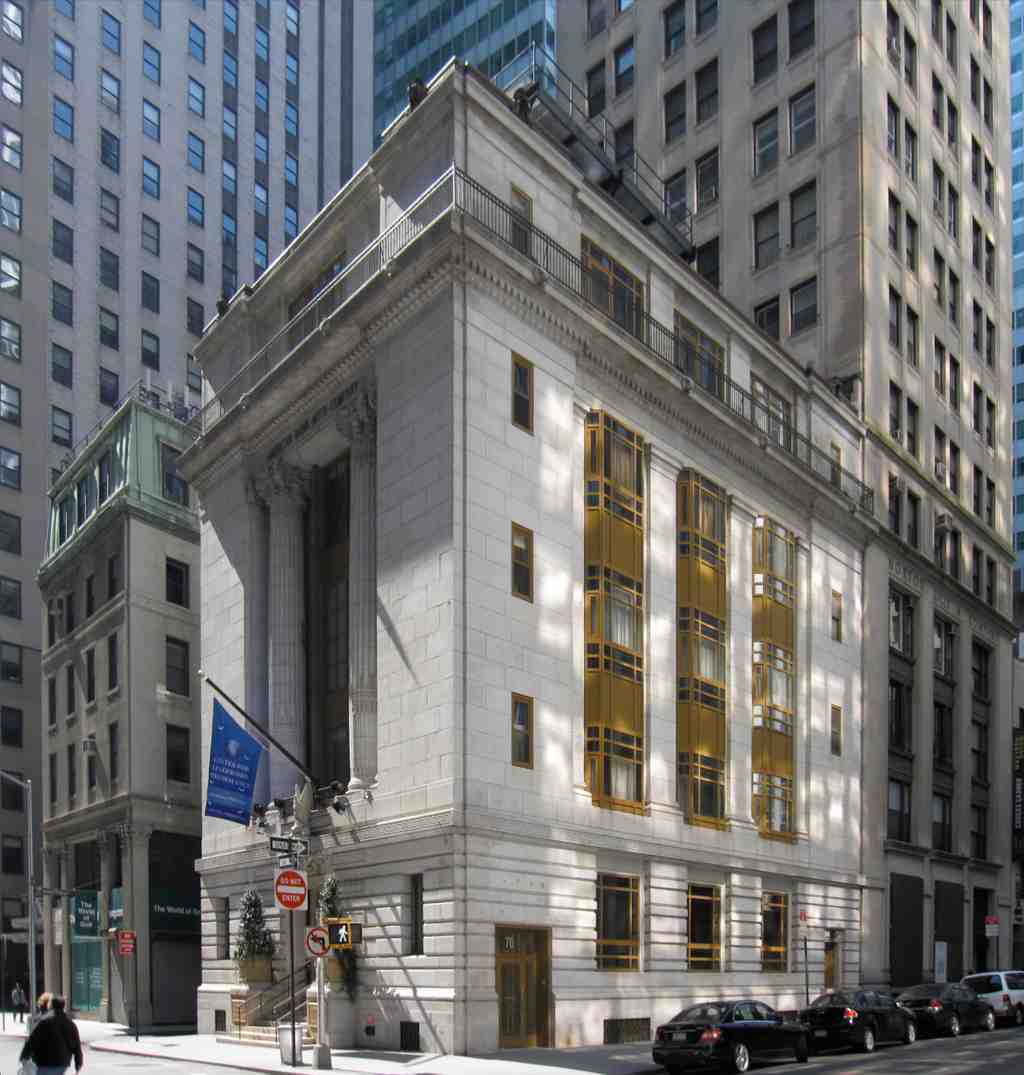
You are standing in front of a narrow five story neoclassical structure faced in smooth gray granite, defined by two massive fluted Corinthian columns that frame the recessed central facade. Look at that striking profile. You can see how those majestic details draw the eye upward in the modern photo on your phone.
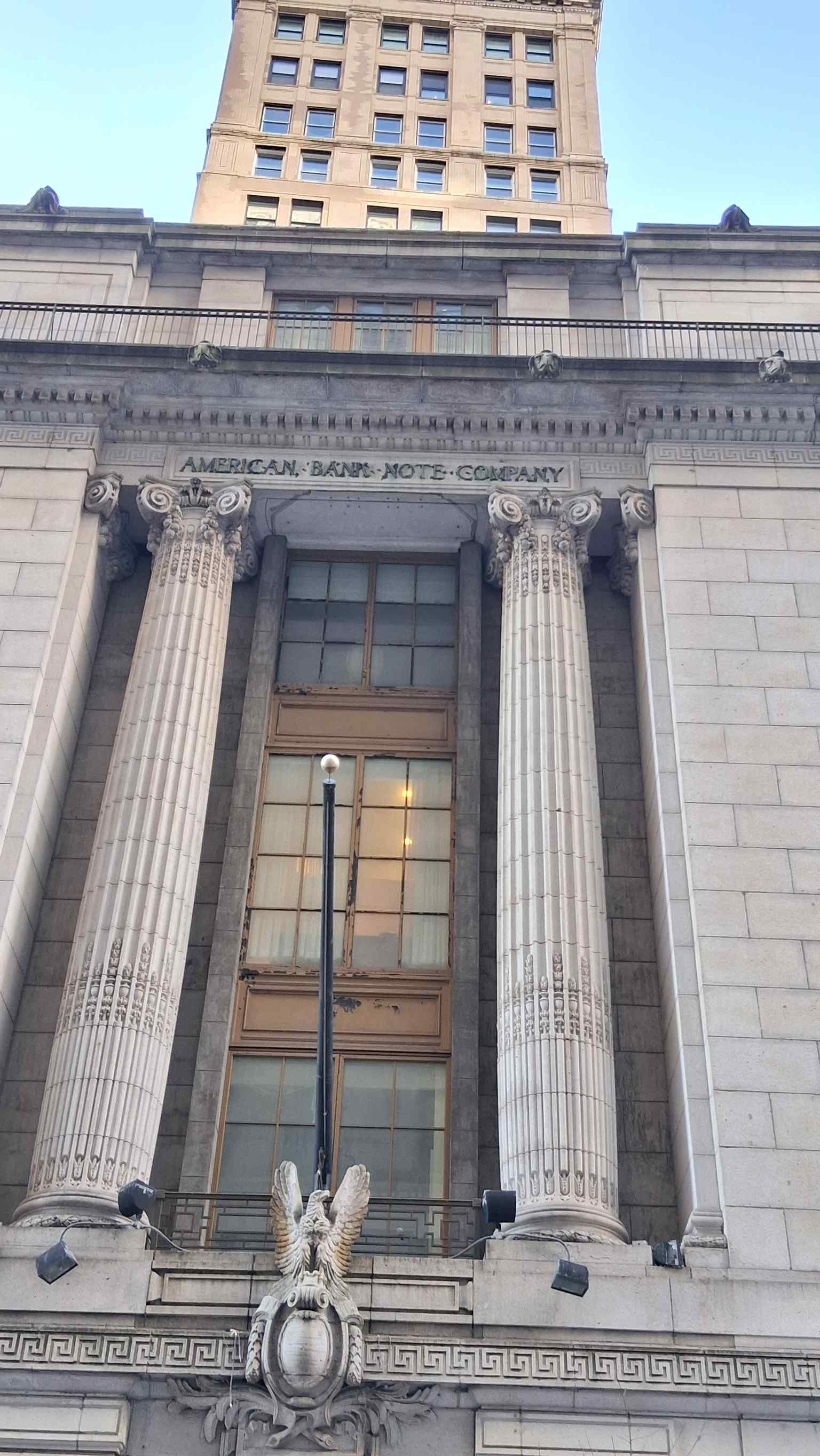
This building was erected in 1908 to house the American Bank Note Company. They did not just manage money here, they actually printed it. Banknotes, stamps, currency, and stock certificates all rolled off the presses of this leading engraving company. This institution literally created the physical paper that fueled Downtown Manhattan's financial dominance. The architects deliberately chose this grand neoclassical style, borrowing heavily from ancient Greek and Roman architecture, to project absolute wealth and unbreakable security. If you take a peek at the historical illustration on your app, you will see how it completely dominated the block when it was brand new.
Inside, this place was an absolute palace of commerce. Imagine stepping through those doors into a general office framed by a massive oval mahogany counter. Upstairs, the executive board rooms were wrapped in indigo leather, blue and gold decorations, and rich tapestries. It was the absolute peak of early twentieth century executive luxury.
But the story of this neighborhood is one of constant, sometimes chaotic, adaptation. After the engraving company moved its offices out in 1988, the building changed hands and identities over and over. In the late 1990s, visionary developer Tony Goldman transformed that opulent ground floor into the Wall Street Kitchen and Bar. He installed television sets all over the dining room so traders in sharp suits could aggressively monitor live stock prices while eating lunch.
Then, things took a deeply colorful turn. In 2004, the organization of Maharishi Mahesh Yogi, the spiritual guru who famously taught The Beatles, bought the property for five and a half million dollars. Why this specific building? Because it is oriented perfectly due east, which aligned with their principles of a spiritually healthy space. They turned this aggressive monument to capitalism into a Transcendental Meditation center intended to calm high stress Wall Street traders. The upper floors became luxury apartments for wealthy administrators known as rajas, who reportedly paid one million dollars each to join the group and wore literal gold crowns and white robes inside these walls.
That spiritual era eventually faded into intense financial speculation. A Chinese investment firm bought the building, tried to flip it for eighty eight million dollars, failed, and let it sit totally vacant for over seven years. It finally ended up in bankruptcy court and was auctioned off to a trust for twenty million. It just goes to show how buildings down here survive the most extreme highs and lows, completely rebuilding themselves for whatever new era crashes over them.
Our journey continues south toward a piece of art that perfectly captures that aggressive financial energy. Head toward Bowling Green, the small park just a few blocks away, and I will meet you at the famous Charging Bull.