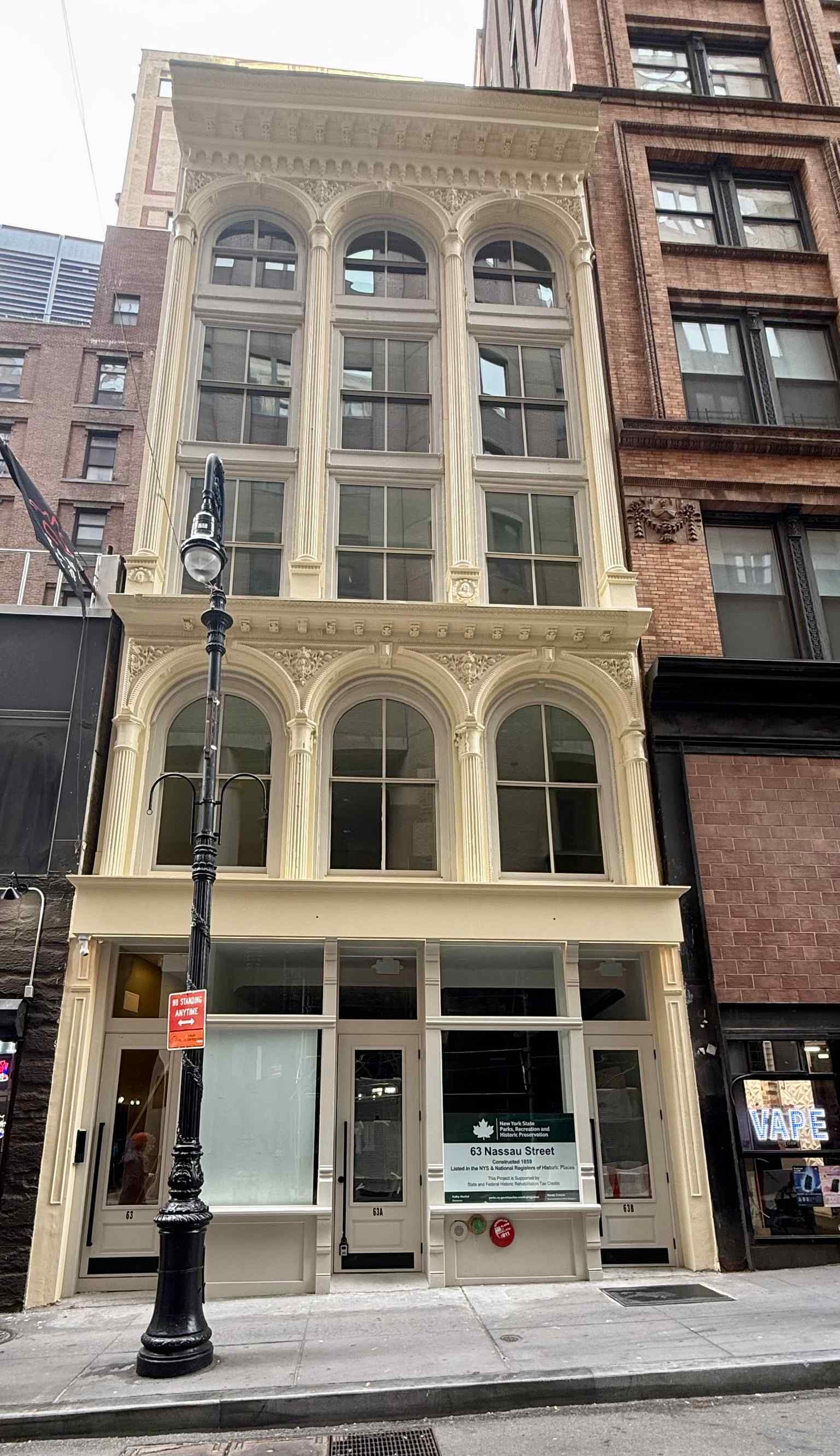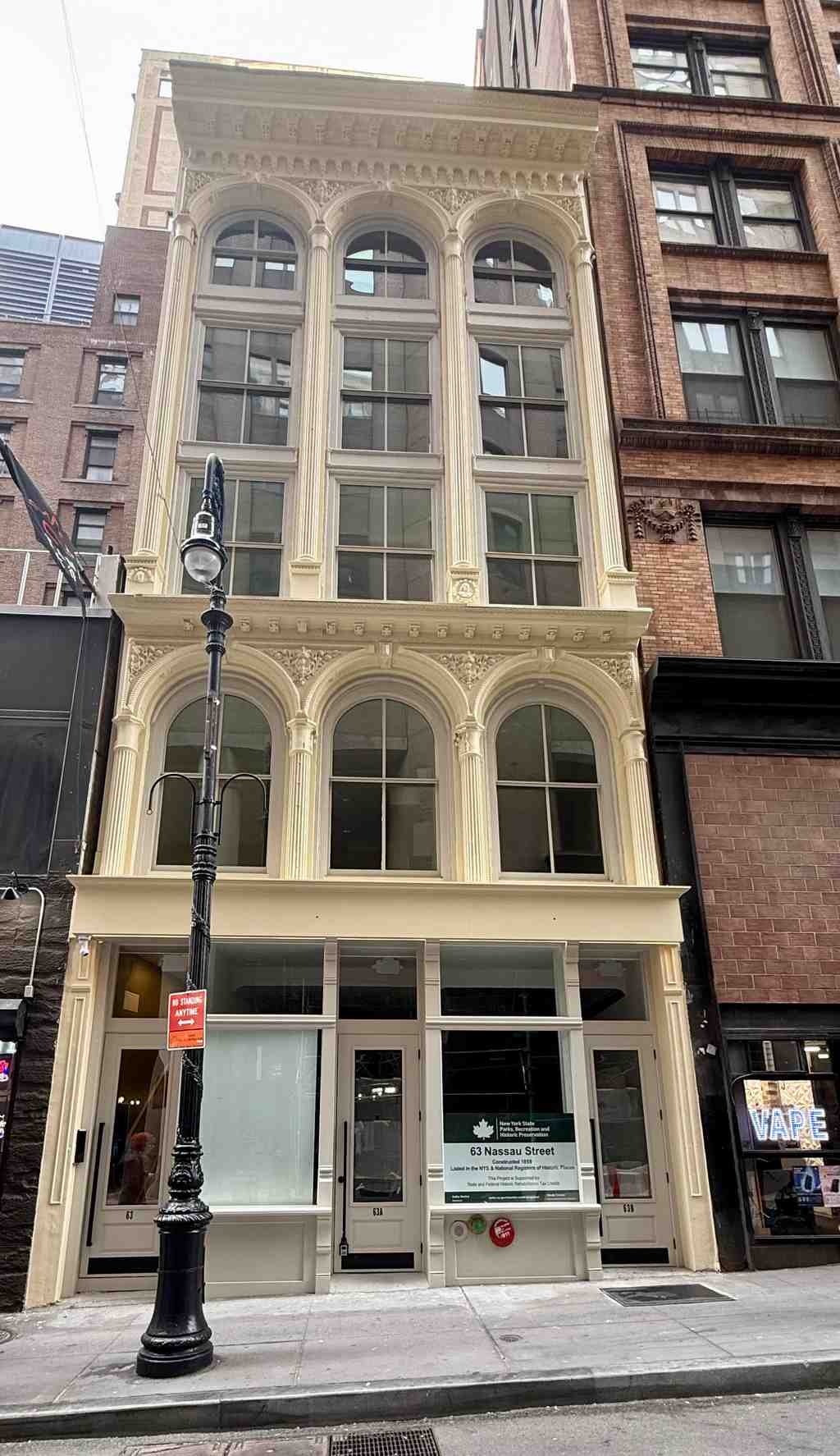
Look for the slender five-story building with a light-colored cast-iron facade, defined by elegant arched windows stacked between beautifully fluted columns. Originally built in 1844 as a humble masonry structure, this site belonged to a man named Thomas Thomas. He ran a successful kitchen furniture and tinware shop right here, selling things like discounted block-tin coffee urns to the bustling crowds of Lower Manhattan.
But in 1855, a devastating fire swept through nearby Maiden Lane, destroying numerous businesses, and around the same time, Thomas Thomas passed away. Seeing an opportunity in the ashes, his son Augustus and his new partner William V. Curtis decided to completely rebuild. The neighborhood was rapidly becoming a hub for the high-end jewelry trade, and merchants desperately needed fireproof buildings to protect their expensive goods.
They hired James Bogardus, a true pioneer in the new architectural use of cast iron. Cast iron was revolutionary at the time because it allowed builders to create strong, fire-resistant structures with highly ornate, decorative facades that were much lighter than traditional stone. Augustus and William actually knew Bogardus from his very first cast-iron project at a pharmacy on Broadway, where they ran a separate silk business. By 1859, they had transformed this humble tinware shop into an absolute architectural marvel.
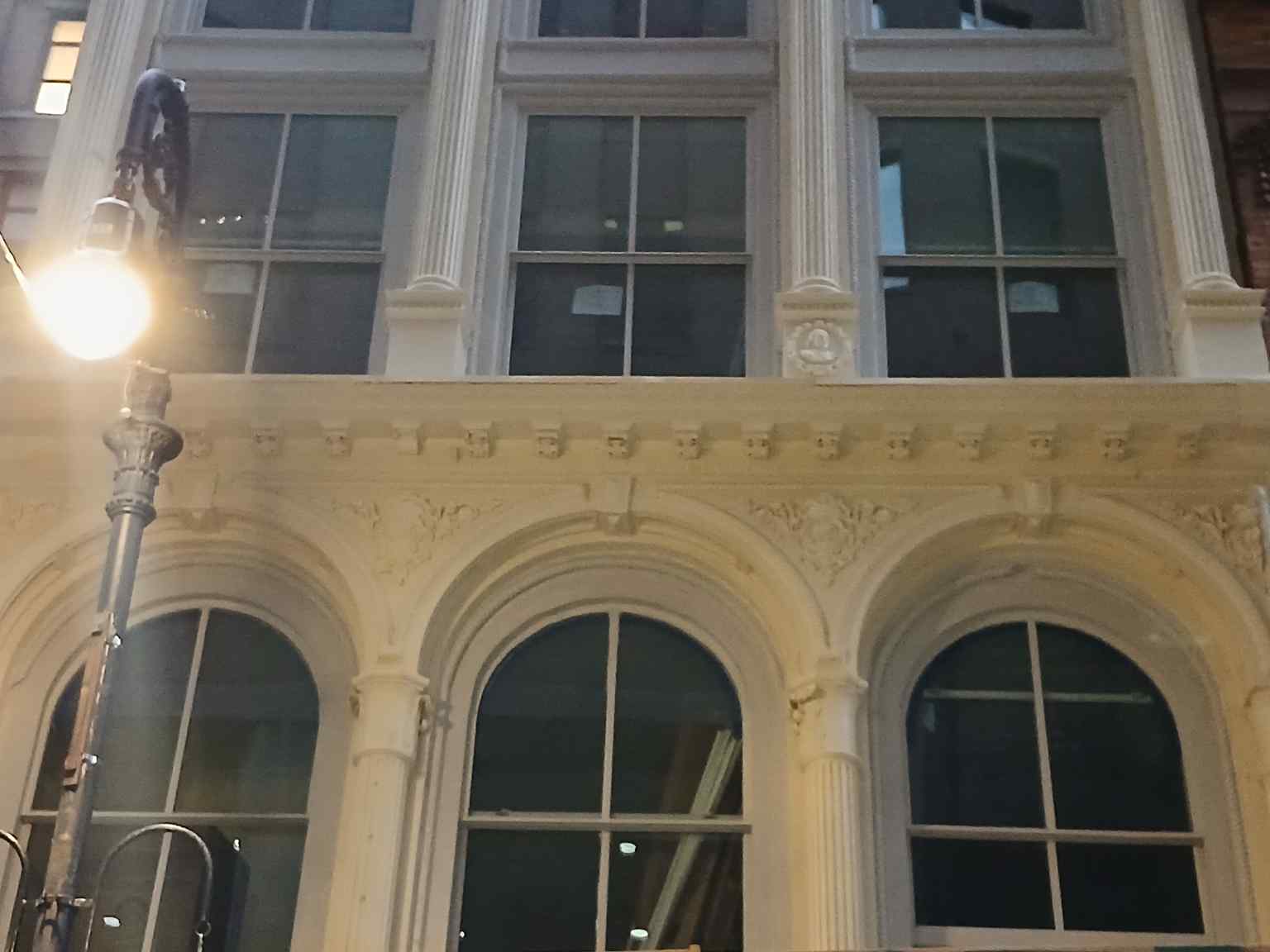
Take a peek at the second image in your app. Right between the second and third floors, you can see empty circular spaces where heavy iron medallions of George Washington once hung. They survived intact for over a century before they were quietly stolen in the nineteen seventies, leaving an incomplete signature that frustrates historians to this day!
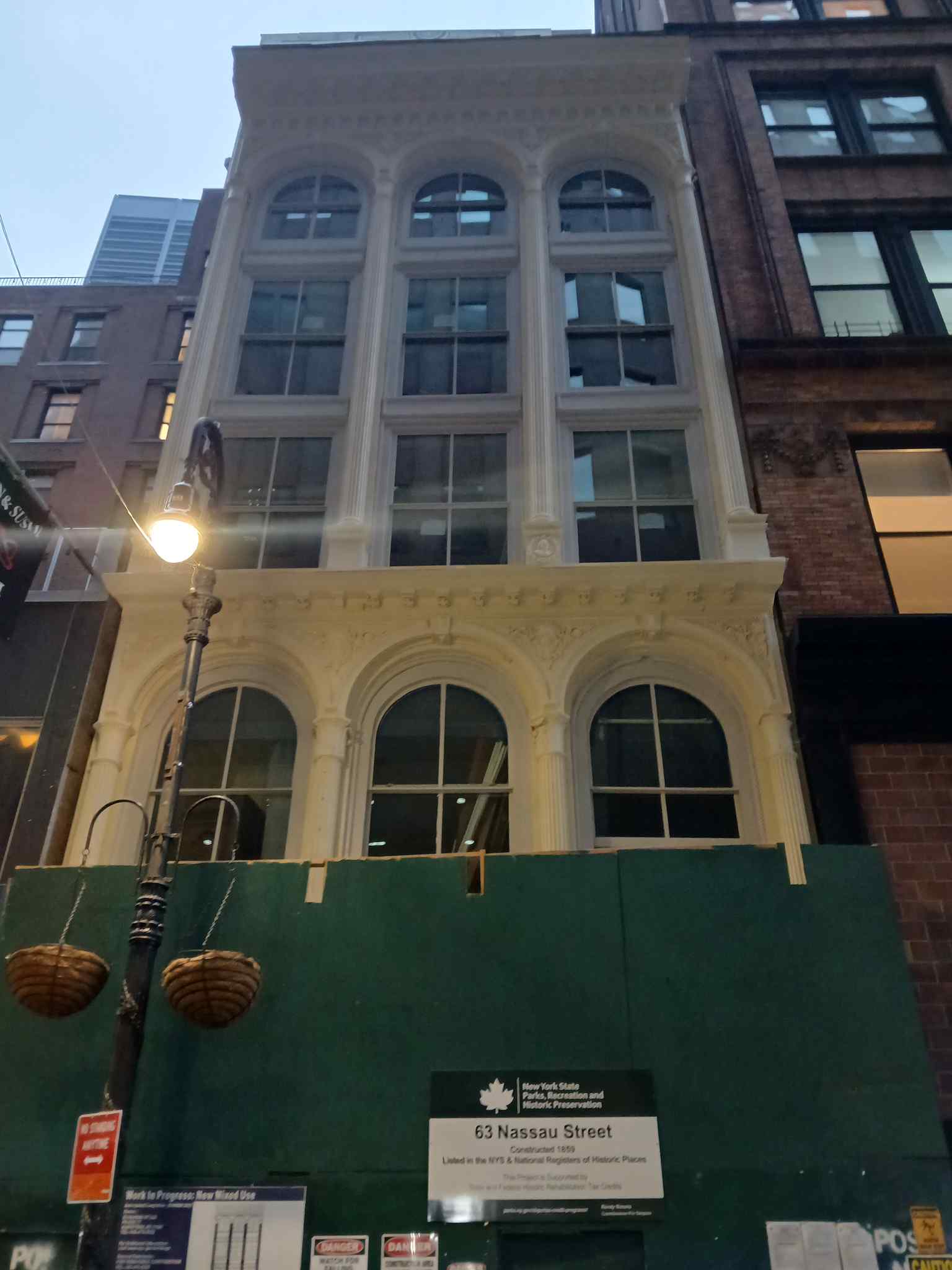
Despite their grand ambitions, Augustus and William faced terrible timing. The Financial Panic of 1857 and the looming threat of the Civil War completely destroyed New York City luxury markets. By April 1860, they were forced to sell this masterpiece at a significant loss to a French bootmaker just to get some rental income.
Decades later, this rare survivor became the focus of the fight for preservation, a fierce movement to protect these historic cast-iron treasures from being demolished for modern high-rises. That fight was championed by Margot Gayle, the legendary preservationist who founded the Friends of Cast Iron Architecture. On May 15, 2007, the exact day after celebrating her ninety-ninth birthday, she attended the Landmarks Preservation Commission hearing in her wheelchair. She triumphantly fought off vocal resistance from the building owner and watched the board vote unanimously to protect it. Today, it stands as one of only five known Bogardus buildings left in the entire United States.
Let us keep moving toward Broad Street. Our next stop, the American Bank Note Company Building, is about an eight-minute walk away.