
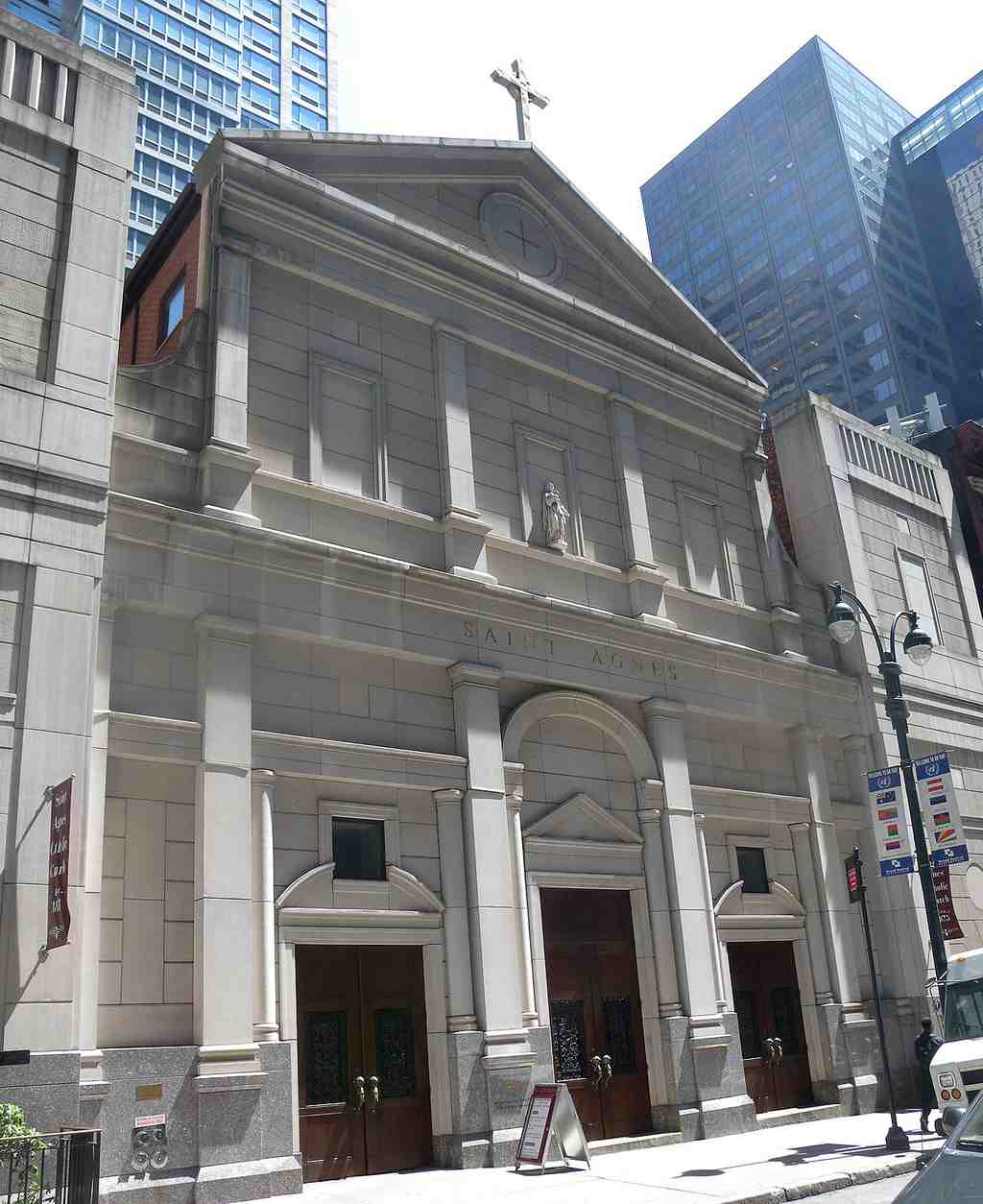
You can easily spot Saint Agnes Church by its light grey stone facade, classical triangular roofline, and the simple stone cross standing tall at the very peak.
Back in eighteen seventy-three, this parish was created for the hardworking Italian laborers who were building the brand new Grand Central Depot just down the street. The first pastor, Reverend Harry Cummings Macdowell, literally rented out a hall above a meat and produce market on Forty-Second Street for his temporary chapel, handing out paper flyers on the street to drum up a congregation.
The church eventually got its own permanent building, but let us just say Saint Agnes has had a literal baptism by fire. Twice, actually. The first massive blaze happened on Christmas Eve in eighteen ninety-eight. It gutted the place but miraculously left the tall stone towers standing. Fast forward almost a century to the tenth of December, nineteen ninety-two, and disaster struck again. Another devastating fire reduced the main worship hall to ashes, leaving just the outside walls and those incredibly stubborn towers upright.
Cleaning up the nineteen ninety-two ruins cost two million dollars, and building the glorious new structure you see today cost another six million dollars. They finally reopened in nineteen ninety-eight. The architects modeled the new design after the Church of the Gesù, a famous classical church in Rome, but they carefully kept those resilient original stone towers flanking the sides of the new building.
This place is not just known for surviving infernos, though. For over half a century, it was basically a national broadcasting hub. Archbishop Fulton J Sheen hosted his massively popular radio and television shows right from here. His dramatic broadcasts, including a legendary episode analyzing the death of Soviet leader Joseph Stalin, were hugely influential in reshaping mainstream twentieth-century American views on the Catholic faith.
It is a beautiful monument to the sheer stubborn resilience of New York City. Take a moment to appreciate its history, and when you are ready, let's keep walking.




