
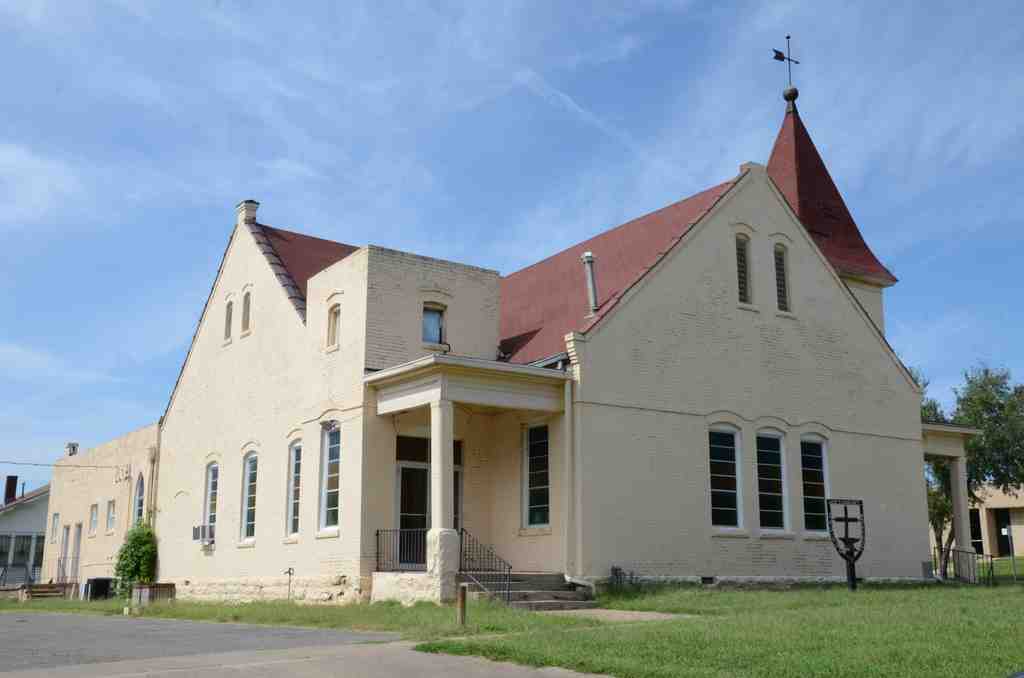
Look for the building on your right with the yellow painted brick façade, rising one-and-a-half stories high with a long, rectangular shape extending back from the street.
This is Ward Chapel AME. It was built in 1904, just three years before the region transformed from Indian Territory into the state of Oklahoma.
The church is named after Bishop Thomas Ward, a pioneering missionary who evangelized throughout this region. He was deeply committed to that 'tri-racial society' we just discussed at the last stop. In fact, he was famous for preaching that the African American and Native American communities here shared a special connection. He called it a... bond of sympathy... forged in suffering.
That bond was put to the test almost immediately. In October 1907, just weeks before statehood became official, this building hosted the Fourth Session of the Indian Mission Annual Conference. Now, that might sound like a routine calendar event... but the tension in the room would have been palpable.
The congregation included many Freedmen-formerly enslaved people of the Five Civilized Tribes. They knew that the ambition to create a modern, cosmopolitan state came with a steep price. The new laws being written were about to strip away the relative freedoms of the frontier and replace them with rigid segregation. So, for the seven thousand members of Muskogee's Black community, this wasn't just a house of worship. It was a political headquarters.
Inside these yellow brick walls, they weren't just praying; they were strategizing on how to navigate the complex, often hostile landscape of the new Oklahoma. This identity as a 'social institution' stuck. In 1919, the church even hosted a national convention demanding reparations for cotton taxes collected on slave labor-a remarkably bold move for the time.
To keep up with all this activity, the building had to evolve. You might notice the scale of the structure; they added a substantial extension to the rear in 1948 just to accommodate the school reunions, NAACP meetings, and community organizing that kept the place buzzing long after statehood was settled.
We now move from the spiritual centers to the residential showpieces, starting with the Trumbo House.




