
Morristown Audio Tour: Echoes of Revolution and Remarkable Lives
An old redoubt lies beneath your feet on Morristown Green, where whispers of revolution echo beneath the laughter of today’s crowds. This self-guided audio tour leads you along Morristown’s tangled streets, plunging into hidden corners and unraveling the secrets behind each historic landmark most visitors rush past. Who plotted a seditious escape under the moonlight in the Presbyterian Church Cemetery? What shadowy illness swept through the rooms of Dr. Jabez Campfield’s house, forever altering the course of American medicine? Why did a mysterious stranger appear at the Green one cold January night, clutching a faded letter sealed with red wax? Move through a world where political skirmishes, whispered betrayals, and unsolved mysteries shaped the nation’s fate. With every step, let fresh eyes reveal stories etched into walls and gravestones, shifting Morristown from a quiet town to a stage of drama and discovery. The past is restless. Unlock Morristown’s hidden depths now.
Tour preview
About this tour
- scheduleDuration 90–110 minsGo at your own pace
- straighten3.5 km walking routeFollow the guided path
- location_onLocationMorristown, United States
- wifi_offWorks offlineDownload once, use anywhere
- all_inclusiveLifetime accessReplay anytime, forever
- location_onStarts at Dr. Jabez Campfield House
Stops on this tour
lock_open 3 free previews · 9 unlock with purchase
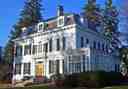
To spot the Dr. Jabez Campfield House, look for a charming, two-story white colonial home with black shutters and a white picket fence on Olyphant Place-there’s even an American…Read moreShow less
To spot the Dr. Jabez Campfield House, look for a charming, two-story white colonial home with black shutters and a white picket fence on Olyphant Place-there’s even an American flag hanging by the door to wave you in. Now, as you stand before these historic walls, let’s travel back more than 250 years to a much younger Morristown. The year is 1765. Imagine the fresh smell of timber and the gentle creak of the wooden steps as Dr. Jabez Campfield, a young doctor with big hopes (and maybe an even bigger wig), leads his new wife Sarah Ward across the threshold. Picture rolling green fields instead of busy streets, the faint jingle of a horse’s harness nearby, and the hopeful murmur of townsfolk waiting for his medical advice. But hold onto your hats! Because this quiet house was about to become the beating heart of Revolutionary history. When smallpox swept through Morristown in 1777, it was Dr. Campfield who bravely inoculated soldiers right inside this home, helping save countless lives. So if these walls could talk, they’d probably cough and then thank the good doctor for his medical skills. Two years later, during another long, bitter winter, this house became a “flying hospital.” Imagine the hurried footsteps of surgeons, the clatter of supplies, and the anxious whispers as medical teams worked day and night-sometimes to the backdrop of snow howling outside. That winter brought not just hardship, but a little romance too. Dr. John Cochran, Surgeon General of the army, stayed here with his wife-and, as fate would have it, their niece Elizabeth Schuyler showed up. Alexander Hamilton, up-and-coming aide to George Washington, visited so often that poor Dr. Cochran couldn’t catch a nap on his own sofa! Hamilton and Elizabeth’s love blossomed here, filling the rooms with laughter, secret conversations, and probably a few awkward “do you mind?” looks from the adults. After the Revolution, the house didn’t rest. It saw doctors trained, children raised, and-even after changing hands, being moved, and rotated-it survived all manner of changes. In 1923, it was saved by the Daughters of the American Revolution, who restored it with care and filled it with treasures: original furniture, Campfield and Hamilton family artifacts, and even 18th-century medical gear you wouldn’t want your doctor to use today. And outside? A garden burst into color for the centennial of women’s suffrage. Today, as you stand here, you’re not just seeing old wood and glass. You’re standing where revolutionaries healed, heroes fell in love, and the past still lingers-waiting for its next curious visitor.
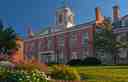
Open dedicated page →To spot the First Presbyterian Church, look for a grand stone building straight ahead, featuring a tall, square bell tower topped with a small green spire and grand arched windows…Read moreShow less
To spot the First Presbyterian Church, look for a grand stone building straight ahead, featuring a tall, square bell tower topped with a small green spire and grand arched windows circling its main hall. Right where you’re standing, generations have gathered on this very spot since 1733-long before smartphones or even streetlights-when the first worshippers met under the open sky. Now, imagine the wind carrying the sound of hymns as the community grew. The church earned its royal stamp of approval from King George II of Britain in 1756-talk about VIP status! But it’s the current building, finished in 1894, that really turns heads. Its sturdy Romanesque arches and the sparkle of stained glass by Louis Comfort Tiffany lend a sense of awe; you half-expect a medieval knight to stroll out the front doors. The story doesn’t end there: in 1840, the congregation split in two-perhaps there was a debate over who brought the best casserole to the church picnic. The Second church eventually became the South Street church, faced a fiery disaster, and then rose from the ashes in its own stone glory. In 1925, the two reunited, bringing everyone back together under what is now the Presbyterian Church in Morristown-a testament to resilience, creativity, and good old-fashioned neighborly spirit.
Open dedicated page →To spot the Presbyterian Church Cemetery, look for a gentle hillside sprinkled with old, weathered gravestones just beside a grand stone church with a tall clock tower rising in…Read moreShow less
To spot the Presbyterian Church Cemetery, look for a gentle hillside sprinkled with old, weathered gravestones just beside a grand stone church with a tall clock tower rising in the background. If you step closer, you might feel like you’re traveling back in time-maybe because some of these gravestones have stood here since 1731, watching centuries roll by beneath their mossy faces. This isn’t just any cemetery; it’s a place where stories are thick in the air, a final resting ground for everyone from Revolutionary War soldiers to congressmen and inventors. In the heart of the cemetery, there’s a mass grave-imagine, over 150 brave fighters from the American Revolution who succumbed to smallpox in 1777, buried together during a dark and desperate winter. Among the stones, you’ll find the names of folks like Silas Condict, who helped build a new nation, and Jacob Ford Jr. with his wife Theodosia-whose mansion once served as General Washington’s home during a cold, uncertain war. So as you look around, remember: beneath your feet is a tapestry of secrets and legends, each stone a chapter, each shadow a whisper from Morristown’s deep, daring past. And don’t worry-no ghosts on the tour today, just a little history chilling in the shade!
Open dedicated page →
Show 9 more stopsShow fewer stopsexpand_moreexpand_less
To spot the Morris County Courthouse, look for a stately three-story red brick building with arched windows, cream-colored trim, and a grand golden-domed cupola right in front of…Read moreShow less
To spot the Morris County Courthouse, look for a stately three-story red brick building with arched windows, cream-colored trim, and a grand golden-domed cupola right in front of you, rising above neatly kept gardens. Picture yourself standing on Washington Street in 1827-the air smells faintly of fresh brick and dusty brownstone as workers put the finishing touches on this very courthouse, a brand new marvel after the older ones outgrew their homes on the Morristown Green. Just imagine the clang of hammers and the buzz of excitement filling the street as architect Lewis Carter’s design takes shape, blending Greek Revival pillars and classic Federal style. The courthouse you see now has held countless stories of justice, debate, and even a bit of courtroom drama-definitely more excitement than jury duty snacks! Over time, it’s witnessed the history of not just Morristown, but all of Morris County, earning its spot on the National Register of Historic Places in 1977. Today, the courthouse is a hero of the Morristown Historic District-standing strong and proud, just waiting to see who will walk up those steps next.
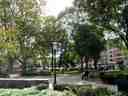
Open dedicated page →Right in front of you, you’ll spot the Morristown Green-just look for the wide, open park framed by old, leafy trees, lamp posts, benches, and a mix of stonework and greenery,…Read moreShow less
Right in front of you, you’ll spot the Morristown Green-just look for the wide, open park framed by old, leafy trees, lamp posts, benches, and a mix of stonework and greenery, sitting at the very heart of town and surrounded by the busy streets and buildings. Welcome to the Morristown Green! Take a deep breath and soak in the atmosphere-because believe it or not, you’re standing on two and a half acres that have been through a wild journey for more than three centuries. Imagine, way back around the year 1000, this spot thrived with Munsee Lenape people. Just picture them moving through these woods, hunting for wolf or elk and fishing for mussels in the cool waters of the Whippany River. Now that’s fresh produce-no supermarket needed! But things changed dramatically by the 1700s. This very green patch was declared public space in 1715, and it quickly became…the town’s original multitasker! Picture cows, sheep, and horses munching away where you’re standing, townsfolk wandering through, and children perhaps daring each other to climb some of these old trees. By the time the Revolutionary War swung through, this tranquil park had seen it all-militia marching, soldiers camping, and even a jail right here. Oh yes, this wasn’t just a park; it was home to Arnold’s Tavern, George Washington’s temporary headquarters. Legend has it he used the tavern’s new extension for war councils and, when business was done, the odd dance or two. If those walls could talk, they’d have some toe-tapping tales! Hold on to your hat, though-because the Green wasn’t always home to peaceful picnics. In the 18th and early 19th centuries, this was the stage for public executions. The last one was so infamous that more than 12,000 people showed up! The story of Antoine Le Blanc is a real local dark legend: after his terrible crime, the roads around the Green were jammed with wagons and people peering from rooftops, all to watch justice being delivered. Every time you walk across these paths, just remember-at least what you’re stepping on now is grass, not a crowd of 19th-century rubberneckers! But don’t worry, Morristown Green isn’t only about serious history. Over time, townsfolk decided it should be a “common forever,” so they replanted trees, put up fences, and transformed it into the gathering place you see today. If you look around, you’ll spot more than just green grass-there are important statues here! One statue, The Alliance, shows George Washington, Lafayette, and Hamilton deep in discussion-a bronze “selfie” of a pivotal moment from the Revolution. There’s also a Civil War monument and a unique tribute to Morris Frank and Buddy, the first seeing-eye dog team, who helped launch a movement for guide dog training right here in Morristown. Community events now fill up the Green all year long. The Festival on the Green brings the whole town together for food, music, and friendly chaos, while the annual Christmas Festival turns this park into a tiny winter wonderland with Santa’s House and sparkling lights. If you’re lucky, you might wander through during Moonlight Movies, or catch a passionate speech or a blood drive. The Green’s motto has always been to keep the community at its heart, whether you’re here for a celebration or a cause. Today, as you stand among the soft rustle of leaves and the laughter of people enjoying a sunny afternoon, you’re part of a living tradition-Morristown Green is the patchwork quilt of town memory, pulsing with stories from every era. Keep walking, and who knows? You might just hear George Washington planning his next big dance.
Open dedicated page →Right in front of you, you’ll spot a stately, two-story red-brick mansion with tall white columns at the entrance-just look for the large sign on the lawn that reads Macculloch…Read moreShow less
Right in front of you, you’ll spot a stately, two-story red-brick mansion with tall white columns at the entrance-just look for the large sign on the lawn that reads Macculloch Hall. Now, let’s take a stroll through the heart of Morristown’s historic district, a patchwork quilt of remarkable stories, grand homes, and quirky characters. This district wasn’t just plopped onto the National Register of Historic Places for looking pretty-it's a living scrapbook full of drama, invention, and even a dash of eccentricity. Imagine the sound of horse-drawn carriages clattering down these old streets as you gaze at nearly every style of grand architecture you can think of. Dating back to 1810, Macculloch Hall’s classic brick and Federal-style lines are as dignified as a judge at a pie-eating contest. Vail Mansion, meanwhile, was built for the president of AT&T-rumor has it he never even slept there, so I hope nobody changed the Wi-Fi password! Granite, marble, and grandeur-he just handed it over to the town. Churches, libraries, and charming summer cottages like The Kedge fill the district with a mix of faith, learning, gossip, and stubborn pride. Over time, this area grew from 50 to over 350 buildings, doubling its size and throwing its arms open even wider to new stories and people-listen for laughter, late-night debates, and maybe the faint bell from a century-old trolley. Every brick here has seen a piece of America’s great adventures-and let’s admit it, some truly unforgettable mustaches too!
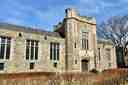
Open dedicated page →To spot the Morristown and Morris Township Library, just look ahead for a grand, castle-like stone building with tall windows and a clock perched above an arched entryway-trust…Read moreShow less
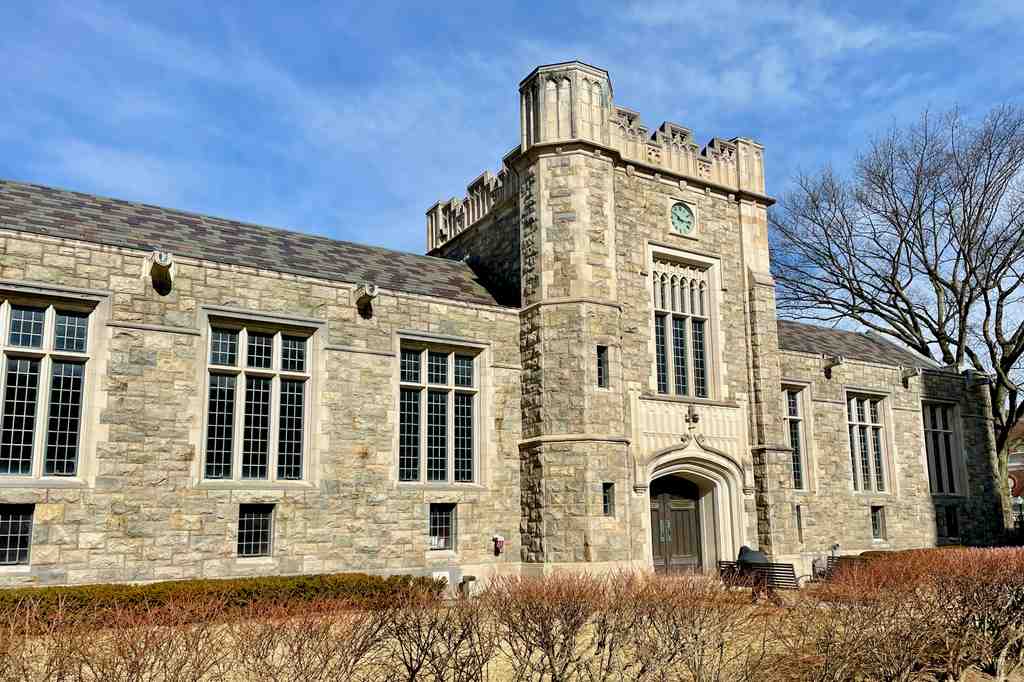
To spot the Morristown and Morris Township Library, just look ahead for a grand, castle-like stone building with tall windows and a clock perched above an arched entryway-trust me, you can’t miss it! Now, as you stand at the entrance, imagine the centuries swirling together behind those thick stone walls. The story of this library begins in 1792-not with a fancy building, but with a group of folks swapping books among themselves, probably hoping nobody dog-eared the pages! Picture a chilly evening, candlelight flickering, and 97 determined readers gathering to share 96 precious books-a treasure trove for colonial Morristown. By 1812, local book lovers formed their own Library Association, dreaming big. That dream started to come true in 1866, when the effort was officially incorporated as the Morristown Library and Lyceum. By 1875, the collection had swelled to over 8,000 volumes, enough for any serious bookworm to lose themselves in. But then, disaster struck-a fire in 1914 turned shelves and stories alike into ashes. The library lost nearly everything, except for its spirit and a bit of insurance money. Hope wasn’t lost, though: the trustees scooped up land for a new home, and fate sent them a guardian angel by the name of Grinnell Willis. Willis, a retired textile merchant still grieving his late wife, built the new, fireproof library as a loving tribute to her-and to the kindness this town showed her. So, in 1917, this magnificent castle of learning opened with 8,000 volumes and just four staff members, ready to start anew. Step inside and you’ll find more than just shelves and silence-there’s a sense of adventure hiding in every corner. Up in the reference room, a giant golden eagle gazes down, saved from a 1920 armory fire-talk about a lucky escape! Peer at the custom fire screen by blacksmith Samuel Yellin, where swirling designs and the initials ‘M’ and ‘W’ tell their own story. Even the staircase speaks, with brass panels naming soldiers from World War I. And yes, there’s a wild side: in the 1990s, the library’s rules made headlines-after a man was banned for, let’s say, being too aromatic, a legal battle over the First Amendment raged, ending with huge settlements and a lesson in freedom of access. Today, the library is bigger, brighter, and more inclusive than ever. So whether you’re in the mood for history, a giant eagle, or maybe a bit of legal drama, this is the place where Morristown’s stories all come together.
Open dedicated page →Look for a grand white house with lots of black shutters, a steep mansard roof, and a sun-drenched glass conservatory gracing one side-right on the corner, framed by towering…Read moreShow less
Look for a grand white house with lots of black shutters, a steep mansard roof, and a sun-drenched glass conservatory gracing one side-right on the corner, framed by towering evergreens. There it stands, the Thomas Nast Home, or as he liked to call it, Villa Fontana-a Second Empire beauty just waiting for you to imagine the smell of fresh ink and the sound of scratching pens from the 1870s. Picture yourself in Morristown, just after the Civil War, where the quiet air outside is suddenly interrupted by scribbles and shouts of laughter upstairs as Thomas Nast dreams up his next big cartoon. Nast lived and worked right here, in a cozy upstairs bedroom, turning ordinary news into powerful satire for Harper’s Weekly. This is the home where he created unforgettable images: yes, Santa Claus as we know him, plus the donkey and elephant for the Democrats and Republicans-so if you're still wondering who to thank for those political animal mascots, it's the man who lived behind that solid wooden door. Nast’s art wasn’t always a laughing matter, though. His sharp ink took down political machines like Boss Tweed and Tammany Hall. You can almost sense the tension of the day as angry politicians tried to outwit a cartoonist armed with nothing but paper and a wicked sense of humor. While Nast brought joy to many with his plump, jolly Santa, his illustrations of immigrants-especially the Irish-sparked plenty of controversy. As the world changed, tastes shifted, and his star faded; Nast finally accepted a post in Ecuador, where his incredible journey ended. But the walls here still hold echoes of American legends and artistic rebellion. As you stand in front of the crooked dormers and pilastered corners, imagine Nast sketching a future few could have predicted-one where his characters would outlive him for generations.
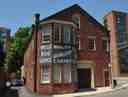
Open dedicated page →To spot the Glanville Blacksmith Shop, look for a two-and-a-half-story red brick building with a bold semi-octagonal front bay, right at the corner with a big painted sign on the…Read moreShow less
To spot the Glanville Blacksmith Shop, look for a two-and-a-half-story red brick building with a bold semi-octagonal front bay, right at the corner with a big painted sign on the facade-it's hard to miss! Now, imagine you're standing here in the late 1800s-you’d hear the furious clang of hammer on anvil, smell the hot scent of metal, and maybe even dodge the occasional startled horse as J.P. Glanville set up his blacksmith shop in 1895. The building you see today shimmered into existence in 1901, with Frank J. Glanville, iron tongs in hand, forging horseshoes and wagon wheels right inside these brick walls designed in Colonial Revival style. Picture the warm glow of the forge lighting up the faces of townsfolk as they brought in everything from plows to buggy axles for repair. And here’s a twist: in 1905, next door, a state-of-the-art livery stable sprung up-think of it as Morristown’s original “parking garage,” where horse-drawn carriages jostled for space and stable boys dashed around in a blur. This was a place of sweat, sparks, and stories, in the very heart of town. It’s a bit quieter now, but if you listen closely, you might still catch the ghostly ring of hammer and hoofbeats echoing down Bank Street.
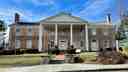
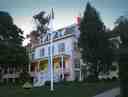
Open dedicated page →To spot the Mount Kemble Home, look for a charming two-and-a-half-story cream-colored house with green shutters, bright red doors, a long porch with white railings, and a tall…Read moreShow less
To spot the Mount Kemble Home, look for a charming two-and-a-half-story cream-colored house with green shutters, bright red doors, a long porch with white railings, and a tall flagpole right in front. Now, standing here on the front lawn, imagine yourself whisked back to 1826 when the air was filled with the sound of hammers and saws building this very house. Over the years, what started as a stately residence became an ever-evolving home, its walls stretching and creaking as new wings and fresh coats of style were layered on-first Federal, then a whiff of Carpenter Gothic, and finally a splash of Colonial Revival for that touch of old-school grandeur. But here’s where the story hits a rather heartwarming twist: in 1890, seven determined women from the local Presbyterian Church banded together and turned this fancy address into a sanctuary for “Worthy and Destitute Women.” Yes, you could say this place has worn many hats... or bonnets! In 1905, thanks to Alfred R. Whitney’s generosity, the old mansion was given a south wing and a new name-the Old Ladies Home, where wit and wisdom multiplied like the houseplants on the porch. Finally, in 1940, it got its current name, the Mount Kemble Home. So as you stand here, imagine lives led with dignity, laughter echoing down the hallways, and the beautiful old house continuing its work as a place of welcome, shelter, and hope. And who knows-if you listen closely, you just might catch the giggle of some cheeky past resident who found a second chance inside these walls!
Open dedicated page →
Frequently asked questions
How do I start the tour?
After purchase, download the AudaTours app and enter your redemption code. The tour will be ready to start immediately - just tap play and follow the GPS-guided route.
Do I need internet during the tour?
No! Download the tour before you start and enjoy it fully offline. Only the chat feature requires internet. We recommend downloading on WiFi to save mobile data.
Is this a guided group tour?
No - this is a self-guided audio tour. You explore independently at your own pace, with audio narration playing through your phone. No tour guide, no group, no schedule.
How long does the tour take?
Most tours take 60–90 minutes to complete, but you control the pace entirely. Pause, skip stops, or take breaks whenever you want.
What if I can't finish the tour today?
No problem! Tours have lifetime access. Pause and resume whenever you like - tomorrow, next week, or next year. Your progress is saved.
What languages are available?
All tours are available in 50+ languages. Select your preferred language when redeeming your code. Note: language cannot be changed after tour generation.
Where do I access the tour after purchase?
Download the free AudaTours app from the App Store or Google Play. Enter your redemption code (sent via email) and the tour will appear in your library, ready to download and start.
If you don't enjoy the tour, we'll refund your purchase. Contact us at [email protected]
Checkout securely with 




