
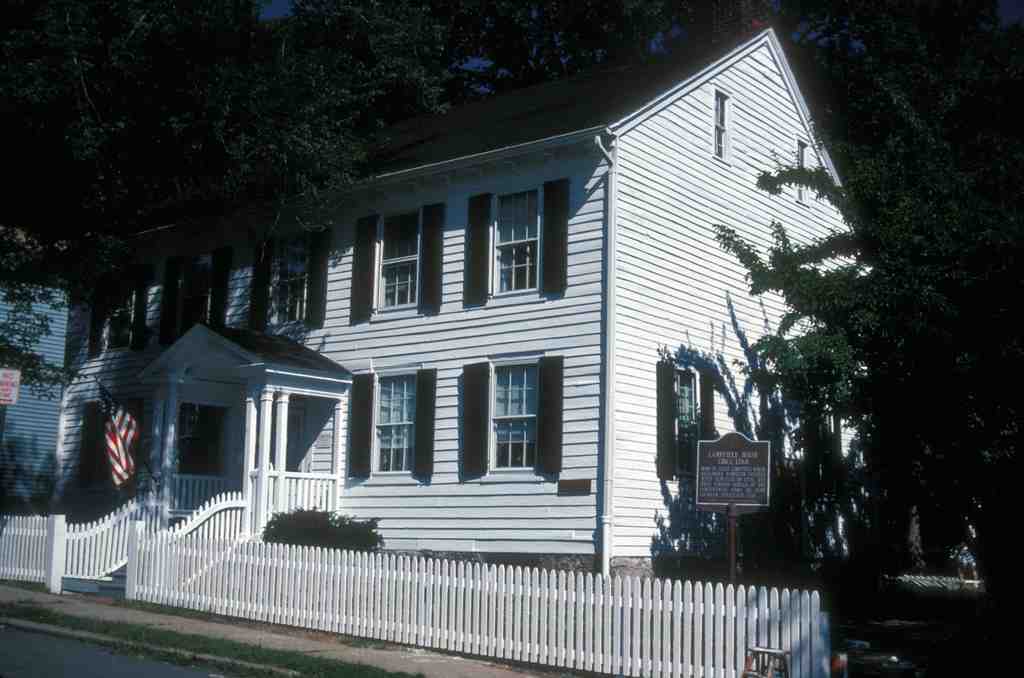
To spot the Dr. Jabez Campfield House, look for a charming, two-story white colonial home with black shutters and a white picket fence on Olyphant Place-there’s even an American flag hanging by the door to wave you in.
Now, as you stand before these historic walls, let’s travel back more than 250 years to a much younger Morristown. The year is 1765. Imagine the fresh smell of timber and the gentle creak of the wooden steps as Dr. Jabez Campfield, a young doctor with big hopes (and maybe an even bigger wig), leads his new wife Sarah Ward across the threshold. Picture rolling green fields instead of busy streets, the faint jingle of a horse’s harness nearby, and the hopeful murmur of townsfolk waiting for his medical advice.
But hold onto your hats! Because this quiet house was about to become the beating heart of Revolutionary history. When smallpox swept through Morristown in 1777, it was Dr. Campfield who bravely inoculated soldiers right inside this home, helping save countless lives. So if these walls could talk, they’d probably cough and then thank the good doctor for his medical skills.
Two years later, during another long, bitter winter, this house became a “flying hospital.” Imagine the hurried footsteps of surgeons, the clatter of supplies, and the anxious whispers as medical teams worked day and night-sometimes to the backdrop of snow howling outside. That winter brought not just hardship, but a little romance too. Dr. John Cochran, Surgeon General of the army, stayed here with his wife-and, as fate would have it, their niece Elizabeth Schuyler showed up. Alexander Hamilton, up-and-coming aide to George Washington, visited so often that poor Dr. Cochran couldn’t catch a nap on his own sofa! Hamilton and Elizabeth’s love blossomed here, filling the rooms with laughter, secret conversations, and probably a few awkward “do you mind?” looks from the adults.
After the Revolution, the house didn’t rest. It saw doctors trained, children raised, and-even after changing hands, being moved, and rotated-it survived all manner of changes. In 1923, it was saved by the Daughters of the American Revolution, who restored it with care and filled it with treasures: original furniture, Campfield and Hamilton family artifacts, and even 18th-century medical gear you wouldn’t want your doctor to use today. And outside? A garden burst into color for the centennial of women’s suffrage.
Today, as you stand here, you’re not just seeing old wood and glass. You’re standing where revolutionaries healed, heroes fell in love, and the past still lingers-waiting for its next curious visitor.




