
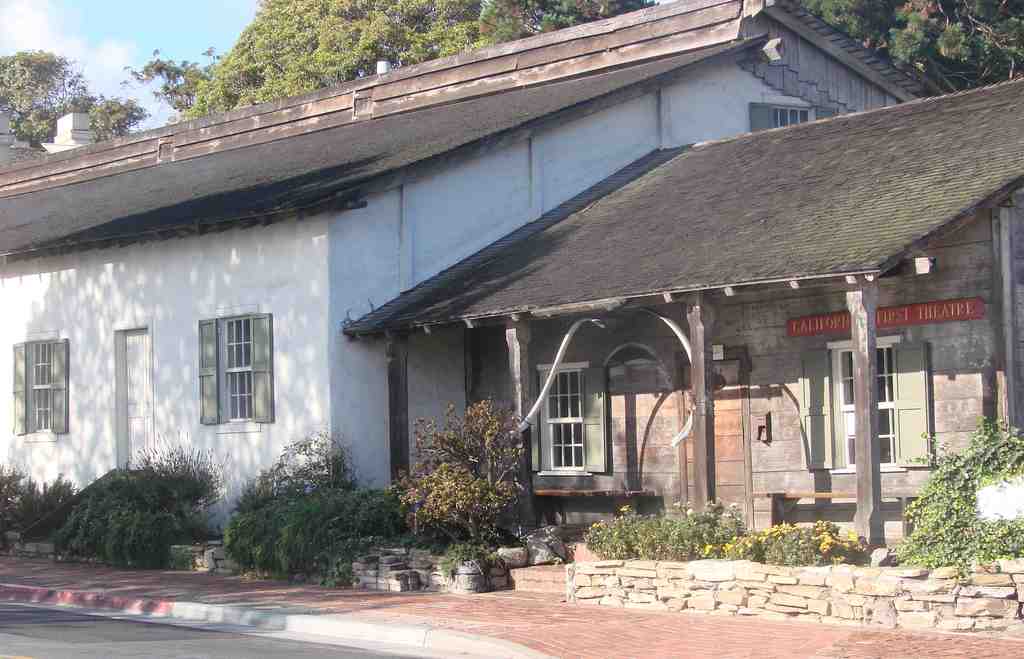
To spot the First Theater in California, look just ahead for a rustic building with faded wooden beams, pale adobe walls, a shingled roof, and a cozy porch complete with a sign that says “California First Theatre” right above the green shutters.
Close your eyes for a moment-picture Monterey in the 1840s: salty sea air, muddy roads, sailors laughing their way back to shore, and this humble little building rising up through the chilly mist. Imagine the sound of boots stomping on well-worn wooden floors, as Jack Swan, a daring English seaman, turns a shipwreck’s planks into what would soon become California’s very own time machine-a place where stories would leap off the stage.
First, this was the rowdiest stop a sailor could hope for! In 1846, Swan put his home-built boarding house to use, letting sailors prop their feet by the fire and swap tales for a mug of grog. On wild Monterey nights, this space was alive with laughter, singing, and the clink of glasses. The partitions between rooms could be raised or lowered-so it was perfect for noisy gatherings or a bit of privacy after a long night. But even the best parties get shut down sometimes: the local mayor, Rev. Colton, decided that all these saloons-including Swan’s-were getting a bit too much for polite company.
But where do you turn when your tavern dreams are dashed? Why, the theater, of course! Swan wasn’t about to let Monterey be boring. In 1847, he expanded his boarding house, making a long, sturdy adobe rectangle. Suddenly, this place was echoing with completely new sounds: not the shanties of sailors, but lines from Shakespeare, jokes, and cheers. Four soldiers from Santa Barbara teamed up with Monterey locals, putting on the first ever paid theater shows in California right where you stand. They called it the Union Theatre-imagine the flicker of whale oil lamps, the makeshift stage with its quirky wooden curtain that swung up on hinges, and programs handwritten by candlelight. If you think a Broadway ticket is pricey, in 1848, it cost a whopping $5-a fortune back then! But it only took one successful show to make Jack Swan a legend.
In the decades to follow, this building lived a dozen different lives. It was a whaling station, complete with a lookout tower, a drug store, a gift shop, and a cozy tea room. In the little wooden wing, Fred Smith kept a “curio shop,” crammed full of oddities and trinkets for curious passersby, while the main adobe quietly fell asleep, waiting for someone to wake its stage again.
Wake it they did. In the early 1900s, inspired locals (and some famous names like William Randolph Hearst) bought the ramshackle theater and gave it to the state. After a heroic restoration, the doors flung open again in 1920, this time as a museum-imagine dusty artifacts, centuries-old relics, and the clatter of teacups as visitors sipped in the shadow of ancient stories.
But the show truly went on in 1937: a new troupe took the stage, reviving old melodramas with a wink and a cheer, drawing crowds from San Francisco all the way down to Santa Barbara. For over half a century, the Troupers of the Gold Coast filled weekends with laughter, drama, and a little bit of mayhem. This place was known as the only “legitimate theater” for miles-a fact that surely brought a smile to Jack Swan’s ghostly face. Eventually, time called for another pause as the old building needed repairs, but the spirit of performance never faded.
Today, the First Theater is coming back to life. Thanks to passionate volunteers and the Monterey State Historic Park Association, you can walk past its thick adobe walls just as sailors, gold prospectors, and actors once did. Maybe, just maybe, you’ll catch a hint of applause in the air-or the echo of a wooden curtain swinging high, ready for the next act.


