
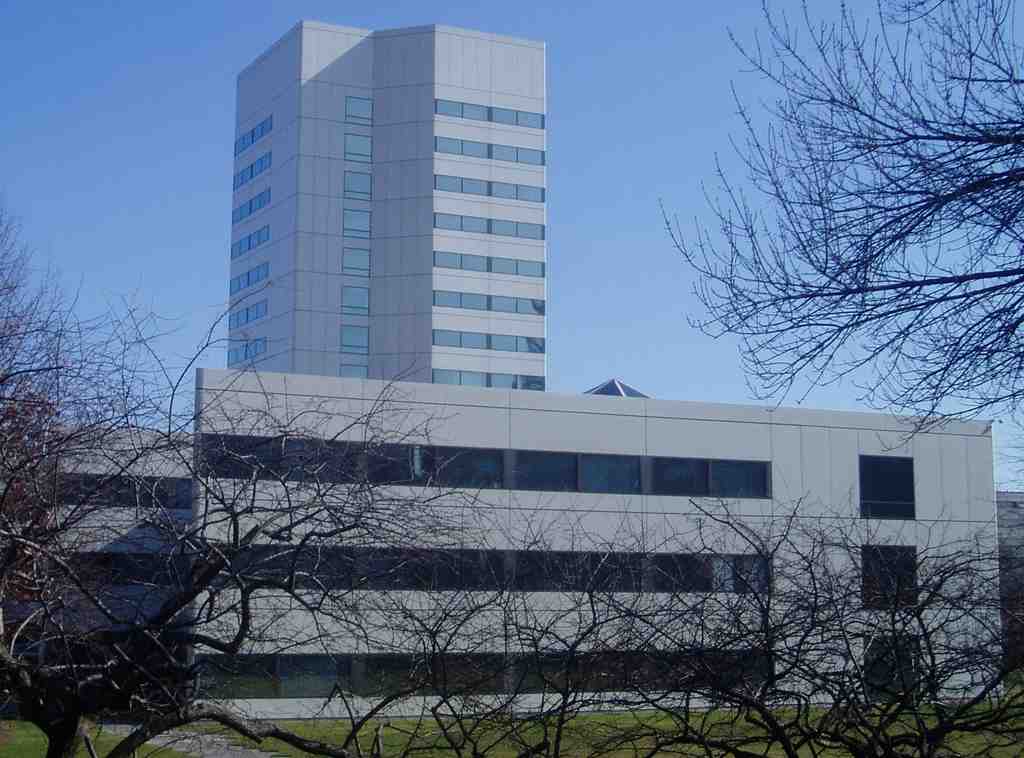
Look just ahead for a modern, almost fortress-like white building-its sharp angles and glassy windows rise above a sprawling base, catching the sun while towering over the surrounding trees.
So here you are, standing at the nerve center of health care itself: Johnson & Johnson’s global headquarters. Step back for a moment and imagine New Brunswick in 1886-a gritty little American city pulsing with railroad tracks, horse carts, and factory whistles. It was here, in a humble red-brick building not far from where you’re standing, that three brothers-Robert, James, and Edward Johnson- rolled up their sleeves, brought in a team of just fourteen workers, and set out to revolutionize medicine. Back then, surgery was a gamble, and infection was practically a coin toss-until J&J started cranking out packs of ready-to-use sterile dressings. You could say they were the original “clean freaks.”
Picture railroad construction crews, working miles from the nearest doctor, clutching the world’s first commercial first aid kits-packed right here, with instructions for what to do when someone inevitably banged a thumb or… much worse. The Johnsons saw a world longing for safety and healing, so they made baby powder, Band-Aids to patch up the world’s scrapes, Tylenol for headaches, even maternity kits for families giving birth at home-serious multipurpose problem-solvers in a cardboard box.
As New Brunswick grew noisier and busier, Johnson & Johnson’s campus grew too. By 1894, they’d gone from a back-room startup to a local empire, churning out goods from 14 buildings and putting hundreds of women and men to work. When doctors faced the devastating Spanish-American War or the deadly 1918 flu, J&J loaded up trains and trucks with surgical dressings, epidemic masks-even a trauma stretcher for field medics-sometimes giving it all away to help save lives.
Now, flash ahead to the roaring ‘20s-one of the Johnsons’ employees mixes tape and gauze, a simple idea that becomes the Band-Aid. By the time World War II erupts, the company is global, and its workers are churning out supplies for soldiers around the world, while J&J calls for dignity on the home front: better pay, fairer hours, a belief that businesses should answer to their communities as much as their shareholders. Hard to imagine a Fortune 500 CEO today penning letters to the President on workers’ rights, but there you go.
And still, they kept inventing-baby oil, allergy medicine, the first disposable contact lenses-while surviving the ups and downs of American business. But this shiny white tower, towering above New Brunswick today… well, it hasn’t seen only sunshine. J&J faced its crucibles-the infamous Tylenol tampering crisis in the 1980s, when poisoned bottles forced the first-ever nationwide recall, changed packaging forever, and made corporate America rethink responsibility. Lawsuits over hip implants, mesh products, and talcum powder kept their lawyers busy through the new millennium.
But the company always found a way to brush off the dust. Today, Johnson & Johnson stands as one of the world’s largest and most valuable health care companies-138,000 employees, $88 billion in annual revenue, and a credit rating as rare as a unicorn: AAA. They make high-tech surgery robots and breakthrough medicines, and their COVID-19 response reached across the globe-with plenty of drama, scientific race, and government contracts in tow.
As you look up at those sleek glassy windows and the sharp white corners, remember: this building grew from the modest dreams of three brothers whose greatest invention, perhaps, was a sense of duty to the world beyond their walls. In this city, and across the globe, millions are patched up, soothed, and healed thanks to a company born right on these streets. Not too shabby for what was once a small headcount in a dusty New Jersey factory-now a giant, still grappling with cures and with conscience.
To delve deeper into the business segments, finance or the corporate governance, simply drop your query in the chat section and I'll provide more information.


