

Denver Audio Tour: Mile High Mysteries & Monuments
Glass towers glitter under mile-high skies, but Denver’s real stories run deeper than any skyline. Beneath the rush of the 16th Street Mall and behind the façades of civic giants, echoes of courtroom battles, architectural gambles, and whispered intrigue await. This is a self-guided audio tour built for explorers hungry to unlock secrets in plain sight. Walk at your own pace and listen as the city’s pulse reveals what most visitors never notice. What explosive decision at the Colorado Supreme Court once changed the shape of justice overnight? Who roamed the shadowy hallways of Brooks Tower in the midnight hours, leaving behind an unsolved mystery? Why does a controversial blue bear keep watch over the Colorado Convention Center—and what message is it really sending? Follow these streets and corridors to feel Denver’s intensity, its ambition, and its wild transformations. Begin now and peer beneath Denver’s polished surface—adventure is waiting just below.
Tour preview
About this tour
- scheduleDuration 120–140 minsGo at your own pace
- straighten5.0 km walking routeFollow the guided path
- location_onLocationLakewood, United States
- wifi_offWorks offlineDownload once, use anywhere
- all_inclusiveLifetime accessReplay anytime, forever
- location_onStarts at 16th Street Mall
Stops on this tour
lock_open 3 free previews · 11 unlock with purchase
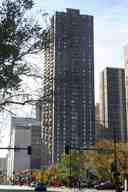
Look up and straight ahead to spot Brooks Tower-a tall, sturdy, brown skyscraper with a sleek, modern look, its balconies carved into the sides like the notches in a giant’s…Read moreShow less
Look up and straight ahead to spot Brooks Tower-a tall, sturdy, brown skyscraper with a sleek, modern look, its balconies carved into the sides like the notches in a giant’s comb. Alright, close your eyes for just a second and let’s step back to Denver in the late 1960s. Can you hear the construction hustle and bustle? Right on this very spot, where Brooks Tower stands tall now, there once sat Denver’s Mining and Exchange building, a relic of wild-west gold rush days. By the late ‘60s, Denver wanted a new symbol of modern living, a bold leap into the future-and wow, did Brooks Tower deliver! Imagine the excitement rippling through the city as this sleek, cylindrical tower began to rise, all thanks to architect Max Ratner and developer Aaron Brooks, whose company put their name on what was to become Denver’s very first high-rise residential building. The year was 1968. The Beatles were on the radio, miniskirts were all the rage, and suddenly, Denver had a building so tall-420 feet, 42 stories-that it looked like the city had sprouted its own mountain overnight. It wasn’t just any apartment building, either. When Brooks Tower opened, it was the tallest building in Denver and, believe it or not, the entire Rocky Mountain region. The Denver Post boasted about the transformation: this area went from a “shoddy slum” to a “busy zone,” practically overnight, powered by the hope and hustle inside that growing tower. Of course, nothing as ambitious as Brooks Tower goes up without a bit of drama. Picture storm clouds rolling in, not just weather but labor strikes, contract disputes, last-minute design changes-at one point, there were so many arguments and delays that folks probably started joking, “Gee, do you think the building will be finished before the Beatles break up?” Even after 215 days of construction extensions, Brooks Tower finally opened its doors in 1969 with a big sigh of relief. Now, let’s talk style-do you see how the building curves and bends, those wavy balconies lining the sides? Ratner’s modern design was all about panoramic views so, whether you were gazing out at city lights or the distant Rocky Mountains, you were living the high life. In fact, for years these were some of the most coveted views in Denver. But Brooks Tower has always been about more than just the skyline. It's got plenty of stories. In the mid-1970s, the second floor was transformed into the Ebbets Field music club-an absolute hotspot for musicians and fans alike. For a brief, magical few years, you might have heard the thumping bass of a live band rolling out through the windows, drawing crowds and landing Ebbets Field the title “Club of the Year” from Billboard magazine two years running! By 1995, the winds of change blew again, turning the once-rental apartments into condominiums in a massive transformation-the largest in Denver at the time. Some say 517 units, others claim more. The truth? It depends who you ask! Since then, life in Brooks Tower has included everything from morning swims in the outdoor pool to big debates about plumbing. In fact, a few years back, just updating those pipes took a whopping $33 million and several years, all without having to send everyone packing-talk about teamwork. And just to add a touch of old-time mystery, next time you pass the gardens out front, look for the twelve-foot-tall copper statue of the “Old Prospector”-survivor of Denver’s mining days, quietly watching over the hustle and flow of modern city life. So next time you look up at Brooks Tower, remember: it stands on layers and layers of Denver’s bold spirit-a little classic, a little chaos, and a whole lot of character. Eager to learn more about the architecture, condominium conversion (1995) or the notable events and renovations? Simply drop your inquiries in the chat section and I'll provide the details you need.
Open dedicated page →
Show 11 more stopsShow fewer stopsexpand_moreexpand_less
Look ahead for a wide, low building with curved lines and a series of round panels floating above the stage-if you spot a structure that looks more like a spacecraft landed in the…Read moreShow less
Look ahead for a wide, low building with curved lines and a series of round panels floating above the stage-if you spot a structure that looks more like a spacecraft landed in the middle of Denver than a concert hall, you’re in just the right place! Welcome to the legendary Boettcher Concert Hall, where the sounds of Colorado’s greatest symphonies come to life! Imagine: It’s 1978, bell-bottoms are in, disco is king, and Denver is about to make music history. Architects from Hardy Holzman Pfeiffer Associates have just built something no one in America had ever seen before-a symphony hall designed “in the round,” where music swirls all around you and almost every seat is shockingly close to the stage. If you’ve ever dreamt of sitting practically in the orchestra’s lap, this is your dream come true! Eighty percent of these custom steam-bent wooden seats are just 65 feet or less from the musicians-so close you might just catch a flying violin bow or two (just kidding, the musicians have great aim). Inside, your ears might tingle-Boettcher was crafted like an acoustic playground. Forget boring flat walls; everything is tilted and wavy to bounce sound around, making sure every “bravo!” or trumpet blare dances through the space. See those decorative bands wrapping around the room? They’re not just for show; acoustics experts call them “undulating facias”-which is just a fancy way of saying, “sound bouncers.” Above, those peculiar flying saucer-like discs form the “canopy,” each one carefully placed to beam music perfectly to your ears, and to keep musicians from feeling left out on stage. If that’s not enough, underneath the stage they carved out an “acoustical moat,” where low notes rumble and echo like a secret river of sound. But wait, there’s drama: Boettcher got mixed reviews early on, partly because it was so huge you could accidentally start a game of hide-and-seek with the audience. At just over 2,300 seats, it was often half empty, which made the acoustics a little unpredictable-one night, every note sparkles, the next, some sections sound like they’re underwater. In 1993, specialists swooped in, upgraded the magic with higher seatbacks, new reflectors, and some sneaky curtains to tune the room for any performance-even during a show. Boettcher is home to the Colorado Symphony, who rehearse, perform, and fill these seats with music-loving fans. Over the years, the city debated whether to revamp, shrink, or even demolish this one-of-a-kind hall, with rumors swirling about outdoor venues and classroom makeovers. But for now, Boettcher stands, humming with history, brimming with sound, and-if you listen closely-maybe just a little bit of 1970s swagger. Yearning to grasp further insights on the design, tenants or the potential closure? Dive into the chat section below and ask away.
Open dedicated page →Right in front of you is a grand, two-story stone building with a row of arched windows and ornate iron gates, tucked behind neatly trimmed trees-just look for the solid,…Read moreShow less
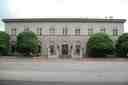
Right in front of you is a grand, two-story stone building with a row of arched windows and ornate iron gates, tucked behind neatly trimmed trees-just look for the solid, fortress-like structure with “UNITED STATES MINT” engraved above the main entrance to spot it! Welcome to the Denver Mint, where making money is a literal job and not just something your grandparents say when you ask for an allowance! Imagine, it’s the early 1900s-the air thrums with the distant clang of metal on metal, and inside these imposing walls, millions of coins are being born, shimmering and new, ready to jingle in the pockets of Americans from coast to coast. But before this became the grand palace of pennies you see today, Denver’s first dabble in minting wasn’t the government-it was those wild and wooly days of the Pikes Peak Gold Rush. Picture rugged prospectors trudging into town, boots caked in gold-laden mud, nuggets hidden in their pockets. Clark, Gruber & Co. set up shop in a simple two-story brick building back in 1860, where they’d take that gold dust and turn it into shiny $10 coins faster than you could say “Pikes Peak or Bust!” These coins had actual images of Pikes Peak and “Pikes Peak Gold” wrapped around the top, a bold local flex before hashtags were a thing. Some coins even had the Goddess of Liberty with “Clark & Company” gleaming in her tiara-a little bit of Denver pride stamped right onto every piece. Now, if you think you’ve had a productive week at work, imagine them minting about $18,000 worth of gold coins per week by hand! That’s a lot of bling for a city still figuring out where to get a decent cup of coffee. The federal government decided enough was enough and bought Clark, Gruber & Co.’s entire building and minting equipment in 1863. But, in a twist worthy of an old Western, they didn’t actually make coins for a while-just gold bars. The reason? Too many rowdy outlaws and rebel ruckus on the trails during the Civil War. Instead, the Denver Assay Office would melt, weigh, and stamp raw gold, sending those bars back to miners with an official stamp and a hopeful pat on the back. It wasn’t until way later, after a few false starts, lots of gold, and a few ambitious business plots, that Congress finally blessed Denver with official branch mint status. By 1904, construction was wrapping up on the incredible building you see now-modeled after an Italian palace, complete with Pikes Peak granite and roof tiles all the way from Italy. In 1906, the first clangs of coins echoed out, and Denver was off to the races, minting gold and silver coins by the millions. By the first year, they’d produced 167 million coins-talk about making it rain! If this place feels sturdy, that’s because it was once the city’s most substantial building, meant to be as tough as any mountain prospector. Step closer to the lobby (if only you could-tours are limited and security is tight!), and you’d find colorful murals showing the drama of mining and the bustle of commerce, painted by Vincent Aderente. Over the years, the Denver Mint has not only been a fortress of finance but a Hollywood star. Its money appeared in the movie “Cliffhanger,” and it had cameo roles in TV’s “The Wild Wild West” and “Maverick.” There’s even a song named after it-“Lucky Denver Mint” by Jimmy Eat World, just in case you felt like dancing while you save your change. Today, more than 50 million coins roll out of here every single day, destined for pockets, piggy banks, and probably your couch cushions. So next time you spot a coin with a little “D” beneath the date, remember you’ve stood at the gates of the world’s largest money-maker-where history, drama, and a little touch of Denver gold come together in every shiny cent!
Open dedicated page →You’ve made it to the world-famous Denver Art Museum-where art and architecture compete for your attention and, quite frankly, for your awe. As you stand here, take in the…Read moreShow less
You’ve made it to the world-famous Denver Art Museum-where art and architecture compete for your attention and, quite frankly, for your awe. As you stand here, take in the museum’s striking silhouette. Does the building look a little...extra? That’s because you’re looking at the handiwork of two superstar architects. On one side, there’s the geometric, castle-like Martin Building, dreamed up by Italian legend Gio Ponti in 1971. On the other, the angular, rocket-ship Hamilton Building, designed by Daniel Libeskind and finished in shimmering titanium in 2006. Ponti wanted his creation to defend art like a fortress, while Libeskind preferred to shoot for the peaks-literally, his inspiration came from the sharp forms of the Rocky Mountains, and none of the building’s planes run parallel. It’s the only place in Denver where the walls are so unpredictable, you might actually get lost walking in a straight line. But how did a city famous for cowboys become a hub for world-class art? Let’s rewind to 1893. Picture a tiny group called the Denver Artists Club gathering in a borrowed building, probably arguing over who gets the closest seat to the fireplace during those chilly Colorado evenings. That club grew and grew, changing its name and homes, until, in 1923, it officially became the Denver Art Museum-DAM. Over the years, local donors, from Mrs. George Cranmer to Delos Chappell, fueled its rise. Talk about a grassroots movement. By the 1950s, it gained such momentum that it scored a massive donation from the Kress Foundation-on one condition: build an entirely new space. Money troubles? Check. Failed bond election? Double check. But Denverites united, put their heads (and wallets) together, and built what’s now the Bach Wing. Enter Gio Ponti in 1971-a man who had never set foot in Denver before, but apparently liked triangles, towers, and a million glass tiles. He declared, “Art is a treasure, and these thin but jealous walls defend it.” This North Building (now the Martin Building) is his only completed project in the States. Denver wasn’t done upping the ante, though. In 2006, the Hamilton Building soared onto the scene, adding 146,000 square feet of display space. Some folks loved it, some critics said, “This is a great sculpture, but a tricky place to hang art.” Well, at least you’ll never get bored, right? But wait-there’s more. In 2018, the whole campus underwent a jaw-dropping $150 million renovation. New galleries, new dining spots, a fancy welcome center, and more natural light poured in thanks to those carefully placed skylights. Hard to believe the original building was made for 100,000 visitors a year. Now, it’s seeing nearly nine times that, with over 850,000 annual guests-and that’s a lot of footsteps echoing through these angular halls. Inside, you’ll find more than 70,000 works across every century and continent. There’s something for everyone: ancient ceramics from Mesoamerica, striking African jewelry and textiles, contemporary American Indian art, and a collection of Latin American works that’s one of the largest in the country. The Impressionist collection alone would make even Paris a little jealous-Vincent van Gogh, Claude Monet, Berthe Morisot, and more. Feeling like you want some homegrown stories? Head to the Petrie Institute for Western American Art, where the American West comes alive with heroic landscapes, bronzed cowboys, and wild tales in oil and bronze. Let’s not forget the DAM’s beloved learning centers, including interactive family zones and even special mornings for guests with sensory needs. There’s something for everyone-from kids with sticky hands to art historians with notebooks. And if you catch a whiff of something delicious, it might be from one of the new restaurants, where the art of food is celebrated as much as the paintings on the walls. The Denver Art Museum is more than a building. It’s a living, sometimes quirky, sometimes bold, ever-evolving celebration of creativity and community. Don’t just stop outside-heading inside, you’ll see why people joke that it’s the only place in Denver where the architecture deserves a selfie just as much as the art. Now, let’s continue to our next stop, where books and stories reign supreme! If you're keen on discovering more about the collections, selected collection highlights or the funding, head down to the chat section and engage with me.
Open dedicated page →To spot the Colorado Supreme Court, look ahead for the Ralph L. Carr Colorado Judicial Center-a sleek, modern four-story building, standing right at 2 East 14th Avenue near the…Read moreShow less
To spot the Colorado Supreme Court, look ahead for the Ralph L. Carr Colorado Judicial Center-a sleek, modern four-story building, standing right at 2 East 14th Avenue near the shining gold dome of the State Capitol. Welcome to the highest court in Colorado, where hard decisions are made and, occasionally, some serious legal drama unfolds-no gavels thrown, just big rulings! Imagine it’s 1876, and Colorado has just become a state. In this very spot, the Supreme Court of Colorado is carved into existence, its justices chosen for their sharp minds by the Governor from a handpicked list-though surviving the “interview” is just the start; every justice must pass a public vote after two years before settling in for a decade… and everyone retires by 72. If you stand here when a major hearing is underway, you might notice an air of tension, just waiting for something momentous to happen. You’re catching this landmark in its modern form, the Ralph L. Carr Colorado Judicial Center, opened in 2013-named for a governor known for standing up for justice during World War II. The old courthouse, right across the street years ago, had a bold “floating” design: a box-like structure held aloft by two mighty square columns. It hovered above a 150-foot mural by Angelo di Benedetto, a colorful tapestry of lawgivers and legends-picture Hammurabi, Moses, and even Martin Luther King Jr., watching over the city’s legal heart. And here’s a neat bit: under that mural was a glass window peering straight down into an underground law library, so students could spot the painted heroes above as they debated tricky cases below. Sadly, the mural was removed before the old building was torn down-or as some say, “imploded in dramatic style.” Where it ended up? Still a mystery. Inside today’s center, you won’t find just grand pillars and stately chambers-you’ll step into a modern theatre for justice, with a Supreme Court courtroom perched nobly on the upper floors. Behind two giant brass doors that look like something Indiana Jones might tussle with, justices gather in a semicircle to decide the most important questions in Colorado. Their powers are sweeping: they review the toughest appeals and take on cases most other courts would shy away from, but only 6% of the many appeals submitted even get a look! Imagine being one of the select cases to make the cut-cue the dramatic music. Not only does the court rule over tricky criminal cases and feisty election battles, but it holds original power over attorney discipline, legislative advice, and even refereeing between squabbling government boards. You might say the Supreme Court is Colorado’s top referee-whistle and all. Many famous cases have passed through here-the repeal of Colorado’s Taxpayer Bill of Rights, the battle for same-sex marriage recognition, and even the 2023 ruling about presidential eligibility that made national headlines before being reversed by the U.S. Supreme Court. In 2024, they ruled that ski resorts can’t just wave away all responsibility with some fine print on your pass. So next time you ski, thank those robed justices! Justice here isn’t just about robes, law books, and serious faces, though. Pay is set every year by the legislature-so, no, none of these legal eagles are buying private islands any time soon. Even if they did, you can bet there’d be some sort of appeal. All the court’s opinions get published for the world to read, from the days of Colorado Reports up to today’s online slip opinions. The sense of responsibility is everywhere-decisions here ripple out into every part of Coloradan life, from bag fees in Aspen to oil drilling on the Western Slope. So, take a second and imagine the important choices made daily inside this building. Each one shapes Colorado’s story just a little more, making this stop not just the top of the legal pyramid, but one of the state’s most influential crossroads for truth and change. Exploring the realm of the powers and duties, membership or the court building? Feel free to consult the chat section for additional information.
Open dedicated page →To spot the Colorado State Capitol, just look ahead for a grand gray building topped with a massive, glittering golden dome, standing proudly at the top of a long red…Read moreShow less
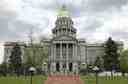
To spot the Colorado State Capitol, just look ahead for a grand gray building topped with a massive, glittering golden dome, standing proudly at the top of a long red staircase. Here you are, standing before the majestic Colorado State Capitol, and I bet you can’t miss that dome gleaming up above you-that’s not just paint, that’s real gold leaf catching the sunlight! Imagine it’s the late 1800s: the streets are muddy, horses clopping past as workers haul huge blocks of Colorado white granite up to build this mighty structure. The blueprints were designed by Elijah E. Myers, the same architect who built other state capitols, but this one had to capture the wild dream of Colorado-so they made sure the Capitol sits just higher than the rest of downtown, as if to say, “Yep, we made it!" This place has weathered everything from raucous political debates to desperate gold rush dreamers hoping to strike it rich-literally, since the gold dome was added in 1908 to commemorate those early gold rush days. If you walk up those steps, don’t forget to check out the famous “Mile High” markers: not one, not two, but three bronze markers showing where Denver sits exactly one mile above sea level. The latest one is on the 13th step-now, you can tell your friends you stood exactly 5,280 feet high, and nobody can debate which step is right! Now, close your eyes for a second and imagine stonemasons chiseling away at 24,000 tons of granite hauled in from Gunnison. Inside, you’d find rare rose-colored marble-so rare the entire known supply from the Beulah quarry was used up here, so if you’re a fan of pink rock, this is sacred ground! The floors use white Yule Marble, and if you look carefully at the patterns, you might just see faces peering out at you-people say one spot even looks like George Washington, and another like “Unsinkable” Molly Brown. All around inside are portraits of every U.S. president-Lawrence Williams painted from Washington to George W. Bush, while artists Sarah Boardman and Kirsten Savage took over for the others, hanging their work among the echoes of countless legislative debates. The Capitol survived decades of storms, upgrades, and rallies, with its most recent overhaul blending modern safety into its grand old bones. And here you are, part of a new chapter, standing where people have shaped history for over a century. Isn’t it golden?
Open dedicated page →Look for a tall granite structure with a bronze soldier in a raincoat, boots, and hat holding a rifle-he’s perched high above, watching over you right in front of the State…Read moreShow less
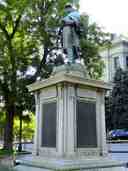
Look for a tall granite structure with a bronze soldier in a raincoat, boots, and hat holding a rifle-he’s perched high above, watching over you right in front of the State Capitol. Now, imagine yourself over a century ago in 1909, when crowds gathered as the shiny new Soldier’s Monument was unveiled right here. This isn’t just any statue-it honors Civil War soldiers, and our bronze cavalryman stands alert, raincoat billowing, boots and spurs ready, gripping his trusty rifle and saber. He’s seen Denver transform all around him, sun, snow, and fancy festivals alike. But in 2020, something dramatic happened-a group of protesters toppled the statue, sending him off on an unexpected adventure, straight into storage! For a while, instead of watching over Capitol-goers, he took a little vacation to the History Colorado Center, earning a new crowd of museum fans. Where he finally lands is still up for debate; maybe he’ll return to guard Lincoln Park with other war heroes, or maybe he’ll mark another corner of this city’s ongoing story. From a proud dedication in 1909 to modern debates, this monument has seen it all-standing tall, then lying low, and now waiting for his next chapter.
Open dedicated page →You’ll spot the Brown Palace Hotel ahead by its striking reddish sandstone and red granite walls forming a sharp triangular corner, with a series of elegant green awnings on…Read moreShow less
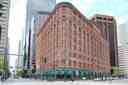
You’ll spot the Brown Palace Hotel ahead by its striking reddish sandstone and red granite walls forming a sharp triangular corner, with a series of elegant green awnings on street level-just look between 17th Street, Broadway, and Tremont Place, and you can’t miss its grand presence. Now, let’s turn back the clock and enter a world of luxury, drama, and just a dash of mischief. Imagine Denver in 1892: horses clip-clop along the roads, the air has a tang of coal smoke, and the city is buzzing about its brand-new marvel-a hotel crafted with fireproof iron, sandstone, and an iron resolve! Henry C. Brown, a man with grand ambitions, picked this very spot and called on architect Frank Edbrooke to create a hotel so unique that even today, its elegant triangular shape is like an architectural exclamation point among the glassy skyscrapers. When it opened, the Brown Palace was Denver’s tallest building, a true “look at me!” moment for the city. Step inside (in your imagination for now) and you’ll find one of America’s first grand atrium hotels-sun streaming down eight stories, echoing with whispers from movie stars, presidents, and even the Beatles. Indeed, The Brown Palace has welcomed the likes of Queen Marie of Romania, John Wayne, and Molly Brown-she checked in just a week after surviving the Titanic, probably in need of some very strong tea. U.S. presidents from Taft to Clinton have all called it home, even if just for a night. But not all the tales here come with golden luggage tags. In 1911, the Marble Bar witnessed a deadly love triangle played out in gunfire, with socialites and politicians drawn into a scandal worthy of a tabloid. Denver’s own elite couldn’t help but gossip about rivals Frank Henwood and Sylvester Von Phul duking it out-while poor George Copeland, caught in the crossfire, ended up in all the wrong headlines. Speaking of surprises, in the 1930s the hotel celebrated the end of Prohibition with the Ship Tavern, ensuring guests could toast in style. Even Hollywood couldn’t resist the charm-Jane Fonda and Robert Redford filmed “Our Souls at Night” here, and writers set tales of time travel and heartbreak in its halls. The Brown Palace remains a living storybook with marble columns, murals by Allen Tupper True, and a skybridge connector to a 22-story annex that joined the party in 1959. So as you gaze at those detailed stones, imagine the deals, dreams, romances, and secrets cooked up behind those green awnings-every granite block has a tale to tell, and this old hotel never runs out of stories or style. And honestly, where else can you brag about bumping into a Beatle, a president, and a ghost-all before lunch? Want to explore the annex, past guests or the murders of 1911 in more depth? Join me in the chat section for a detailed discussion.
Open dedicated page →Look for the tall, pinkish granite skyscraper with a unique curved top-directly ahead, towering between two other sleek buildings, that’s the United Bank Tower, now called the…Read moreShow less
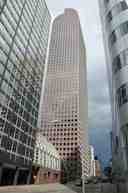
Look for the tall, pinkish granite skyscraper with a unique curved top-directly ahead, towering between two other sleek buildings, that’s the United Bank Tower, now called the Wells Fargo Center. All right, here’s a story to make your heart race faster than a sprint to the last cupcake at a birthday party! The year was 1991, and this soaring tower-nicknamed the “cash register” for its distinctive notch at the top-witnessed one of the most mysterious and infamous crimes in Denver’s history: the Father’s Day Bank Massacre. Imagine a quiet Sunday morning, June 16. The streets are empty, but inside, the air is thick with tension in the hidden corridors and vaults below this very building. At just after 9 AM, a man in a gray sport coat and brown fedora hat steps out of a side freight elevator, falsely claiming to be a bank vice president. Here, in the windowless depths, he’s about to commit a crime that still leaves people scratching their heads. He starts by forcing a lone guard, William McCullum Jr., down to the subbasement, and in a horrifying moment, McCullum is killed. The robber pockets the guard’s pass card, then stalks through tunnels and stairwells-setting off alarms as he goes. It’s a high-stakes game of cat and mouse. Eventually, he forces two more guards into a battery room and shoots them, then finds the fourth guard, who returns at the wrong moment. In total, the intruder fires eighteen shots, hitting every target but one-a chilling mark of expertise. Not a single guard stood a chance-they’d all been stripped of their weapons months before by new policy. Even more unsettling, the killer collects his spent shell casings and tampered with the evidence, leaving just those eighteen bullets as grim breadcrumbs for the detectives. On to the real loot heist! With the guards dispatched, the gunman opens the vault, where six stunned employees are busy sorting deliveries. He orders everyone down and demands the vault manager stuff a satchel with cash. The air is thick with fear-can you smell the acrid tang of adrenaline and vault dust yet? He forces everyone into a tiny “mantrap” room-probably not as fun as it sounds-before making his getaway, locking them inside with nothing but a broken spoon to make their escape. Oh, and here’s where it gets extra dramatic: the employees actually manage to spring themselves loose after twenty long minutes using that humble spoon. Houdini would be impressed. All told, the robber hauls away $200,000-which, believe it or not, is just a fraction of the millions sitting in that vault. Here’s where things get wild: the police soon arrest a retired Denver cop, James W. King, whose life starts to sound like a late-night detective show. There are maps, fake IDs, and a suspicious new safety deposit box-but not a scrap of the missing money or the murder weapon. The trial is a national spectacle, aired live on Court TV. The prosecution paints King as the perfect mastermind, but the defense juggles jaw-dropping alternate suspects-including a neighbor who claims King was mowing the lawn at the exact moment of the crime. Eyewitnesses go back and forth, nobody can agree on a mustache, and at one point the defense tricks witnesses with a photograph of-wait for it-a mustachioed Harrison Ford. Denver’s own Han Solo wouldn’t stick around for this plot! After weeks of nerve-wracking testimony and 53 hours of jury deliberation, King is found not guilty. The verdict stuns the city, and the case goes cold, right here in the “cash register” building you see now. No one has ever found the stolen money, and the whispers about what really happened ping-pong around Denver to this day. Four guards lost their lives, and a cloud of mystery hangs over these streets-proving you can’t always bank on justice, especially when the clues vanish as quickly as the loot. So, whether you’re wondering if the perfect crime is possible or just curious if anyone’s ever found money stashed in a Denver attic, this stop proves the city’s history is every bit as dramatic as a Hollywood thriller. Ready for a grand hotel and a ghost tale next? Let’s keep strolling!
Open dedicated page →



Frequently asked questions
How do I start the tour?
After purchase, download the AudaTours app and enter your redemption code. The tour will be ready to start immediately - just tap play and follow the GPS-guided route.
Do I need internet during the tour?
No! Download the tour before you start and enjoy it fully offline. Only the chat feature requires internet. We recommend downloading on WiFi to save mobile data.
Is this a guided group tour?
No - this is a self-guided audio tour. You explore independently at your own pace, with audio narration playing through your phone. No tour guide, no group, no schedule.
How long does the tour take?
Most tours take 60–90 minutes to complete, but you control the pace entirely. Pause, skip stops, or take breaks whenever you want.
What if I can't finish the tour today?
No problem! Tours have lifetime access. Pause and resume whenever you like - tomorrow, next week, or next year. Your progress is saved.
What languages are available?
All tours are available in 50+ languages. Select your preferred language when redeeming your code. Note: language cannot be changed after tour generation.
Where do I access the tour after purchase?
Download the free AudaTours app from the App Store or Google Play. Enter your redemption code (sent via email) and the tour will appear in your library, ready to download and start.
If you don't enjoy the tour, we'll refund your purchase. Contact us at [email protected]
Checkout securely with 




