
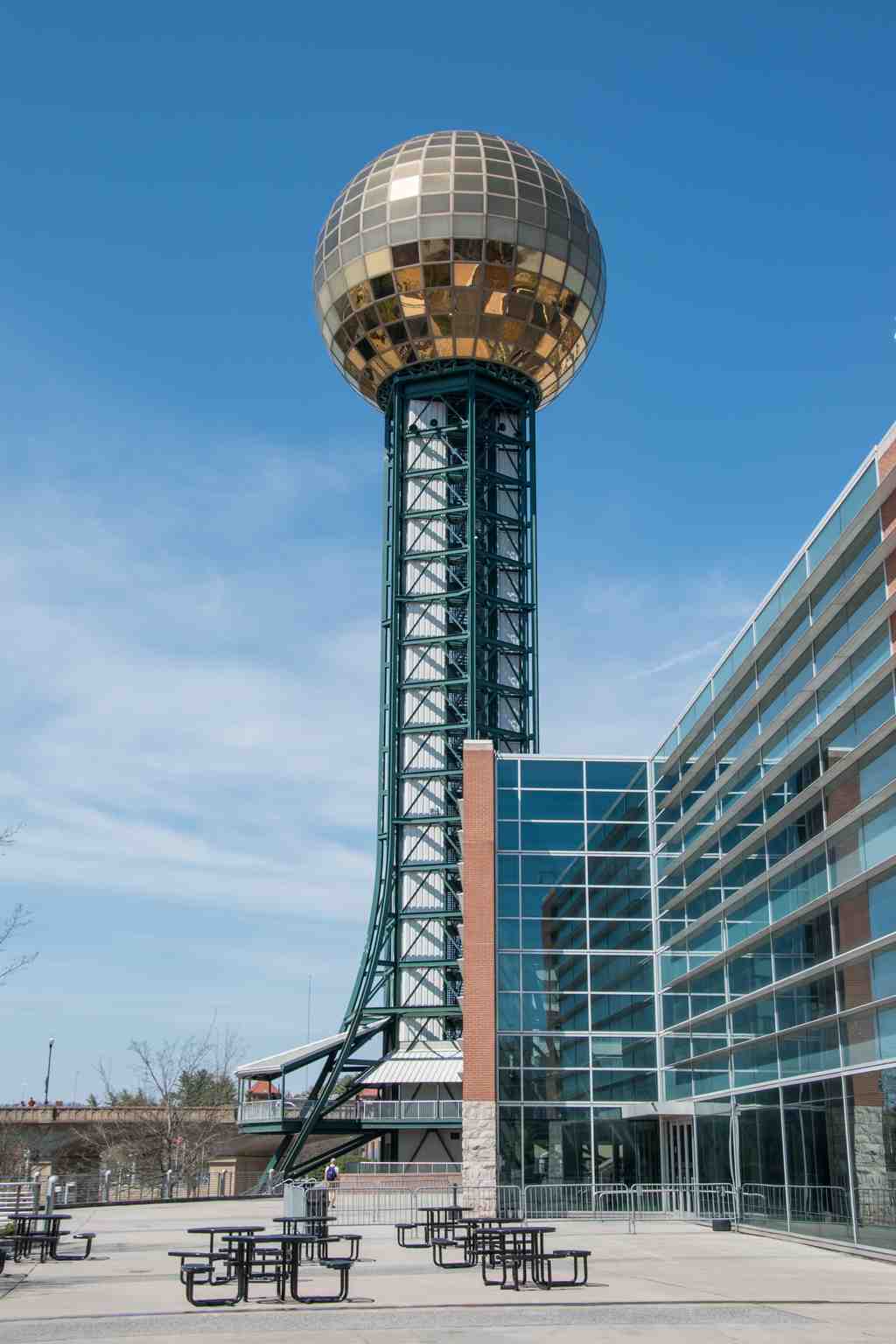
Look to your right, and you will spot a towering hexagonal steel truss column topped by a massive, gleaming glass sphere layered in twenty-four karat gold dust. This two hundred sixty-six-foot monolith is the Sunsphere, affectionately known by some locals as The Lord's Golf Tee. It was built as the focal point for the 1982 World's Fair, an ambitious global exhibition that thrust Knoxville into the international spotlight, though the celebration was rapidly marred by a bizarre and shocking act of vandalism.
Finding a manufacturer to produce those gold-colored glass panes was considered nearly impossible, until a company in New Jersey finally took the job. They meticulously cut the glass into seven different shapes to form the seventy-five-foot sphere you see before you. So, naturally, during the early morning hours of May twelfth, 1982, someone stood outside the fairground and fired a single gunshot right into it. The bullet shattered one of those specialized, gold-dusted panels. No one was ever arrested, and the incident cemented itself in local lore. A completely unsolved drive-by shooting against a giant golden ball. Some residents still jokingly call it the perfect crime.
Inside the sphere, oblivious fairgoers rode the elevator up to eat Sunburgers and drink a rum cocktail known as the Sunburst. The man who orchestrated this expositional glory was a banking magnate named Jake Butcher. Butcher used his political connections, including a friendship with former President Jimmy Carter, to secure millions in federal subsidies. He practically danced through the fair's closing night as the undisputed king of Knoxville.
That reign ended rather abruptly. Just three and a half months later, federal agents raided Butcher's banks, uncovering a staggering web of forged documents and illegal loans. Eight banks failed, wiping out the life savings of many locals. Butcher, the visionary behind the golden sphere, was sentenced to twenty years in prison for federal bank fraud. Quite the hangover from those Sunburst cocktails.
Following the collapse of Butcher's empire, the park became choked with weeds. The Sunsphere sat completely abandoned. The tower mirrors a city constantly battling to save its monuments from ruin, refusing to let them fade, choosing instead to hold onto them with stubborn pride. It fell into such disrepair that an episode of The Simpsons later famously mocked it as a dilapidated wig store called the Wigsphere. While that was purely fictional, the real-life maintenance issues were not. The steel truss frame simply became a premium high-altitude toilet for massive flocks of roosting European starlings. The city eventually had to purchase specialized audio equipment that blasted predator noises to scare the birds away.
Yet, Knoxville fiercely held onto its golden sphere. It survived the starlings, the scandals, and even the activists. In May 2000, nuclear weapons protesters scaled the tower and hung a massive banner reading Stop the Bombs. They occupied the top for three days. It was a strategic choice, using the city's most recognizable structure as a towering political billboard against nearby atomic research facilities. Eventually, the city poured money into renovations, reopening the observation decks so visitors could once again sway slightly in the high winds while looking out over the Great Smoky Mountains.
If you look toward the northern end of the park, you will eventually see an older architectural marvel that dealt with a completely different kind of logistical chaos. But for now, we will leave the golden sphere behind and head toward our next stop at Knoxville station, just a five-minute walk away.


