
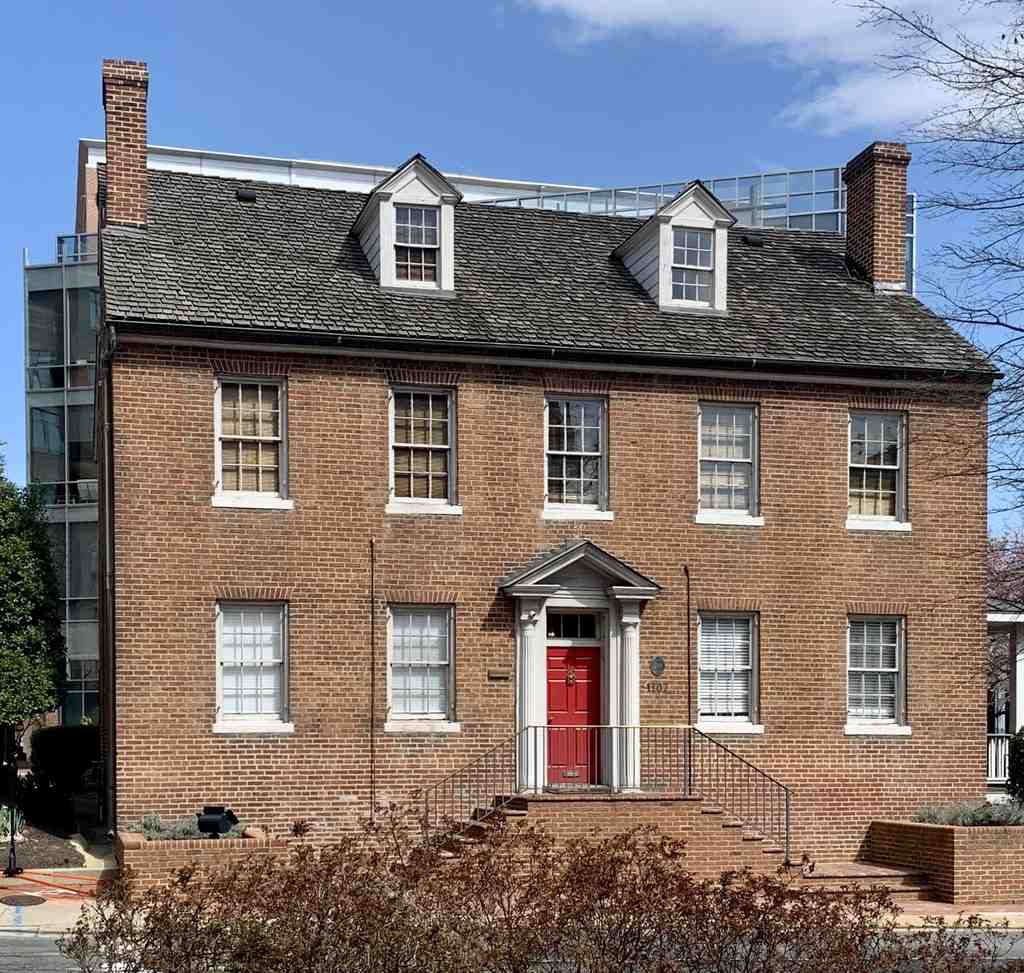
Look at the building right in front of you, a sturdy two-story brick house defined by its shingled roof, dormer windows, and a striking red door framed by white columns. We are standing on the Duke Street Corridor, which back in the mid-1800s was a grim, bustling central artery for the domestic slave trade.
In 1844, a man named Joseph Bruin bought this property. It wasn't just this brick house, but a massive two-acre compound where he imprisoned enslaved people awaiting forced sale to the Deep South. When archaeologists excavated the site, they found a storage pit containing a hoodoo ritual deposit. Hoodoo is a spiritual practice rooted in African traditions, and finding these artifacts tells us the people trapped here were desperately calling on spiritual forces for protection.
Take a peek at your screen to see how careful restoration work preserved this sobering historic brick facade while adapting the space for modern office use.
Bruin gained notorious fame after the Pearl incident in 1848. Seventy-seven enslaved individuals made a massive, desperate bid for freedom by attempting to sail away from Washington on a schooner, a fast-sailing merchant ship, named the Pearl, but they were captured at the mouth of the Chesapeake Bay due to poor weather.
Take a moment to consider the sheer desperation and courage it took for seventy-seven people to board that ship, knowing the brutal consequences of failure. For many, those consequences meant ending up right here.
Furious enslavers sold captives to Bruin, including two teenage sisters, Mary and Emily Edmonson. Bruin forced them to do laundry by day and locked them up by night. Seeing an opportunity, he demanded an outrageous ransom of two thousand two hundred fifty dollars for their freedom, which is roughly eighty thousand dollars today. He tormented the sisters, threatening to sell them to New Orleans as sex slaves if the money was not paid.
Their father desperately traveled north and begged for help. Reverend Henry Ward Beecher rallied his congregation and raised the funds overnight, freeing the girls after seven agonizing months. They went on to college in Ohio. Tragically, Mary died of tuberculosis at just twenty, but Emily became an educator and worked alongside Frederick Douglass in the abolitionist movement. Her harrowing story deeply moved Harriet Beecher Stowe, who used Bruin's real-life jail as the devastating background for her famous novel, Uncle Tom's Cabin.
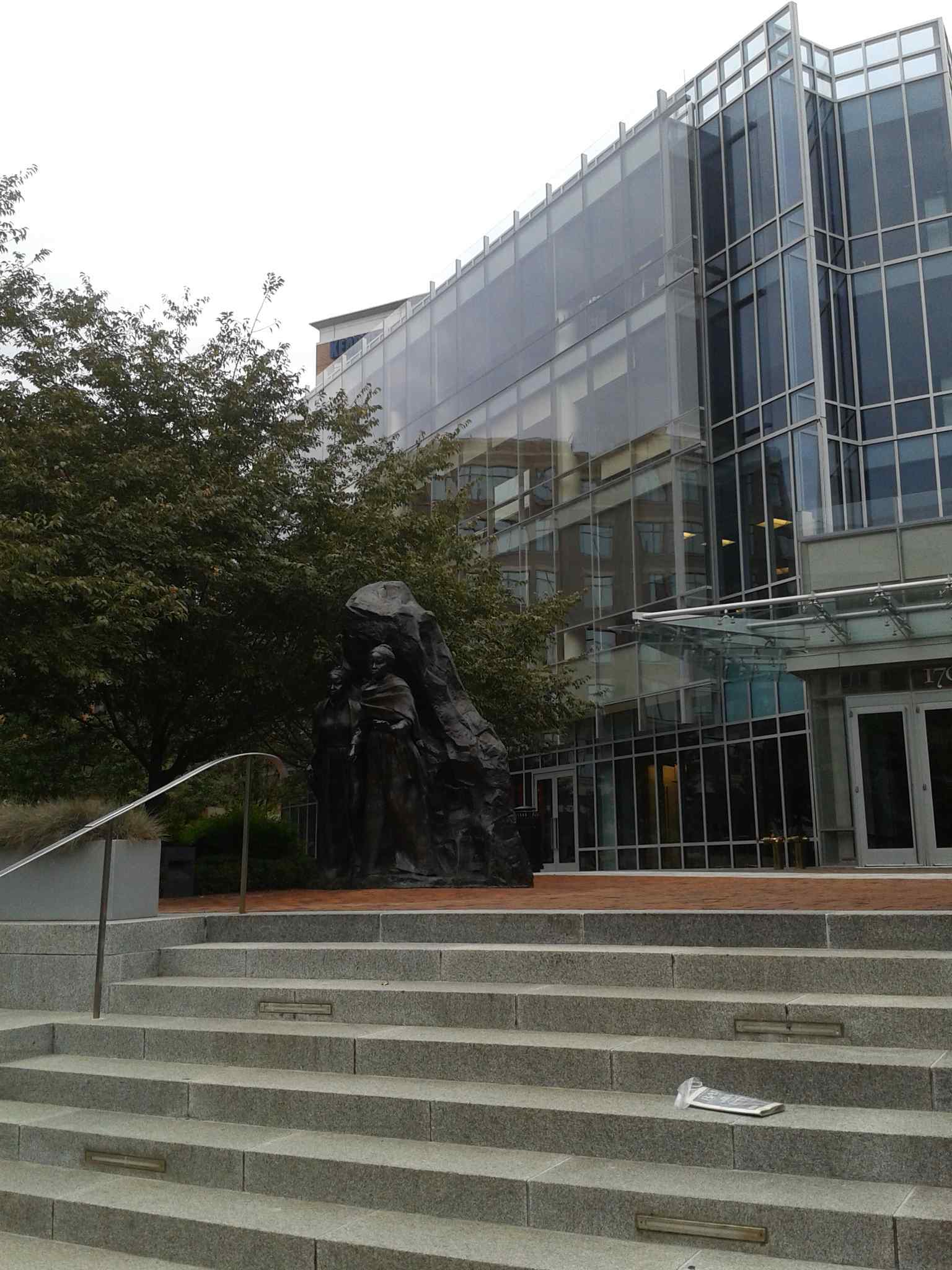
You can see a beautiful tribute to the sisters if you look at the app which shows a ten-foot-tall bronze sculpture by Erik Blome in the plaza right next door, depicting Mary and Emily emerging from a solid mass of metal.
Their story reminds us of the profound bravery of those who resisted the forces trying to break their spirit. Now, let us walk over to Shiloh Baptist Church, which is about a six-minute walk away. The plaza and exterior grounds here are open twenty four hours a day, every day.


