
Right in front of you sits a colossal black steel locomotive with a long cylindrical boiler and a gleaming brass bell perched near its front headlight. Much like the power plant we just left, this machine represents the raw energy that pulled a remote desert outpost into the modern age.
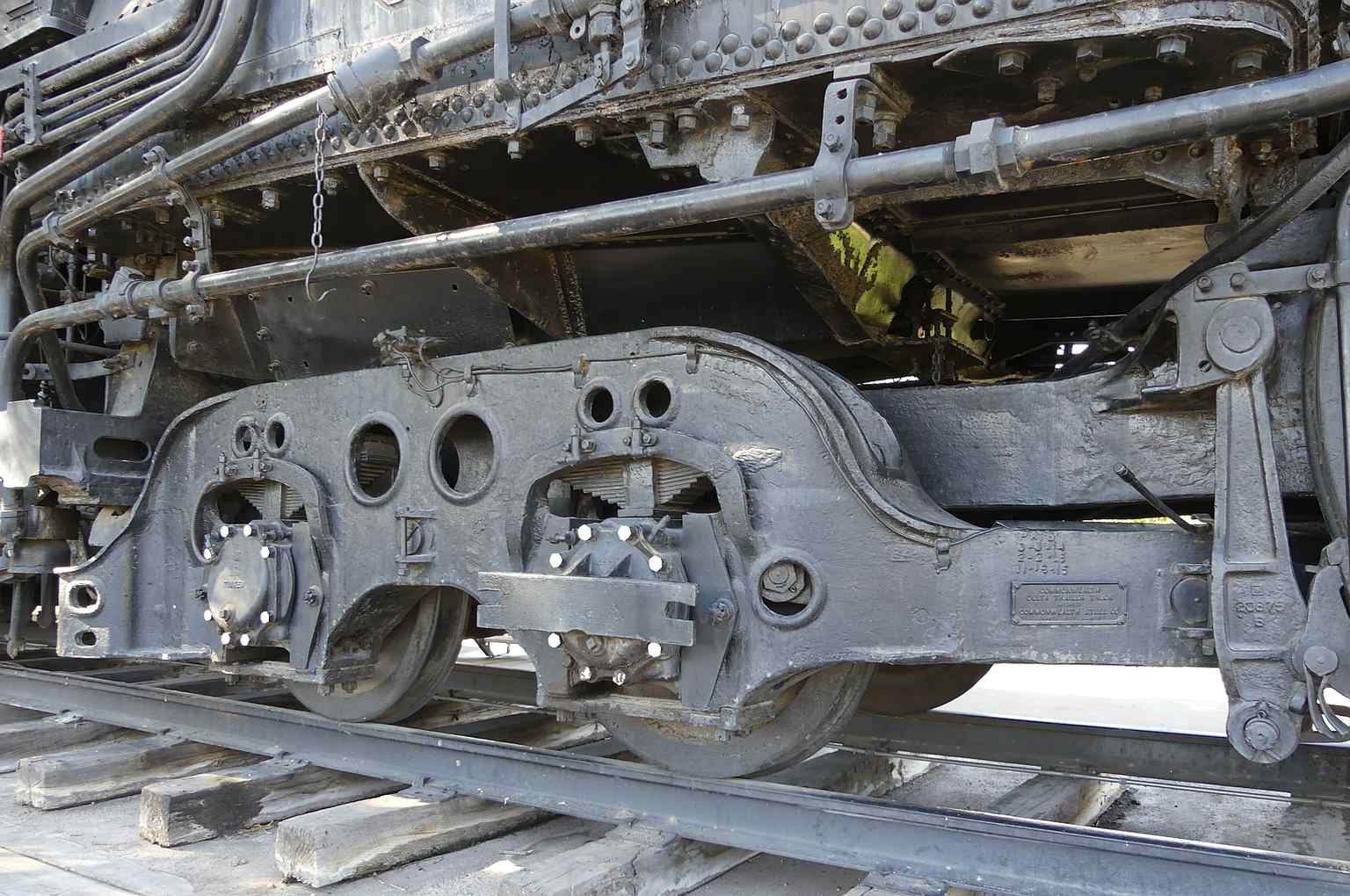
Built in 1928, Atchison, Topeka and Santa Fe 3759 is a heavy mountain type steam locomotive, a 4-8-4 model. That numbers code just means it has four small leading wheels in front, eight massive eighty inch driving wheels in the middle, and four trailing wheels in the back to support its heavy firebox. And heavy is the right word. With its tender... the car behind the engine carrying its fuel and water... the whole thing weighs a staggering 468,800 pounds. Dragging all that iron across the desert meant it had an incredible thirst, requiring twenty thousand gallons of water and over seven thousand gallons of fuel oil just to make its runs. That massive appetite made Kingman an essential water stop on the Los Angeles to Kansas City line. This was the lifeline that kept the town thriving.
By 1953, diesel was taking over, and the reluctant march of progress pushed the 3759 into retirement after over two and a half million miles. But it had one last hurrah. In 1955, it was called out of storage for a special excursion run dubbed the Farewell to Steam. Rail enthusiasts from all over packed the train for a final ride between Los Angeles and Barstow. The demand was so absurdly high that the railway attached a Horse Express baggage car... a car usually reserved for transporting actual racehorses. People happily crammed inside, breathing in the lingering smell of horseflesh just to be a part of history.
One fanatic, a bold cameraman named Al Hawkins, wasn't settling for a window seat. He strapped his tripod to the roof of the locomotive's massive tender, standing tall in the open air as the train blasted through Cajon Pass at speeds nearing one hundred miles per hour. He risked his life to capture color film of the engine's final roar.
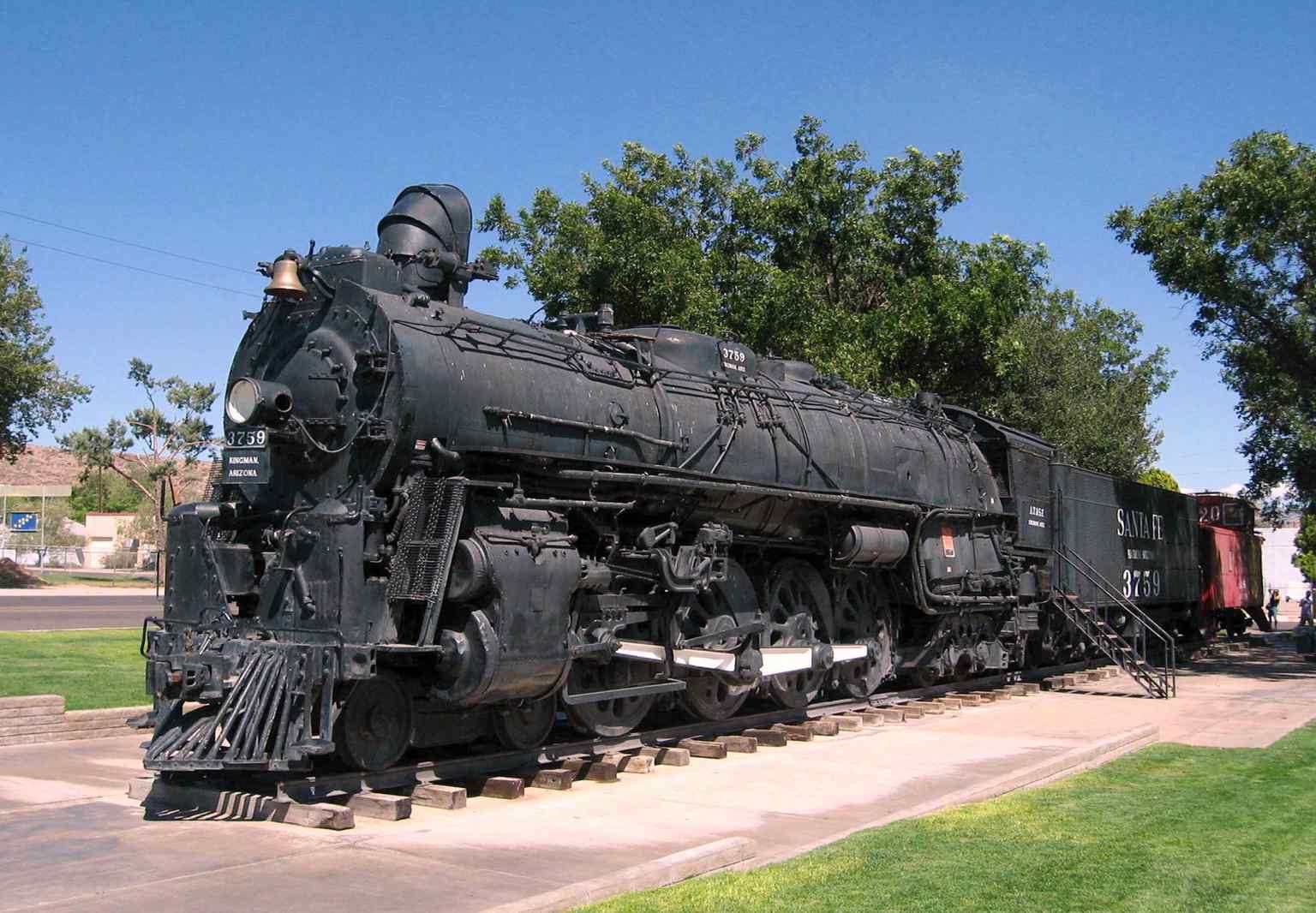
After that wild ride, the Santa Fe donated the engine to Kingman in 1957. Three decades later, in 1987, the town received Caboose 999520, an old mobile office and living quarters for the train conductors, complete with a coal heating stove. To fit the caboose on the tracks behind the engine, the locals did not hire an industrial crane. Instead, the townspeople gathered with thick ropes and hauled this four hundred sixty eight thousand, eight hundred pound beast forward thirty feet purely by hand.
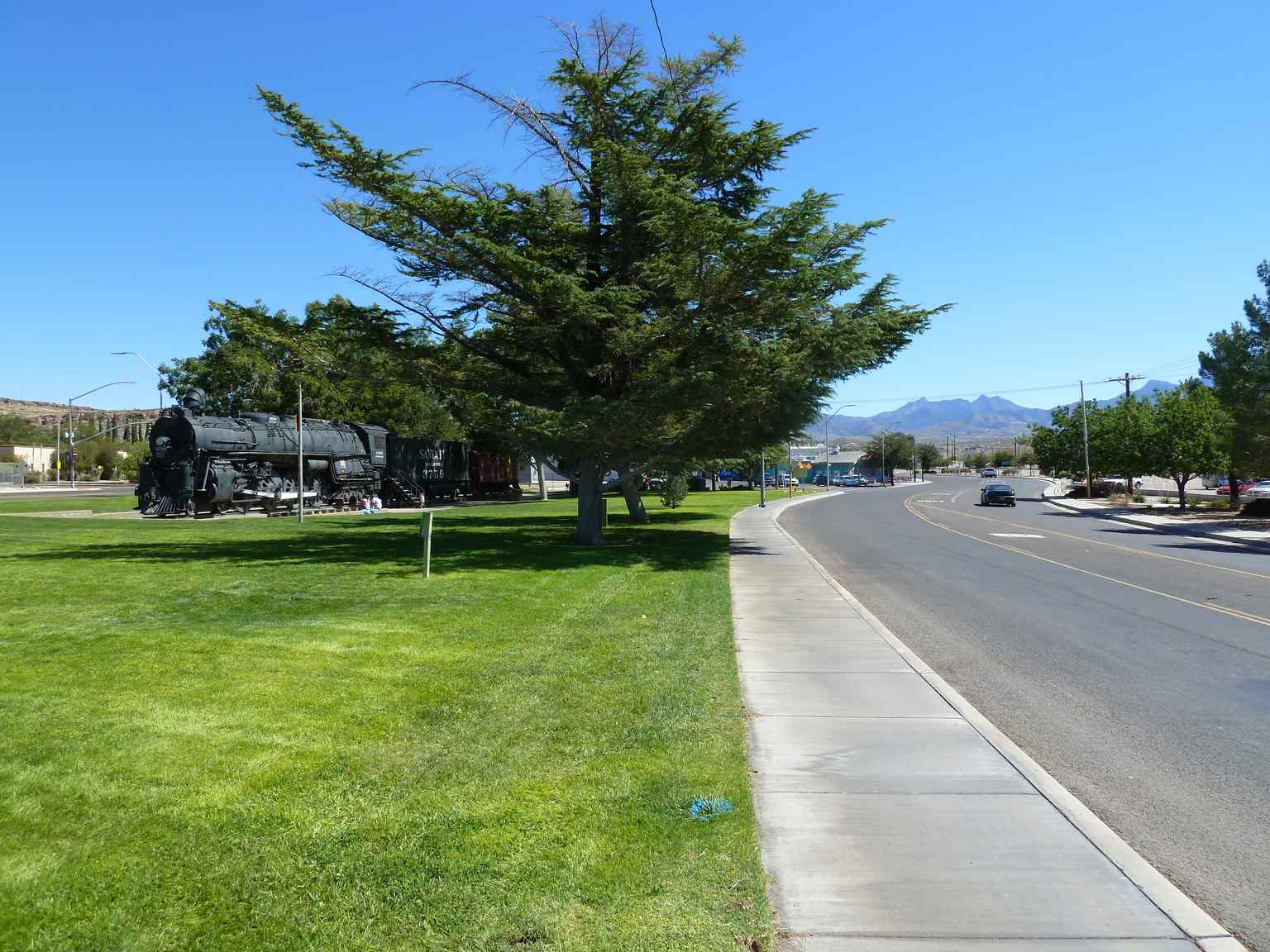
So, when a railway owner proposed leasing the 3759 in 1991 to use as a luxury tourist train near the Grand Canyon, you can guess the town's response. They firmly rejected the offer. Having quite literally pulled its weight themselves, the residents felt a deeply personal bond with the machine. It stays here permanently, a silent iron monument to the era that built Kingman.
Now, we are off to our final stop, a gymnasium that survived against all odds, just a five minute walk away.






