
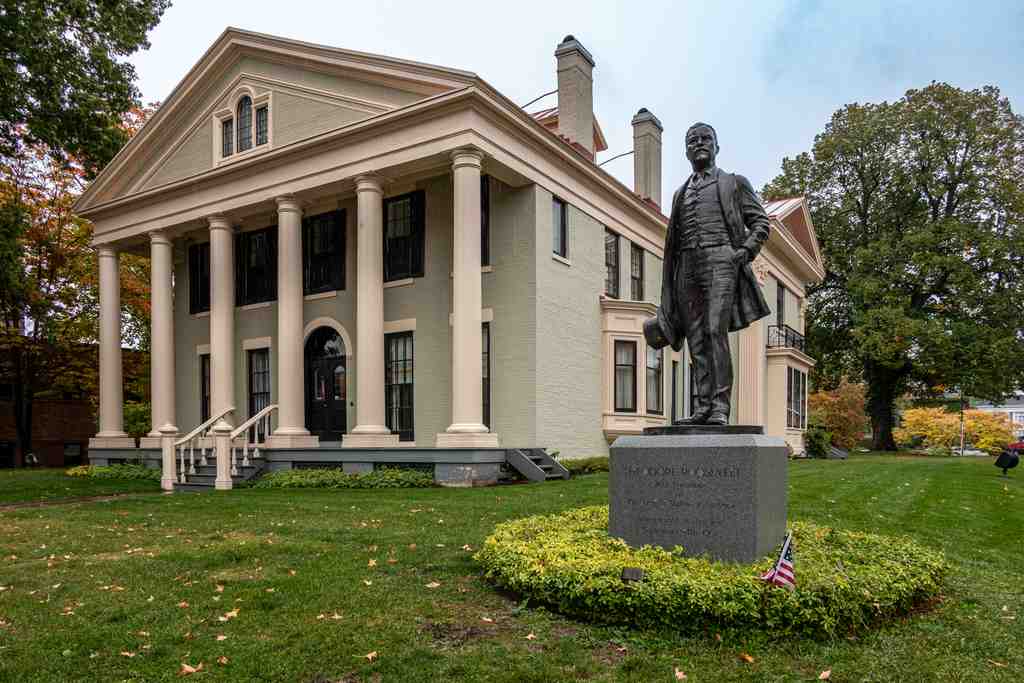
Look ahead and you’ll spot a prominent classical house with pale columns, a stately porch, and a bold bronze statue welcoming you from the lawn-this is the Theodore Roosevelt Inaugural National Historic Site.
Imagine you’re here in Buffalo, but not just any day-it's September 1901, and the city is swirling with tension and whispers. The Pan-American Exposition is in full swing, but suddenly, the festivities are shattered: President William McKinley has been shot, sending shockwaves through the crowds. While nervous men in suits dart through telegraph offices and headlines frantically change, Vice President Theodore Roosevelt speeds toward Buffalo, unaware he’s about to make history in the house right before you.
This grand building you’re looking at might seem like just another fine mansion, but it has layers of stories hiding inside its walls. The oldest parts of this house go back to the days when Buffalo braced itself against British Canada-these were once military officers’ quarters, part of Buffalo Barracks built in the 1840s. After soldiers marched away and the cannons fell silent, families made it their home, adding parlors, tearing out barns, and even planning renovations you can still find tucked away in the archives here.
But the house’s quiet days ended when tragedy struck nearby. The President’s condition takes a dramatic turn for the worse, and with hardly any time to breathe, word arrives-President McKinley has died. You can feel the suspense: the city is anxious, officials are clamoring, and a decision is made. The closest, safest, and most respectable place to swear in the new president is right here, the Wilcox House. Inside, the front library fills with fifty anxious dignitaries; cabinet members stand shoulder-to-shoulder as Federal Judge John R. Hazel administers the oath. Oddly enough, no photos were taken during the ceremony, so you’ll have to picture Roosevelt with his hand raised, surrounded by heavy velvet drapes, gaslights flickering, and shined shoes shifting on the rug.
The Wilcox family would live here until the 1930s, but after they passed, the home transformed dramatically. Picture dinner guests gossiping in the Kathryn Lawrence Restaurant that took its place-bye-bye, stately calm; hello, clinking glasses and buzzing chatter. Eventually, the house would be restored and reopened as a museum, carefully preserving Roosevelt’s inauguration room and treasures from the Pan-American Exposition-including some very presidential wine glasses in case you’re thirsty for history!
Take a deep breath, look around, and imagine this building as the crossroads of America’s story-a place where, in a moment of crisis, a new president and a new era began. Pretty wild to think all that happened right where you’re standing now, isn’t it?




