
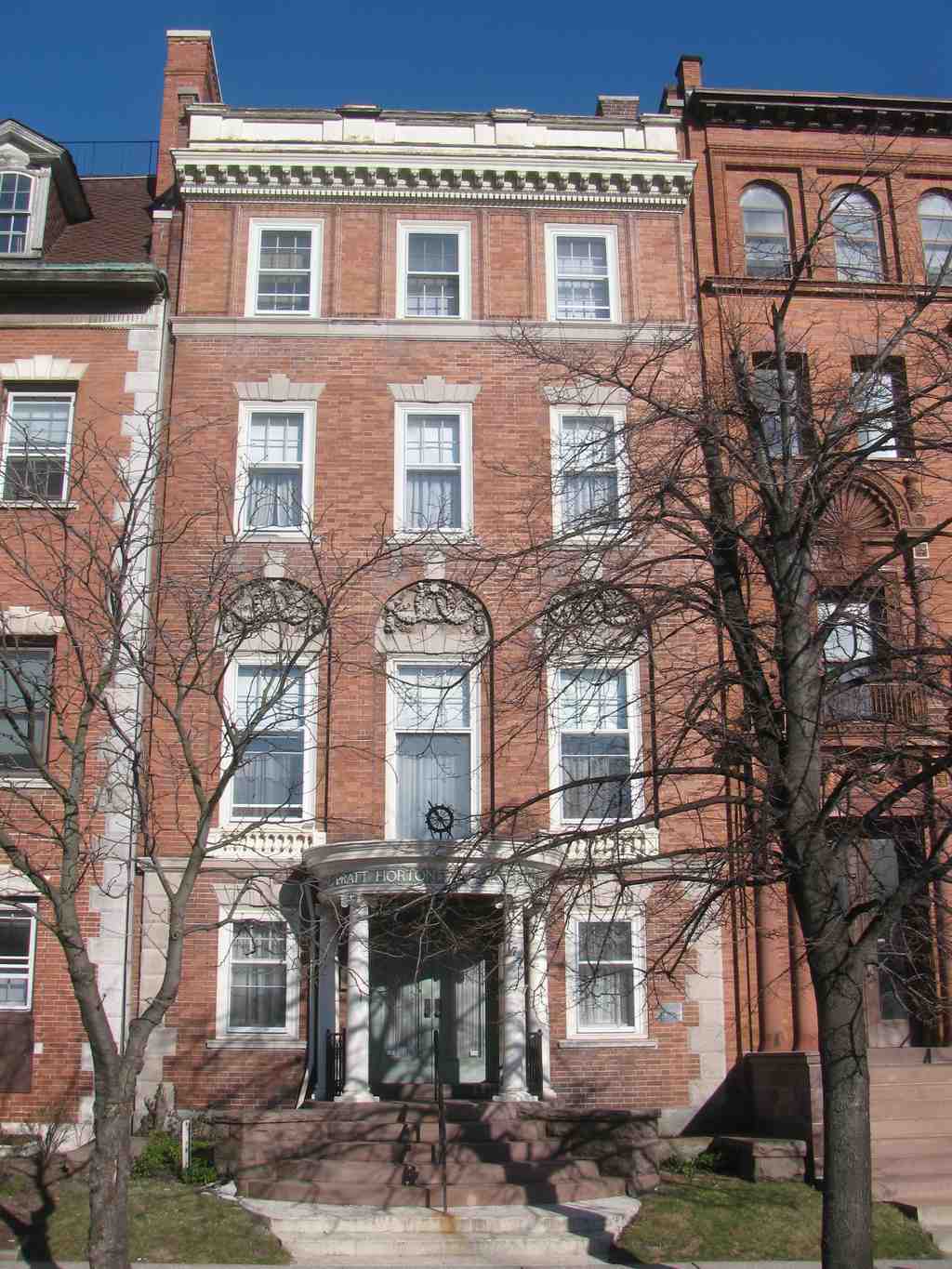
Standing right in front of you is the Birge-Horton House, a tall, four-story brick row house with neat white stone trim and an elegant entryway, nestled right in the middle of a line of grand homes-just look for the house with “PRATT HORTON HALL” etched above its curved front steps.
Now, let’s imagine the year is 1895-a time when Buffalo’s Delaware Avenue was the place to be if you fancied a bit of luxury, a dash of competition with your neighbors, and maybe the occasional fancy wallpaper dispute. The architects Green and Wicks, a powerhouse design team in Buffalo, drew up the Birge-Horton House in the Georgian Revival style-think classic, stately, and just a hint of “look at me!” This house was one of a rare batch of thirteen luxury row houses, all tall and proud, but each with its own personality. The Birge-Horton was the last to go up, making it the grand finale on “the Midway”-smack-dab between the city center’s bustle and the peaceful stone angels of Forest Lawn Cemetery.
Back then, Delaware Avenue was Buffalo’s top address. Henry Birge-of wallpaper fame-wanted a place that matched his style, and he didn’t skimp. Picture yourself climbing a grand staircase that spirals four stories up, six marble fireplaces glowing in the winter, and colored sunlight pouring through leaded glass windows. Talk about a home that says, “You’ve made it!”
After the Birges came Katharine Pratt Horton in 1906, a powerhouse of a woman who filled these rooms with the energy of social gatherings and the quiet dignity of civic service. She loved it so much that she finally bought it-and when she passed, the house was passed on to the Daughters of the American Revolution, who keep it almost exactly as it was nearly a century ago. Imagine the layers of laughter, whispered secrets, and maybe a couple of heated wallpaper debates echoing through these halls. And today? It stands as the only house in the row that hasn’t changed a bit, a living memory right in the heart of Buffalo. How’s that for hanging onto history?




