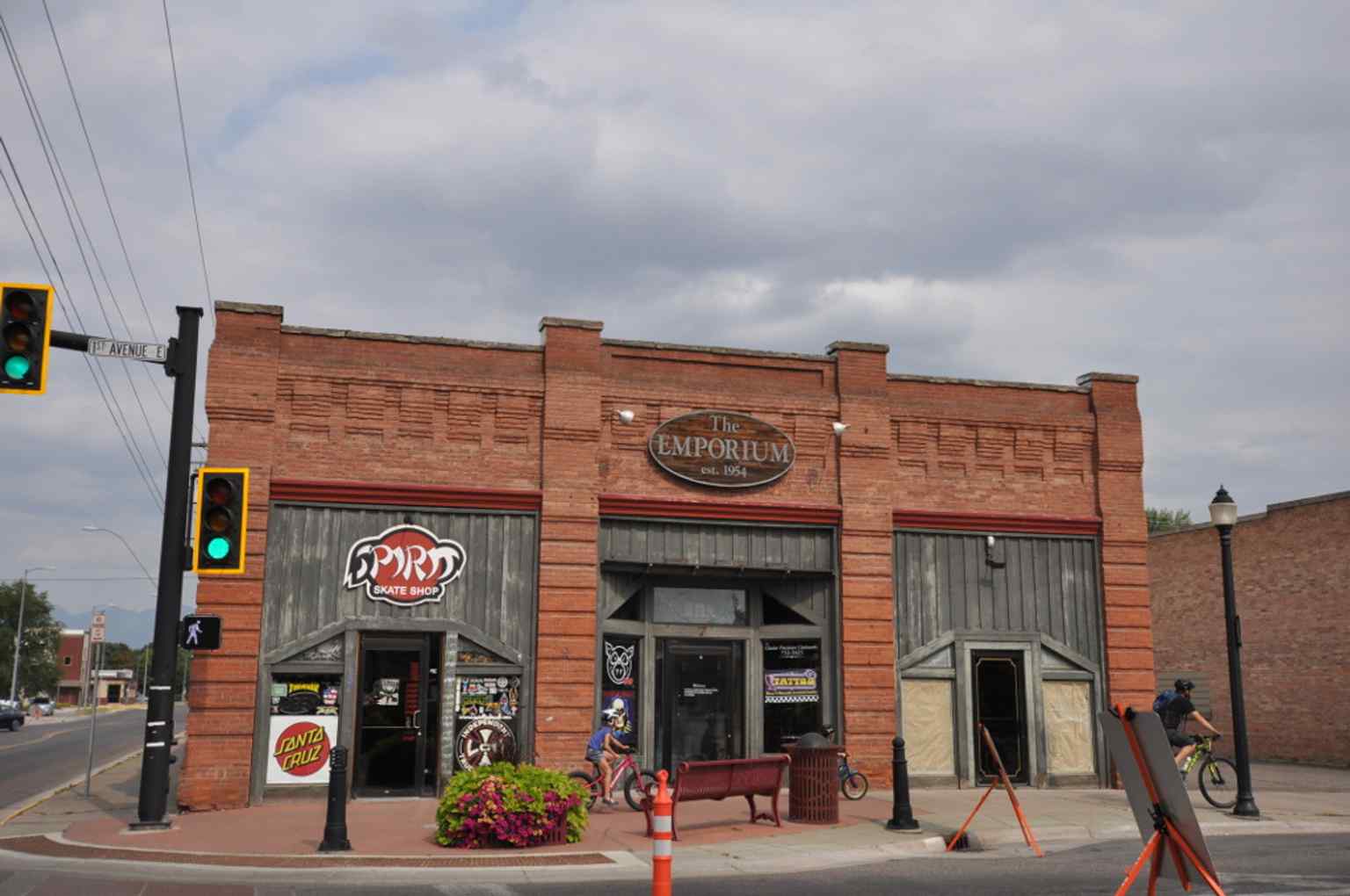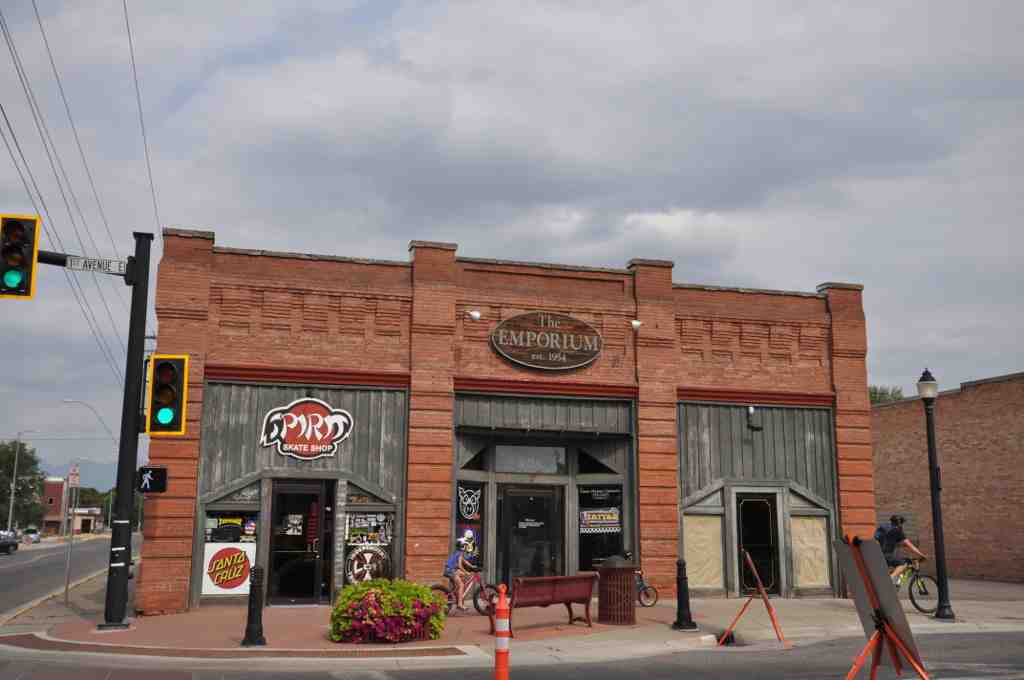
Look for a low rectangular brick building with broad plate-glass storefront windows and a plain parapet, its wide face hinting at a showroom built for weight rather than display.
This place held a rather unusual trade. In nineteen ten, the Kalispell Monumental Company bought two lots here beside the railroad right-of-way and asked architect Joseph Gibson to draw something more ambitious than a shop. He planned an industrial showroom: proof that Kalispell grew not only through polished Main Street fronts, but through freight, distribution, and careful rail-side planning. Stone is stubborn stuff. Marble and granite do not drift in by wagon with any grace.
The company came from Spokane, as a branch of Sammis Monumental Company, selling tombstones and memorials. That purpose gives the building a quiet gravity. Inside, practical engineering carried a strange poetry: a track ran through the centre for a traveling crane, meaning an overhead machine that could move massive stone blocks from place to place. Plate-glass windows along the front and west side flooded the showroom with light, so customers could study surfaces brought from Barre, Scotland, Sweden, Vermont, Georgia, Italy, Colorado, and beyond.
But even solid businesses begin with delays. The pressed brick for the east and north walls arrived late in late December of nineteen ten, and no local substitute could be found. When the building neared completion, company president Fred H. Sammis came from Spokane to inspect it, and local manager C. M. Secor proudly showed him the steam-heated works. By January of nineteen eleven, six carloads of supplies had arrived. By February, the firm was already furnishing marble bases and trim for the Buffalo Block on Main Street before fully moving in that March. The whole venture cost twelve thousand dollars, roughly four hundred thousand dollars in present terms.
If you glance at the image in the app, you can still read that broad, workmanlike confidence in the facade. Yet the business failed by nineteen fourteen; Kalispell may simply have been too small for a company that billed itself as one of the largest monument firms in the country. The building adapted instead, serving a laundry, then a motor sales showroom, where cars arrived by rail and were driven over from the depot. That shift from rail-served stone to the architecture of motoring leads us neatly to the Continental Oil Company Filling Station, about a minute away. If you want to return later, this site is generally open weekdays from nine to five and closed on weekends.