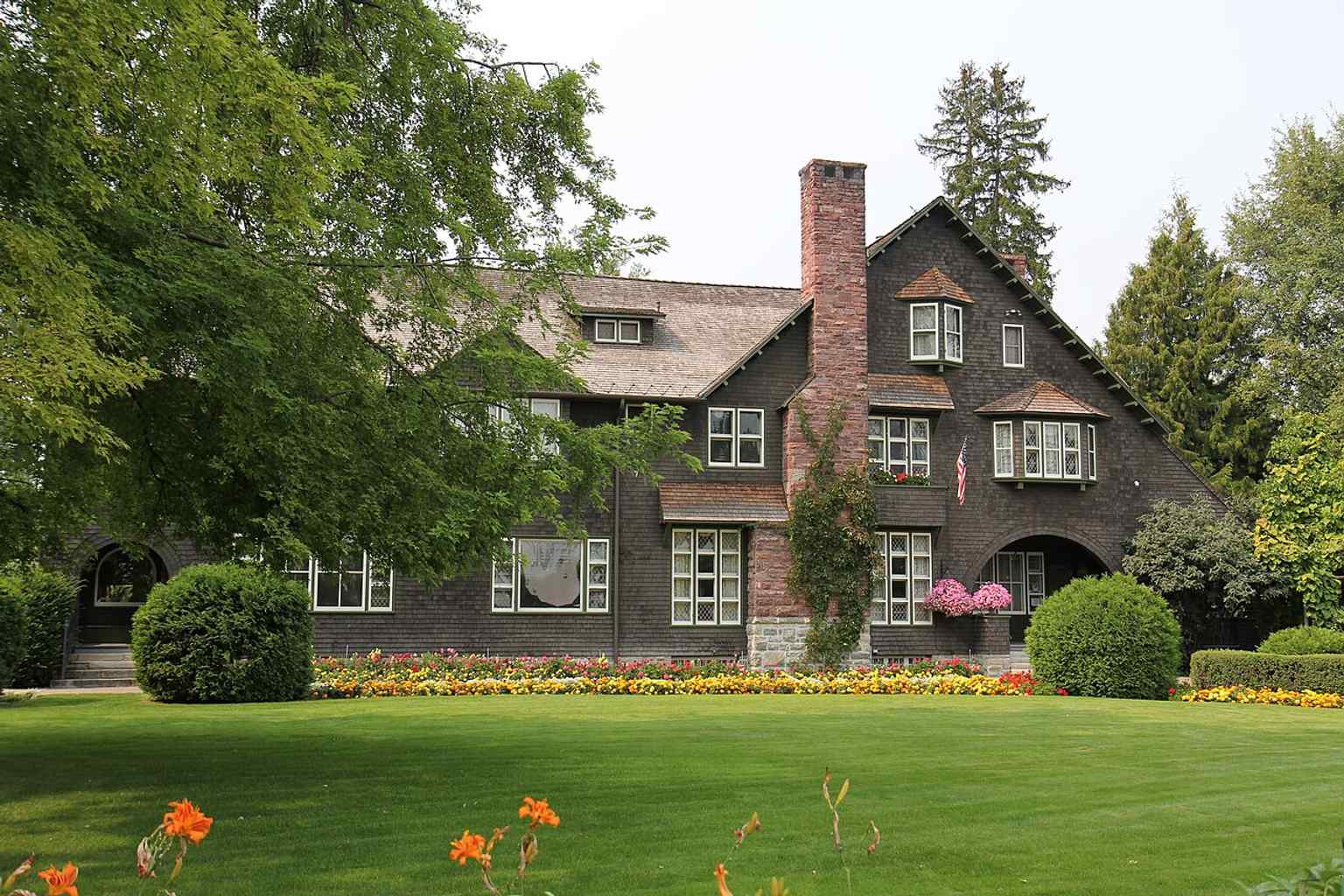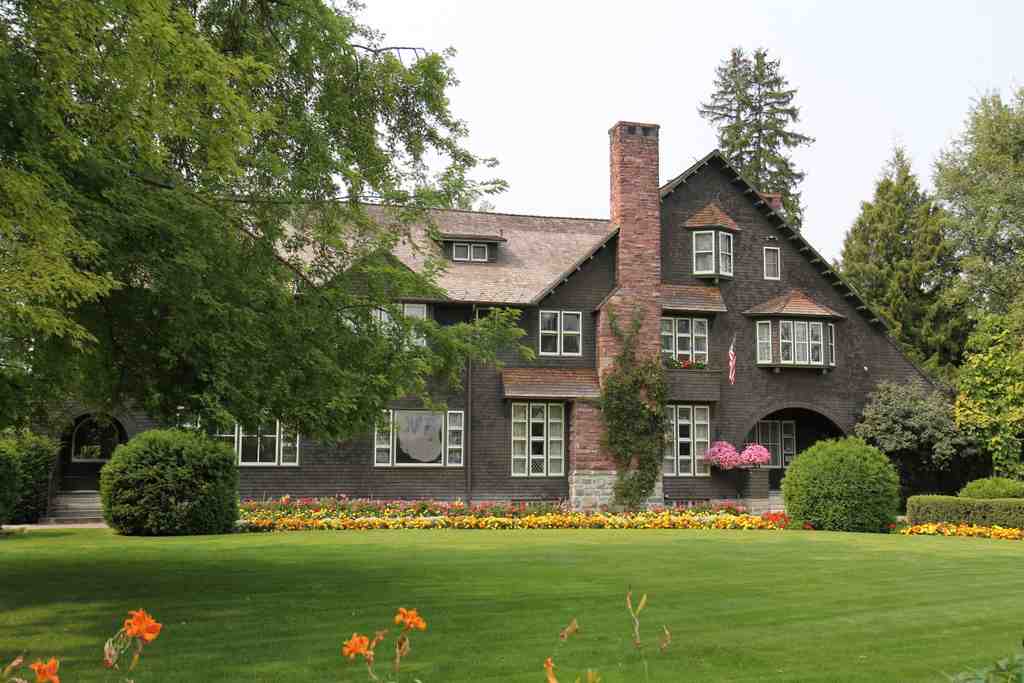
Ahead of you rises a broad, wood-shingled mansion with steep gables, tall chimneys, and a deep porch that makes it feel part farmhouse, part little Norman manor.
This is the Charles E. Conrad Mansion, and it introduces Kalispell with a flourish. Charles E. Conrad, shipping magnate and early town pioneer, chose noted Spokane architect Kirtland Cutter to design it, and work began in eighteen ninety-two before finishing in November of eighteen ninety-five. The style borrows from rural Normandy in France, not a stone castle tradition, but a grand revival of the farmhouse idea, translated into a house meant to impress.
Yet the personality of this place came from two people, not one. Charles brought money and ambition; Lettie Conrad brought education, musical taste, and the steadier art of making a new estate run while raising their three children in a town still finding its shape. This was no sealed-up trophy house. The Conrads loved guests, and the more people they welcomed, the happier they seemed to be, turning private status into a kind of performance of generosity.
Pause a moment and study the layered exterior. Does it strike you as homely, noble, or delightfully uncertain between the two? If you glance at the image on your screen, you can see that same mingling of comfort and grandeur even more clearly.
Most visitors admire the splendour and miss the absence. In the late nineteen nineties, a visitor named Ken Miers noticed buffalo-horn rifle hooks still fixed in the Gun Room, but no original firearms hanging from them. That small gap opened a detective story. In twenty fourteen, Ken and Mary Miers traced a Charles Conrad rifle to the Montana Historical Society in Helena; the family guns had left decades earlier through Samuel E. Johns and his son Douglas Johns. In twenty fifteen, the collection returned, and volunteer Dan Conner installed the glass case that finally gave the room its story back.
The mansion survives because Alicia Conrad Campbell donated the house and its contents to the city in nineteen seventy-four, and because volunteers still guide, clean, garden, and mend what prosperity first built. Next, we continue to the Hockaday Museum, about an eight-minute walk away. If you plan to return inside, the museum is open daily from ten in the morning until six in the evening.