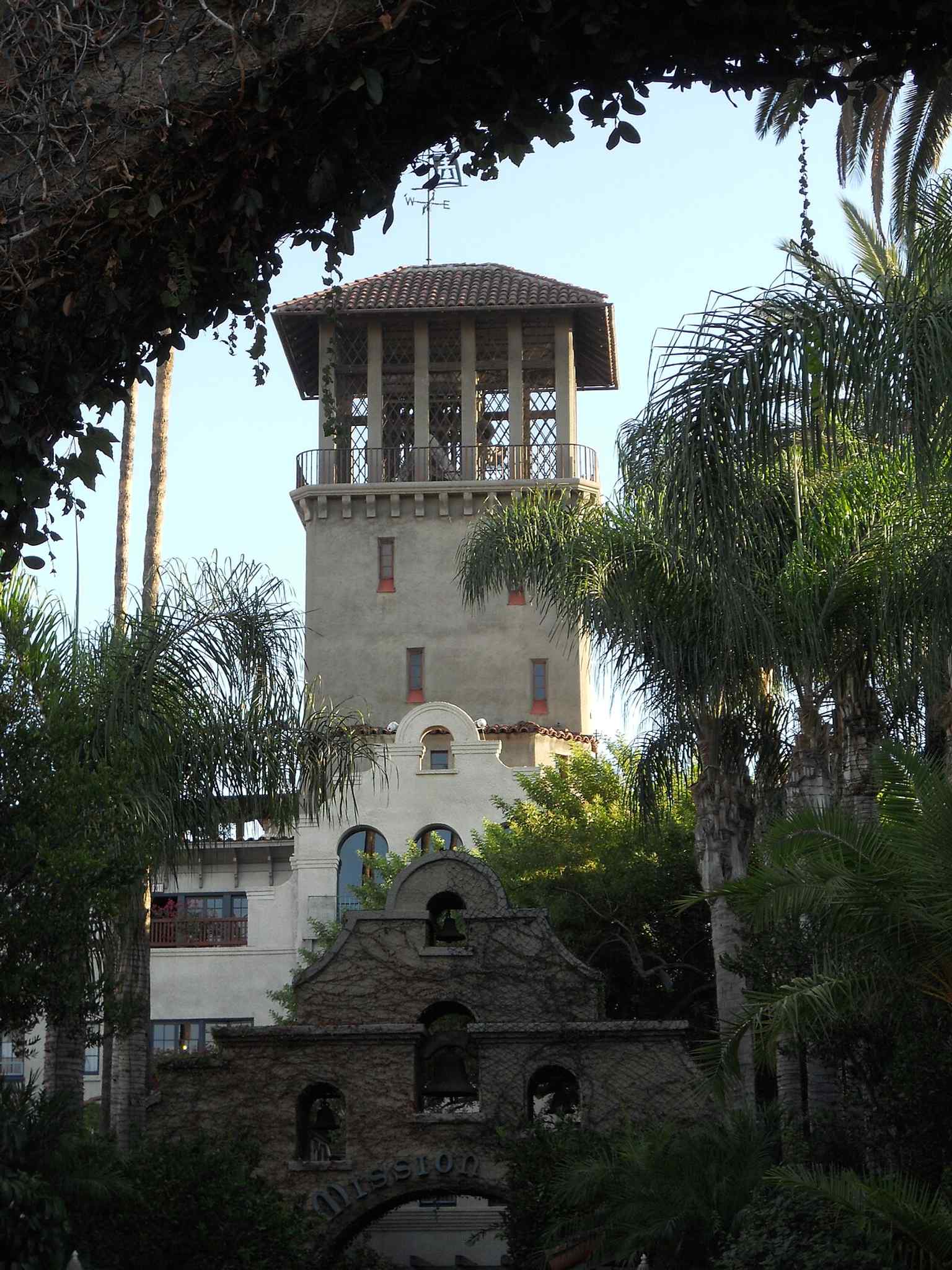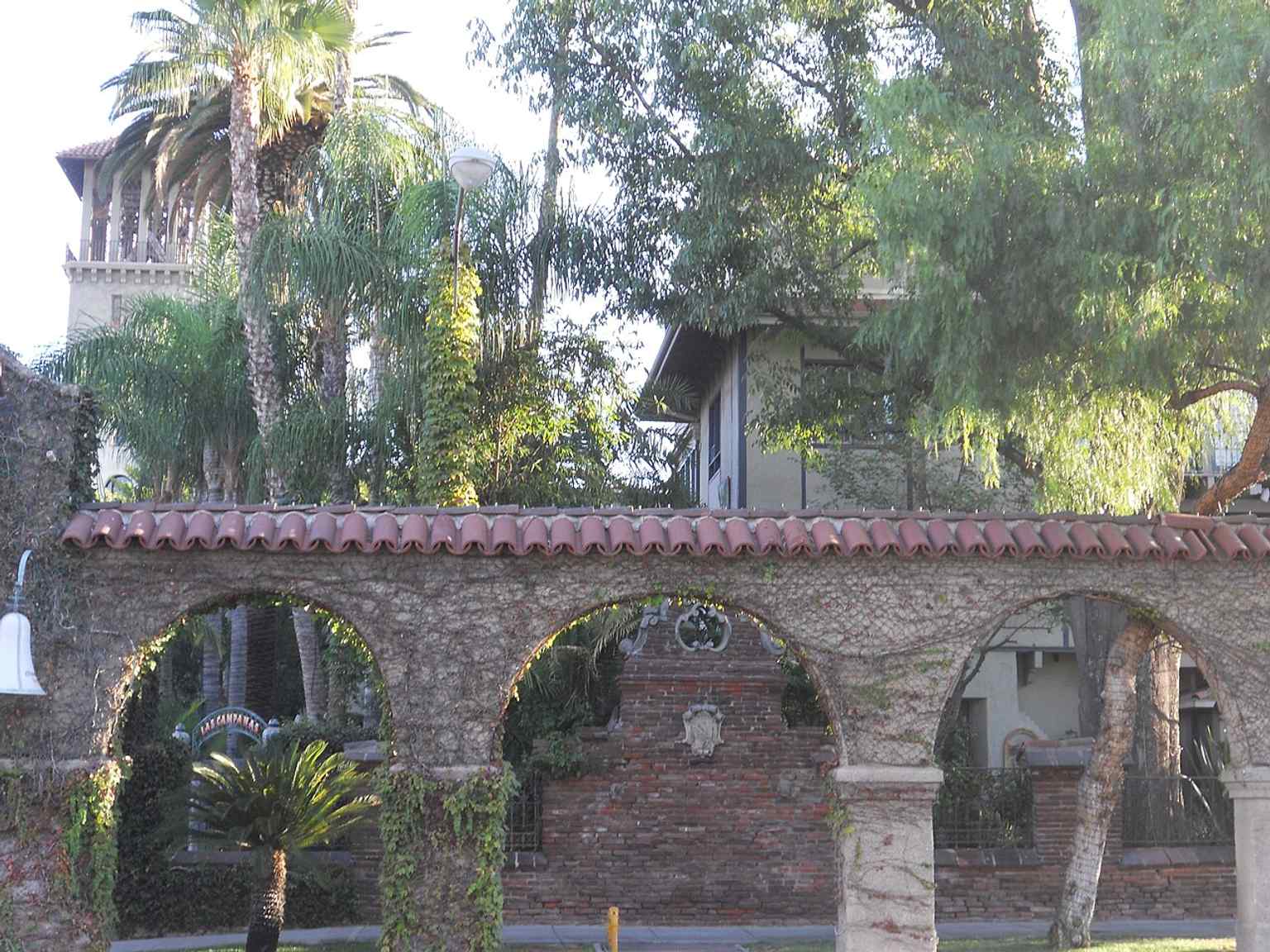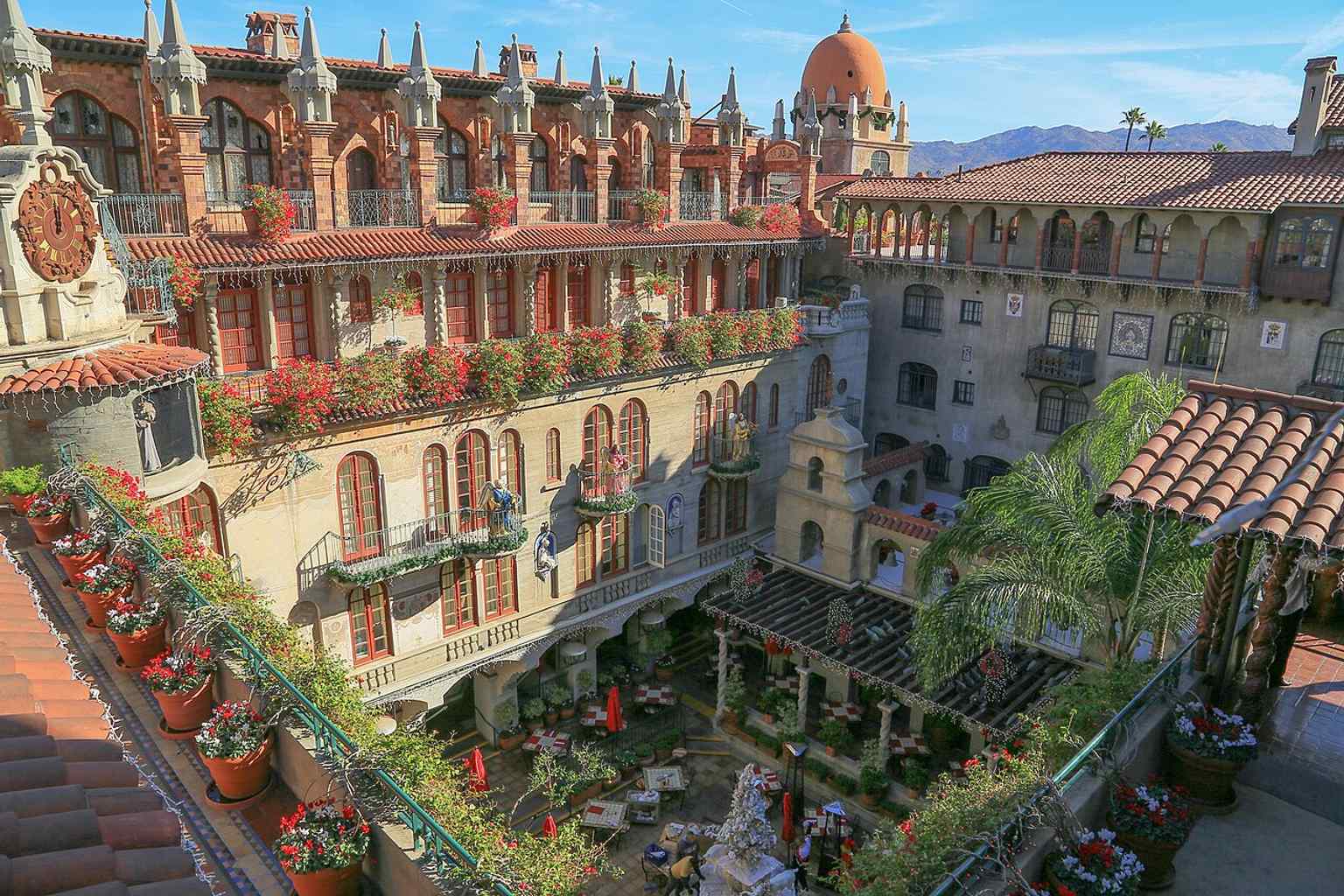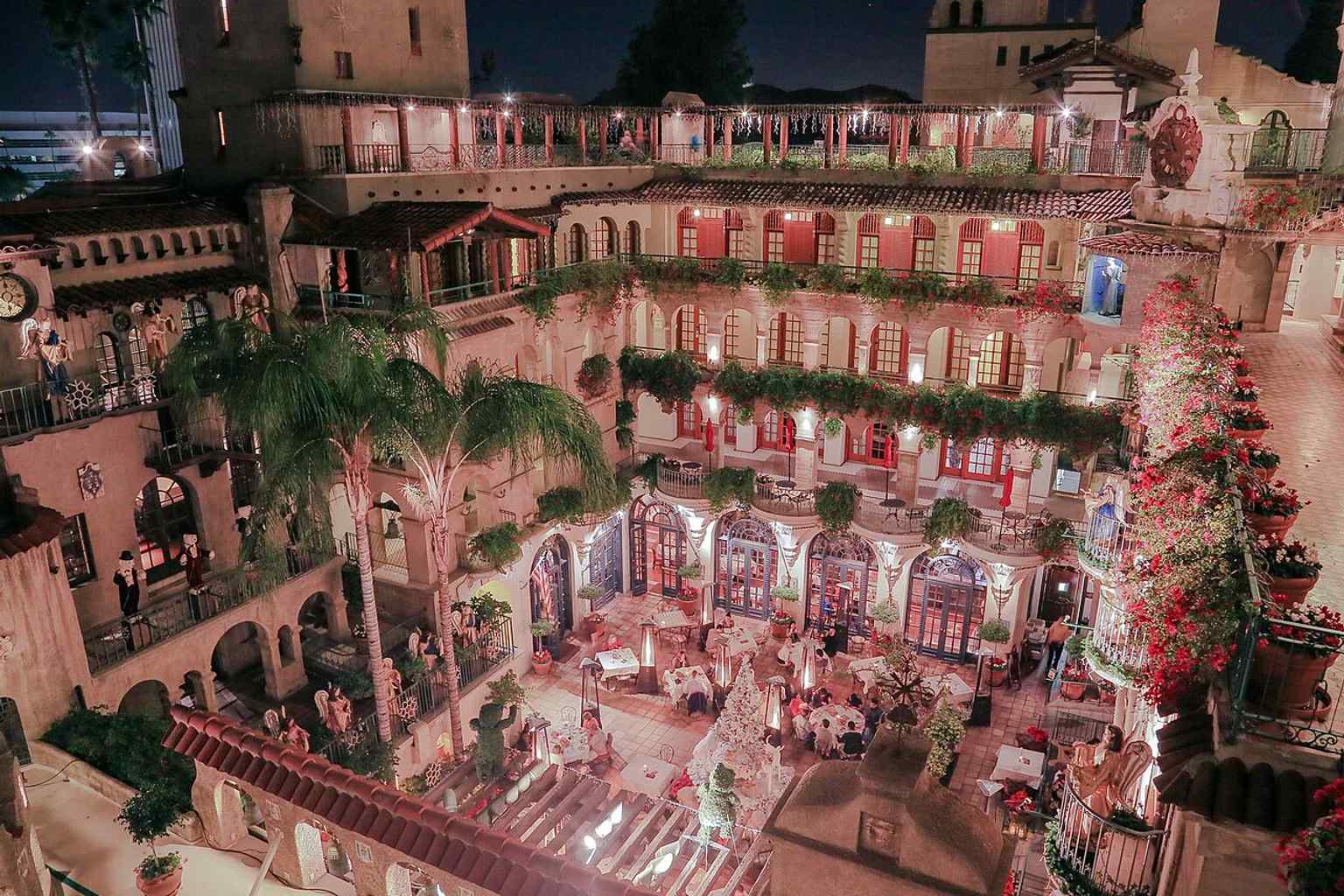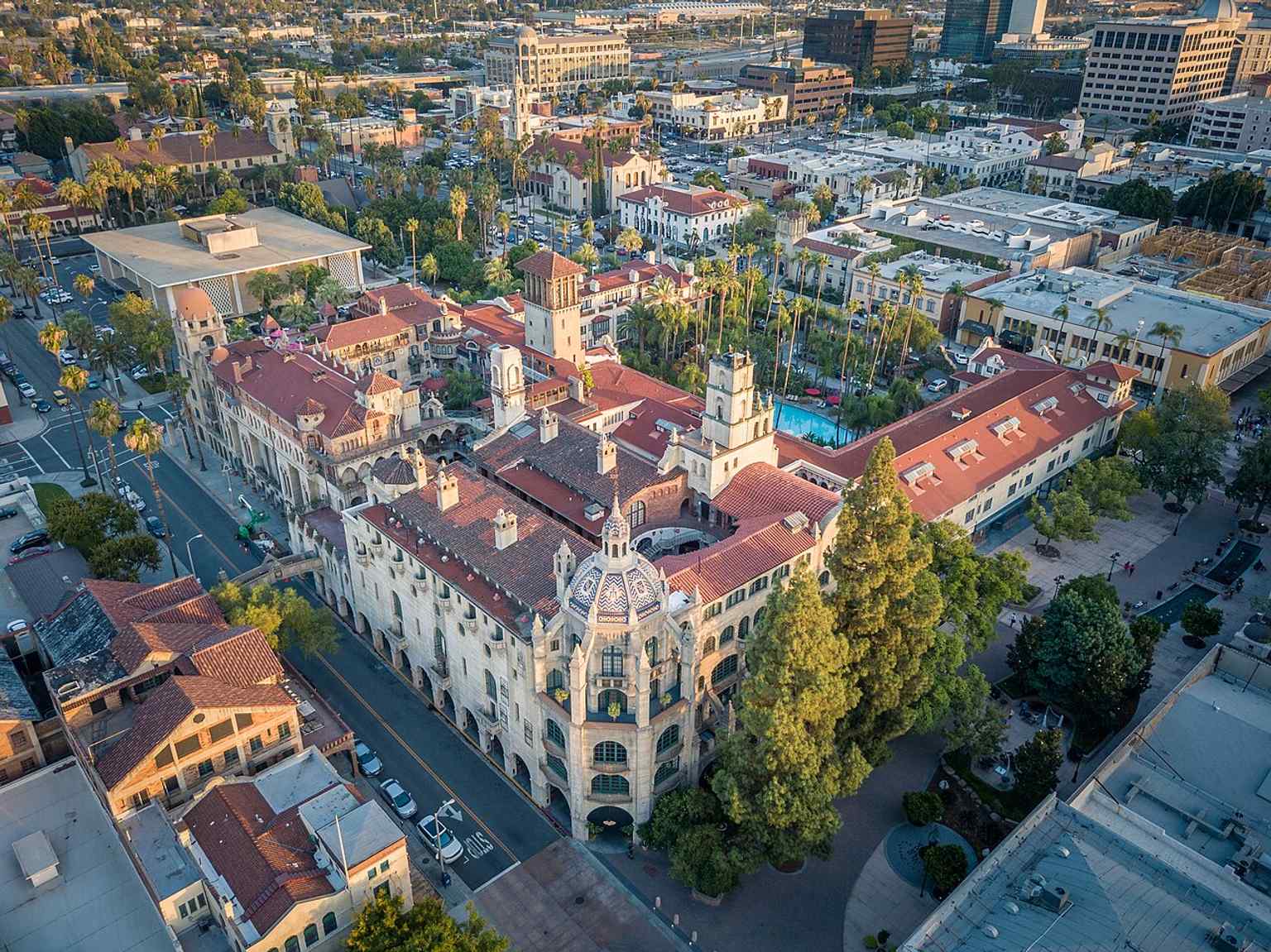
On your right, look for a sprawling cream-colored stucco hotel with deep arched arcades, clustered towers and domes, and a striking medieval-style clock set into the facade.
This is the Mission Inn Hotel and Spa, and from where you stand it looks less like a single hotel than a small kingdom assembled over time. That impression is exactly right. The story began modestly, as an adobe boarding house called Glenwood Cottage. Engineer and surveyor Christopher Columbus Miller opened it, and the Millers welcomed their first paying guest on the twenty-second of November, eighteen seventy-six. Then his son, Frank Augustus Miller, bought the hotel and land in eighteen eighty, and Frank turned ambition into architecture.
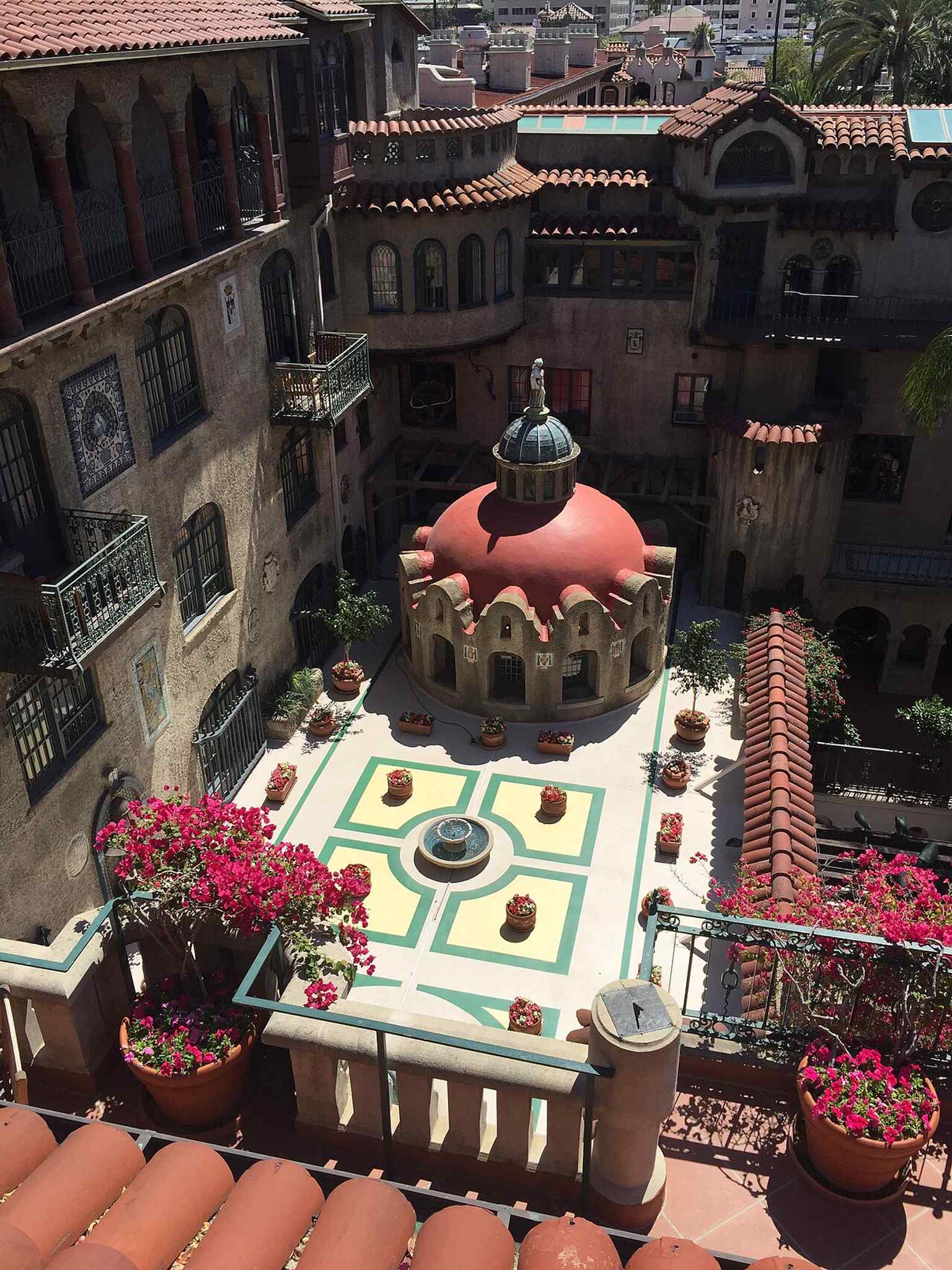
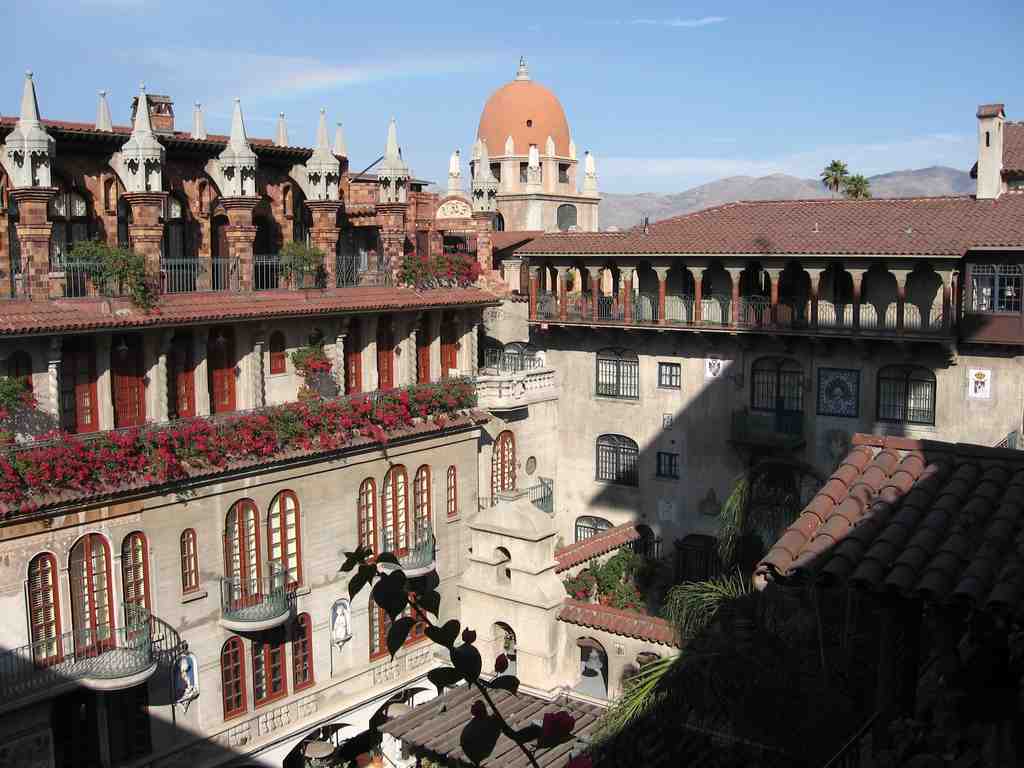
As Riverside prospered through the citrus boom, wealthy travelers arrived from the East Coast and Europe, and Frank kept adding, extending, and reinventing. In nineteen oh two he renamed it the Glenwood Mission Inn, and until his death in nineteen thirty-five he built almost continuously. If you study the exterior, you can see why no neat label quite captures it. People often call it Mission Revival, a style inspired by the old California missions, with thick walls, arches, and bell-like forms. But Frank mixed in Spanish Gothic, Moorish, Renaissance, Spanish Colonial, and Mediterranean ideas as well. The result is this extraordinary patchwork of towers, covered walkways, domes, patios, and narrow passages.
If you have a moment, the dramatic before-and-after shows just how far this place has come from a simple street-front hotel into a sprawling landmark. Several architects helped shape Frank’s dream. Arthur Burnett Benton designed the original building. Myron Hunt created the Spanish Wing at the rear. G. Stanley Wilson designed St. Francis Chapel and added the rotunda, a great round interior space crowned by a dome and ringed with circular stairs.
And the inn is full of stories tucked behind these walls. Frank built St. Francis Chapel to house eight Tiffany stained-glass windows from nineteen oh six, salvaged from the Madison Square Presbyterian Church in New York. If you peek at the chapel image in the app, you can see those windows and the Rayas Altar, a cedar altarpiece twenty-five feet tall and sixteen feet wide, completely covered in gold leaf. Frank also collected more than eight hundred bells for his Garden of Bells, including one from the year twelve forty-seven, proudly described as the oldest bell in Christendom. His son-in-law, DeWitt Hutchings, later added the Famous Fliers’ Wall, where aviators such as Amelia Earhart were honored. By now, one hundred and fifty-one fliers or flying groups have their signatures etched onto copper wings there.
For more than a century, the inn became Riverside’s grand drawing room. Presidents visited. Pat and Richard Nixon married here. Ronald and Nancy Reagan honeymooned here. So did inventors, reformers, newspaper barons, film stars, Harry Houdini, Helen Keller, John Muir, and Albert Einstein.
It nearly vanished in the nineteen seventies and eighties, when deterioration and financial trouble brought real talk of demolition. Local supporters helped secure National Historic Landmark status in nineteen seventy-seven. After a stalled restoration and foreclosure, Duane Roberts bought the property in nineteen ninety-two, and he and Kelly Roberts restored its historic character while keeping it alive as a working hotel.
The Mission Inn is Riverside’s grandest act of imagination made solid in stone and stucco.
From the Mission Inn, continue to the public library, where the city keeps its memory in a quieter register.