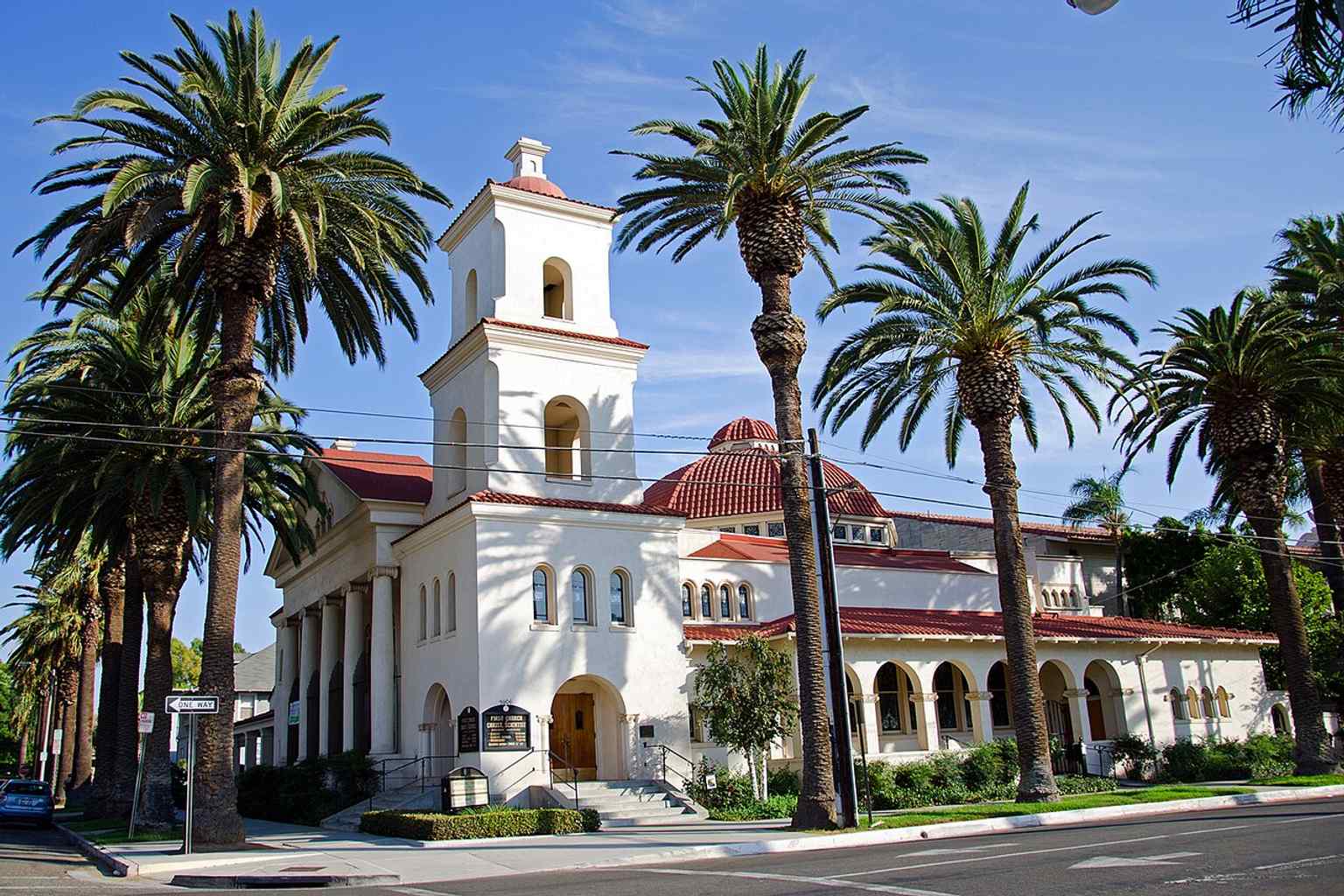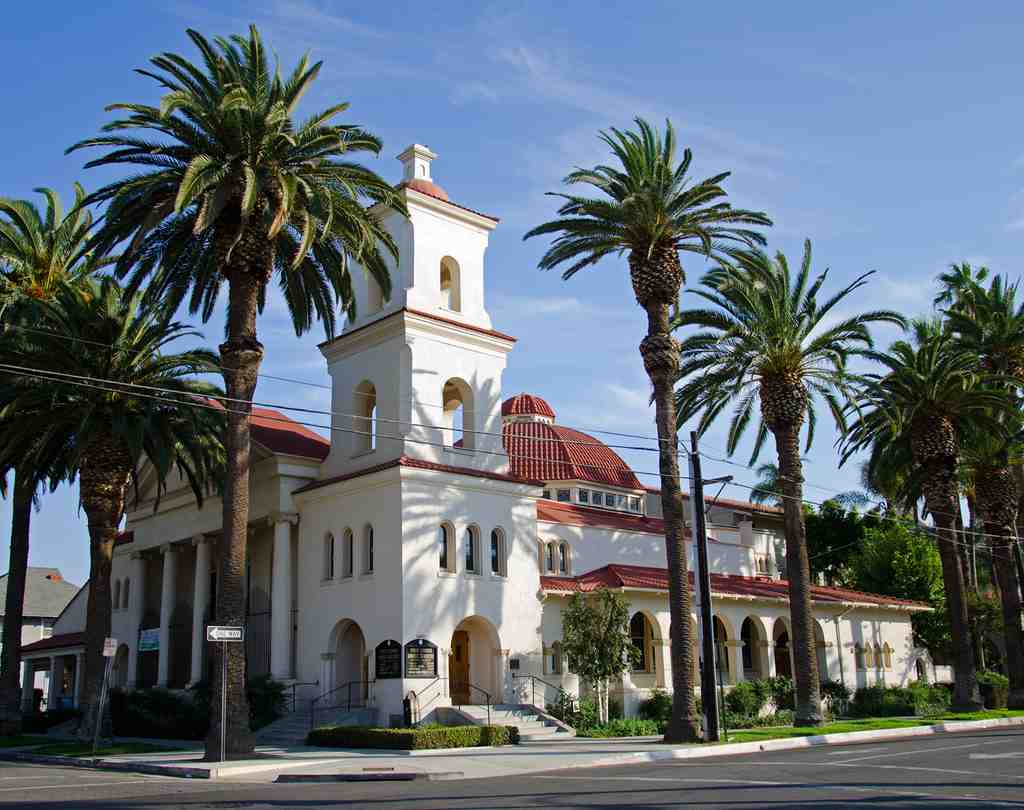
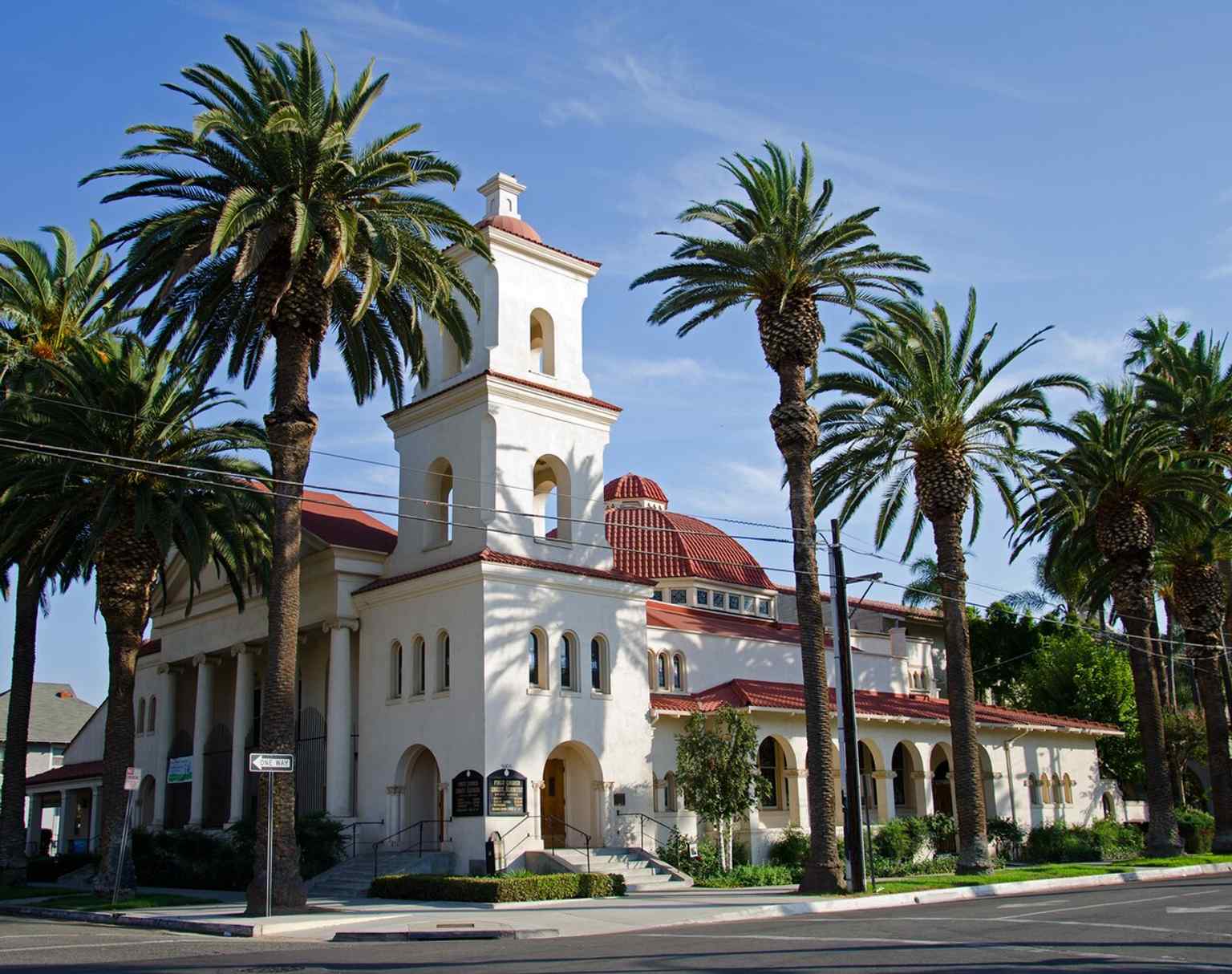
On your right, look for a pale stucco church with a broad Mission Revival front, a red tile roofline, and a deep arched entry that feels almost like a small California mission.
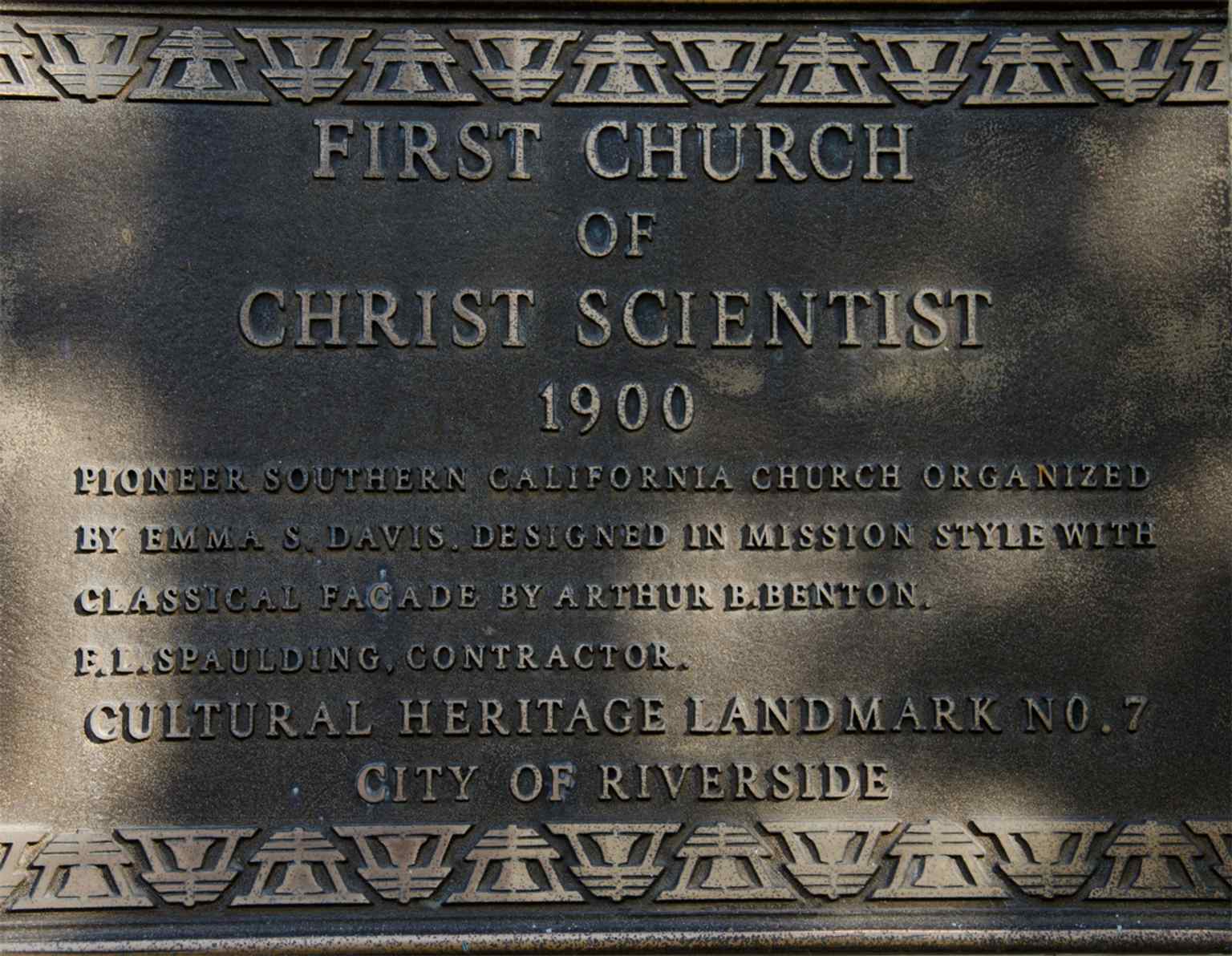
This modest building carries an outsized claim: many have called it the church that introduced Christian Science to Southern California. Christian Science, a Christian movement founded by Mary Baker Eddy in eighteen sixty-six, placed special emphasis on prayer and spiritual healing. In Riverside, that story began not in a grand sanctuary, but in a home. Emma Stanton Davis, one of Eddy’s students, moved here in eighteen eighty-seven and began healing work; by eighteen ninety-one, the Christian Science Journal was already listing regular Sunday services in Riverside. In fact, church records in Boston show this was the first place in California where a class-taught student of Eddy lived.
The congregation laid the cornerstone on the twenty-fourth of October, nineteen hundred. By the tenth of February, nineteen oh-one, they filed notice that construction was complete, and just two weeks later, on the twenty-fourth of February, they held the dedication and first regular Sunday service.
Arthur Burnett Benton designed the church in the Mission Revival style you see here. If you check the view on your screen, the facade shows that style clearly in its simple curves and solid massing. Benton also shaped the nearby Mission Inn and the Municipal Auditorium beside this property. In nineteen ninety-two, the church earned a place on the National Register of Historic Places, and it remains an active congregation today.
A quiet building, then, but one that changed the religious map of the region. From there, head to the Mission Inn, Riverside’s most theatrical landmark.