
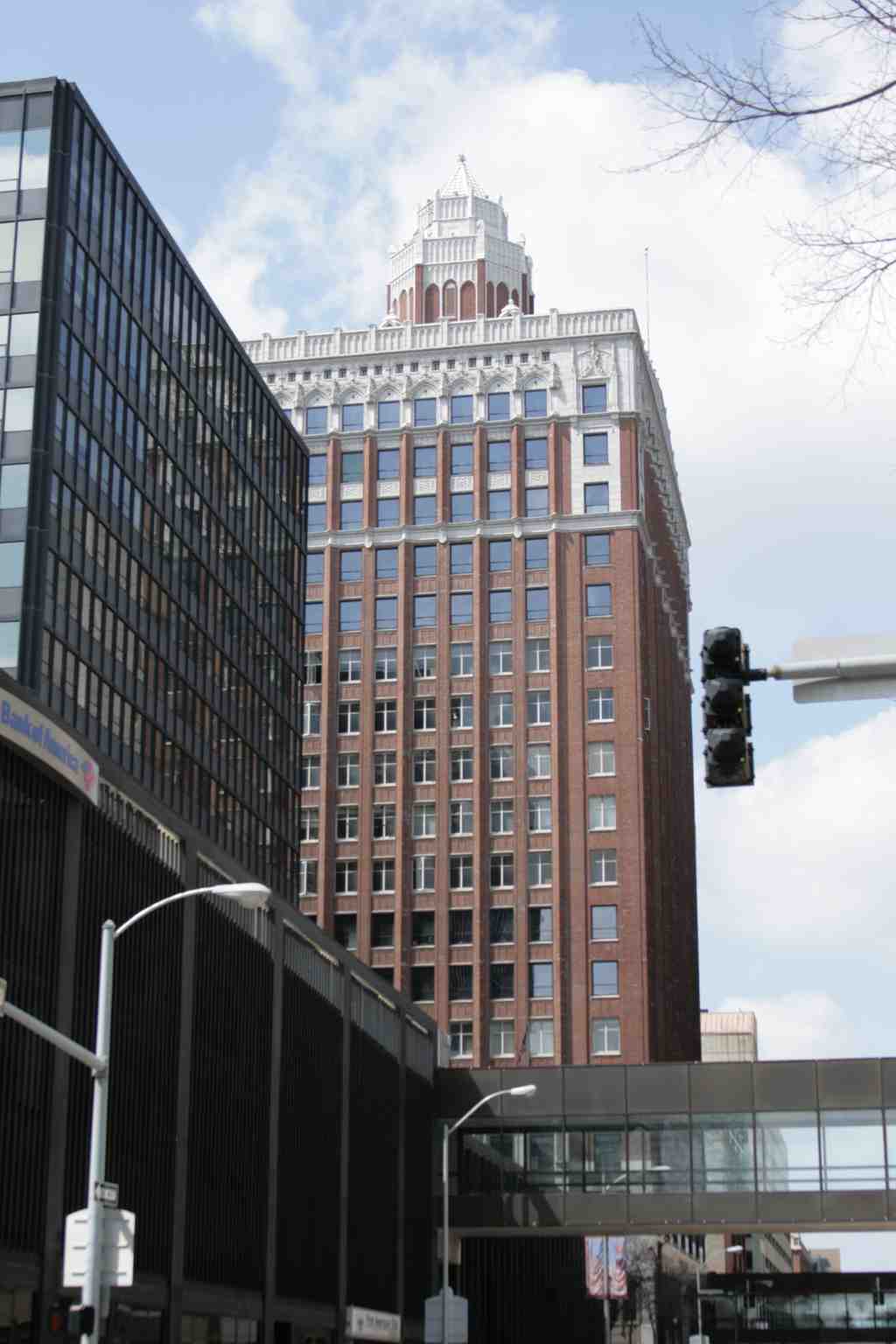
Look to your left at the towering nineteen-story structure of polished granite and brick, topped by a distinctive terra-cotta lantern tower. This is the Equitable Building. The masterminds behind this nineteen-twenty-four marvel were Proudfoot, Bird and Rawson, a prominent Des Moines architectural firm that effectively drafted the city skyline. They designed this high-rise in the Gothic Revival style, borrowing the soaring vertical lines of medieval European cathedrals and applying them to a modern American office building. They even included a few inside jokes. If you look closely just above the second-story windows, you will see whimsical stone gnomes carved into the granite. These corbels, which are structural pieces of stone jutting from the wall to carry weight, appear to be groaning under the immense load of the upper stories. It adds a rather unexpected touch of medieval fantasy to an insurance company headquarters.
For forty-nine years, this three-hundred-and-eighteen-foot giant was the tallest building in Iowa. When it opened, the completion was celebrated with a lavish rooftop party for eight hundred and fifty guests. An airplane flew over and dropped floral wreaths onto the crowd. The building's most iconic feature, that crowning four-story terra-cotta lantern at the top, was not just for show. It originally hid a massive, two-story steel water tank for fire protection. That is clever engineering wrapped in elegant architecture.
For decades, this was the city's premier address. Iowans came here to buy wedding rings at Joseph's Jewelry or grab milkshakes at King's Pharmacy. One dentist worked in a corner office here for thirty-four years. He had a prime view of everything from downtown parades to severe floods. He once watched a car quite literally wash right down the street and into the building's basement, which flooded the lower levels and put him out of work for weeks.
But buildings can hide toxic secrets. In two-thousand-and-five, a local developer named Bob Knapp bought the tower for five million dollars, aiming to convert the upper floors into apartments. What followed was a staggeringly reckless gamble. Knapp and his supervisor decided to completely gut thirteen floors of this historic building without inspecting for or safely removing the asbestos. Asbestos is a highly regulated, hazardous mineral used in old building materials that causes severe lung disease if the dust is inhaled. While the first six floors were fully occupied by businesses, demolition crews up above were pulverizing the toxic material.
After state investigations, the truth came out. A federal judge sent Knapp to prison for forty-one months. Knapp's story ended mysteriously. In two-thousand-and-fourteen, just days after being paroled, he was found dead inside a stolen, burned-out car on a rural road. The bizarre circumstances remain completely unexplained.
The disgraced tower went into foreclosure. In two-thousand-and-twelve, new developers swooped in and bought the whole behemoth in cash for just four hundred and sixty thousand dollars, a staggering drop from Knapp's purchase price. They poured thirty-eight million dollars into a proper, safe restoration, meticulously preserving the marble lobby while adding a rooftop deck. The historic structure survived its darkest chapter intact.
Let us keep walking. Our next stop is another Proudfoot masterpiece that housed a totally different kind of battle, just a two-minute walk away at the Liberty Building.




