
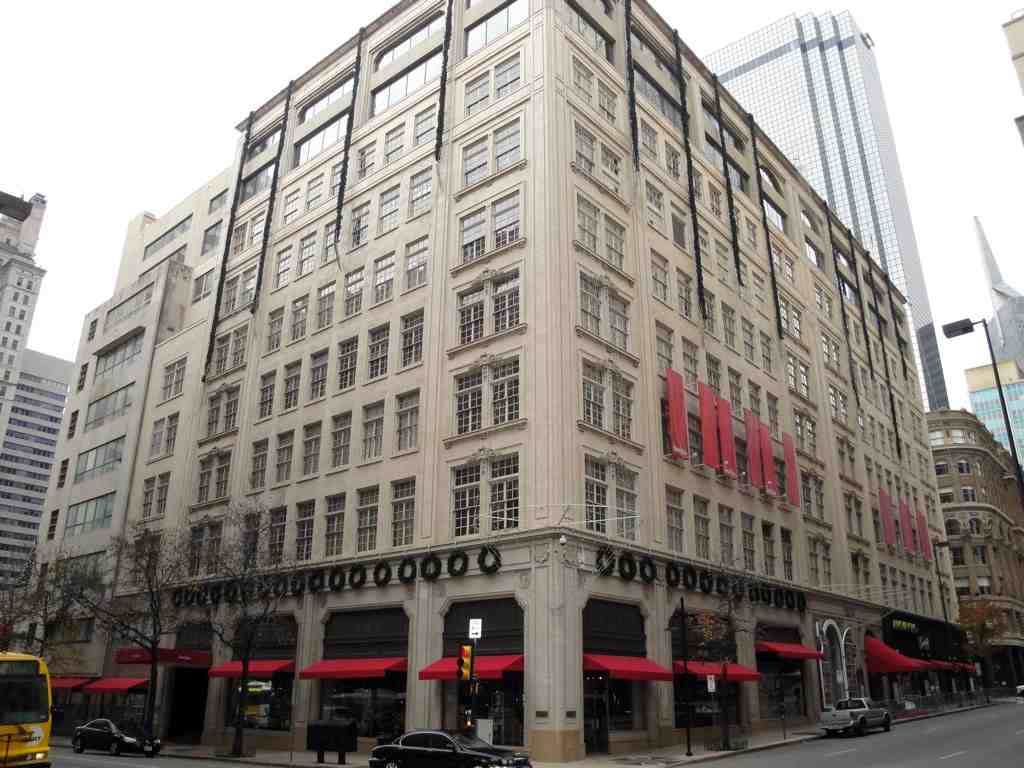
On your left stands the Neiman Marcus Building, an imposing, block-like structure wrapped in white terra cotta, a type of fired clay, defined by tall, vertical banks of grid-like windows stretching up its historic facade. It opened here in 1914 after an earlier shop burned down. The founders wanted a fireproof fortress, which makes sense when you are building an empire in a boom town. But behind the steady expansion of this retail giant in the 1920s was a family drama that almost tore it apart.
Carrie Marcus Neiman, her brother Herbert, and her husband A.L. Neiman had founded the business together. Carrie was the ultimate confidante and the brilliant mind behind the store's success. She served as a pioneering taste-maker, introducing high-quality fashion to Texas oil families who suddenly found themselves flush with cash. If you check your screen, you can see the kind of luxurious interior where she held court. But while she was outfitting Dallas high society, her marriage was quietly unraveling. A.L. was a serial philanderer. It turned into a massive scandal, ending in a bitter 1928 divorce that forced him entirely out of the company.
With her ex-husband gone, Carrie cemented her role as the guiding force of the business. She did not just sell clothes. Because of her impeccable discretion, elite Dallas women trusted her with their deepest personal secrets, from their own affairs to their wayward husbands. She knew how to pull strings quietly. When a local socialite was hosting the Duke and Duchess of Windsor, Carrie proactively suggested ordering custom-monogrammed linens for the royal couple. The Duchess loved the luxurious towels so much she packed all twelve of them into her luggage to take home.
That kind of relentless drive to impress kept the building expanding upward and outward over the decades. But empires always face setbacks. In 1964, the building burned in the costliest blaze in the city's history. They lost five to ten million dollars in merchandise and rare art, which is roughly forty-five to ninety million dollars today. Remarkably, the family just shrugged it off, joked to the press about having a great stock of drip-dry suits, and reopened the doors in twenty-seven days.
They also knew how to play the long game. On the sixth floor is the legendary Zodiac restaurant. The founders chased a famous chef, Helen Corbitt, for eight years to run it. When she finally said yes, her elaborate popovers and theatrical dining experience constantly lost money. But the family did not care. They viewed the restaurant as a loss leader, a business strategy where a service operates at a financial loss just to attract customers into the building. Affluent diners had to walk past endless racks of clothes to reach their chicken consommé, practically guaranteeing they would shop on their way out.
It all traces back to Carrie Neiman. She showed that sometimes the strongest force in building a dynasty is not a loud voice or a flashy title, but the quiet, strategic power of knowing exactly what people want and keeping their secrets safe. Keep that in mind as we head to our next stop, the Mercantile National Bank Building, which is just a one minute walk away.




