
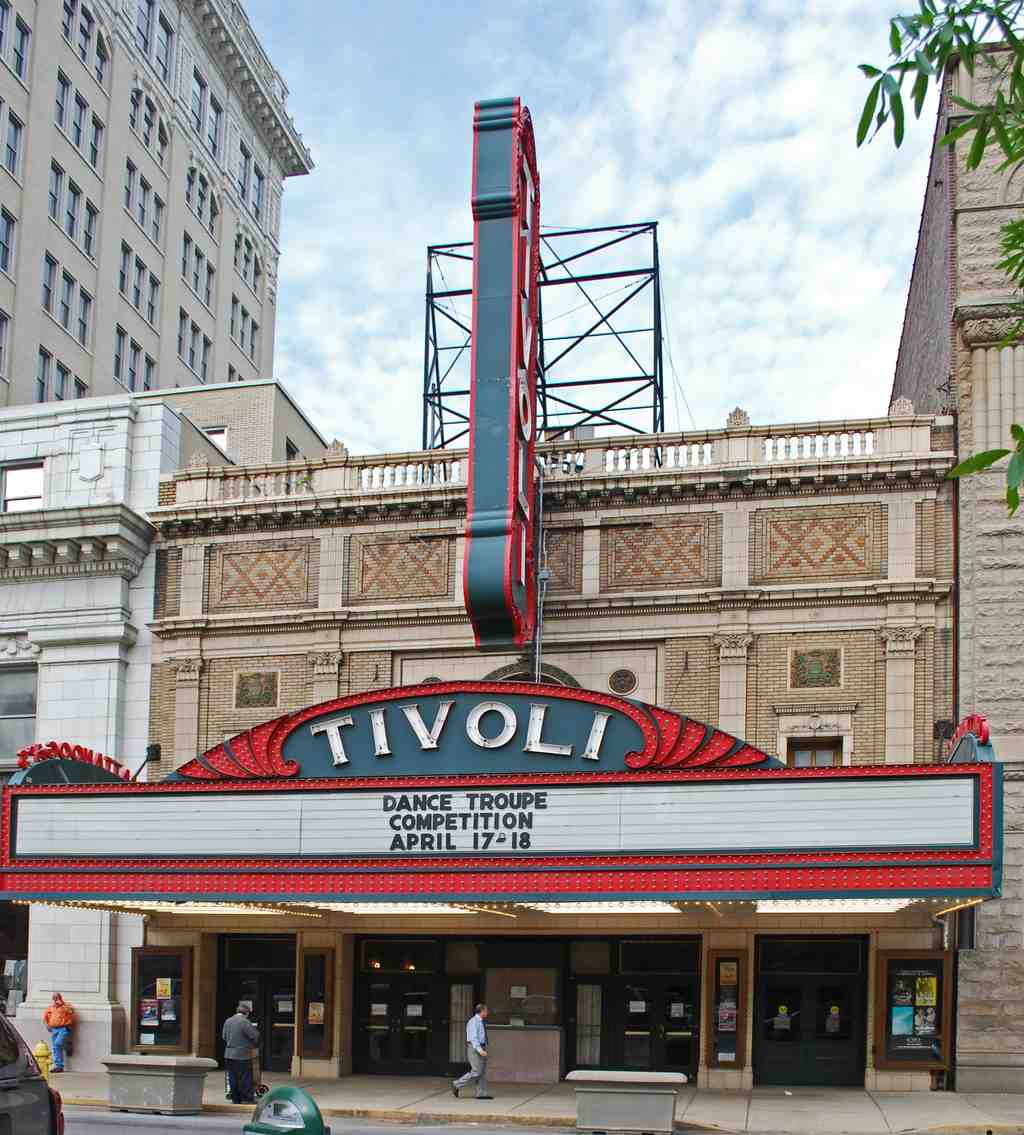
On your right, look for the classic cream-and-tan brick façade topped by that big red-and-black marquee and the tall vertical sign that spells TIVOLI like it’s trying to be seen from orbit.
This is the Tivoli Theatre... Chattanooga’s own “Jewel of the South,” and for once a nickname that isn’t just marketing fluff. It opened March 19, 1921, after about two years of building and a price tag of $750,000 at the time... roughly $13 million today. That’s not “let’s put on a show” money. That’s “we’re making a statement” money.
Architecturally, it’s Beaux Arts-fancy, symmetrical, and proudly over-dressed. Chicago theater specialists Rapp and Rapp helped design it, along with local architect Reuben H. Hunt, and the John Parks Company handled construction. And the exterior is basically a handshake: cream tiles, beige terra-cotta brick, and then the marquee comes in with the red-black-white drama. The sign originally bragged with about 1,000 “chaser lights,” the kind that ripple and wink, plus a big neon TIVOLI to seal the deal. If you were coming downtown for a night out, this was the lighthouse.
Inside was even more of a treat: a grand lobby with white terrazzo flooring inlaid with green marble, little music-themed medallions, crystal chandeliers, and a ceiling that went full rose-and-gold. The seats? Red velvet plush-because in 1921, your movie experience deserved upholstery.
Here’s the real flex: the Tivoli was one of the first air-conditioned public buildings in the country-and among the first theaters in the South with air conditioning. In other words, on a sticky Tennessee summer night, this place didn’t just sell tickets... it sold RELIEF.
Opening day was an all-day celebration: concerts by the Tivoli Symphony, showings of Cecil B. DeMille’s “Forbidden Fruit,” and a personal appearance by Mae Murray. Tickets ran 15 to 55 cents-about $2.50 to $9.50 today. And yes, they packed in multiple shows, plus speeches from local big-deals like Professor Spencer McCallie and the mayor.
The Tivoli’s built for scale-over 1,750 seats spread across orchestra, boxes, loge, and balconies. The stage is massive, and the silver-and-gold proscenium arch frames it like a picture you can walk into. And because movies used to be silent-awkward, right?-they installed a mighty Wurlitzer organ (after an earlier organ), costing $30,000 in 1924... around half a million today. That “Mighty Wurlitzer” is still playing, nearly a century later, which is honestly more commitment than most of my gym memberships.
Like a lot of grand movie palaces, it hit hard times when newer theaters arrived in the 1950s. The last film here was “Snow White and the Three Stooges” in August 1961- a quiet, tasteful farewell. It closed, then came back as a cultural center in 1963, landed on the National Register of Historic Places in 1973, and the city bought it in 1976 for $300,000-about $1.6 million today. Major restoration money followed, and after a big renovation, it reopened in 1989 with Marilyn Horne headlining... the kind of comeback story the Tivoli deserves.
When you’re set, The Read House Hotel is a 4-minute walk heading south.


