
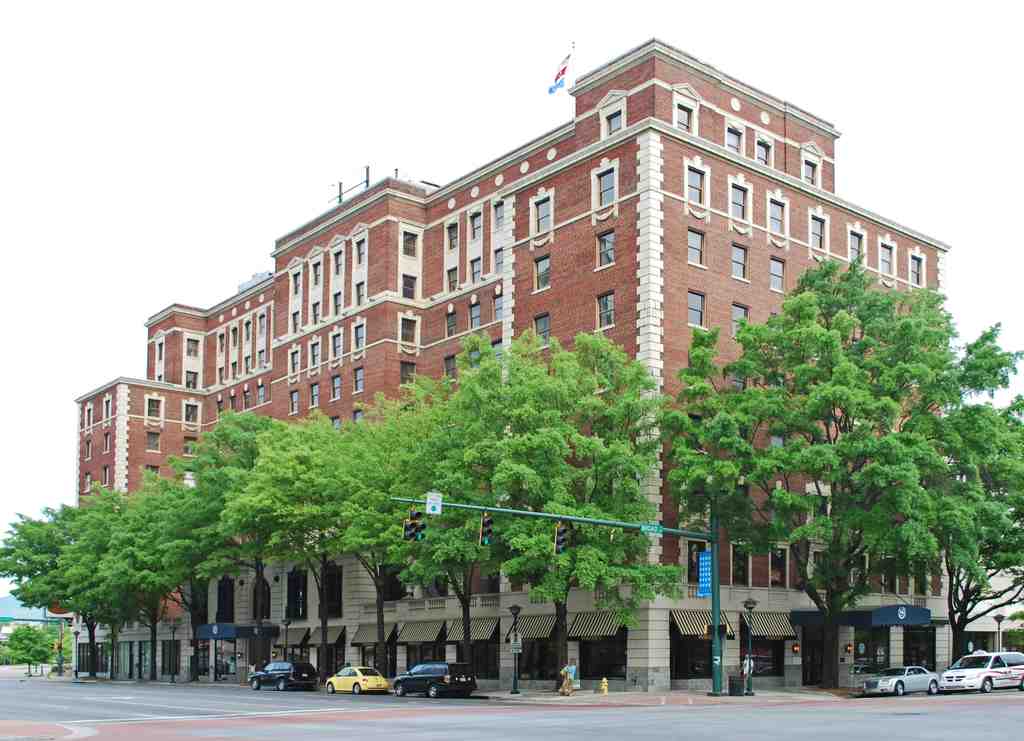
On your right, look for the big red-brick, ten-story hotel with white stone corner trim and rows of tall windows, sitting right at the street corner beneath a canopy of leafy trees.
This is The Read House, and it has the kind of history that likes to change outfits but never really leaves the party. The address has been welcoming travelers since 1847, when a hotel called the Crutchfield House opened here-built by Thomas Crutchfield Senior, who’d later become Chattanooga’s mayor. Back then, being “directly across from the depot” was basically the 1800s version of having the best airport hotel. Trains brought people, money, and gossip… and this place happily took all three.
In January of 1861, the Crutchfield House hosted a guest passing through on a very tense little errand: Jefferson Davis, fresh off resigning from the United States Senate, headed home to Mississippi. He gave a pro-secession speech right in the dining room-because nothing pairs with dinner like political combustion. And then William Crutchfield, the mayor’s brother and future congressman, fired right back, calling Davis a traitor and basically saying Tennessee wasn’t going to get tricked into joining the chaos. Tempers flared so hard a duel almost happened. Imagine checking in, hoping for a quiet night, and the hotel’s entertainment is “almost a shootout.”
When the Civil War arrived in full, the building’s role turned grim. In 1862 it became Confederate headquarters, then a hospital that winter, run under Confederate General Samuel Jones. In 1863, Union troops took Chattanooga and planted their regimental colors on top of the hotel-an unmistakable “we’re in charge now” message. After the Battle of Chickamauga, it served as a hospital again, this time for wounded Union soldiers. The Crutchfield House survived the war… but not fire. In 1867, it burned down, and the family decided they’d had enough of rebuilding.
Enter John T. Read, a Civil War surgeon with a stubborn streak. In 1872-New Year’s Day, no less-he opened the first Read House Hotel here, starting with about 45 rooms. His son Samuel took over young, at 19, and grew it into a 202-room operation by 1902. This spot was booming, and the Read family played along.
The building you’re looking at now is the 1926 version: ten stories in a tidy Georgian style, designed by Chicago architects Holabird and Roche. It cost $2.7 million at the time-roughly around $50 million today-and they pulled off the classic trick of keeping parts of the old hotel running while the new one went up, so the front desk never really had to say, “Sorry, we’re closed.”
Famous names cycled through-presidents, performers, and even Al Capone. During one of his federal trials, Capone stayed here, and the hotel added custom iron bars to his windows-Room 311-bars that, yes, are still there. Because nothing says “welcome” like decorative detention.
And then there’s Room 311’s other claim to fame: the haunting story. Many locals whisper about a woman named Annalisa Netherly, said to have lived in that room for a long stretch in the 1920s and ’30s, and to have died there under murky, tragic circumstances. The stories don’t agree on details-some say murder, some say suicide-but the legend stuck. Guests report strange, heavy feelings, especially men… and especially smokers. Others sleep like a rock. So… your odds are either “paranormal encounter” or “great night’s rest,” which is about as on-brand for hotels as it gets.
When you’re set, the Chattanooga Public Library is a 3-minute walk heading east.


