
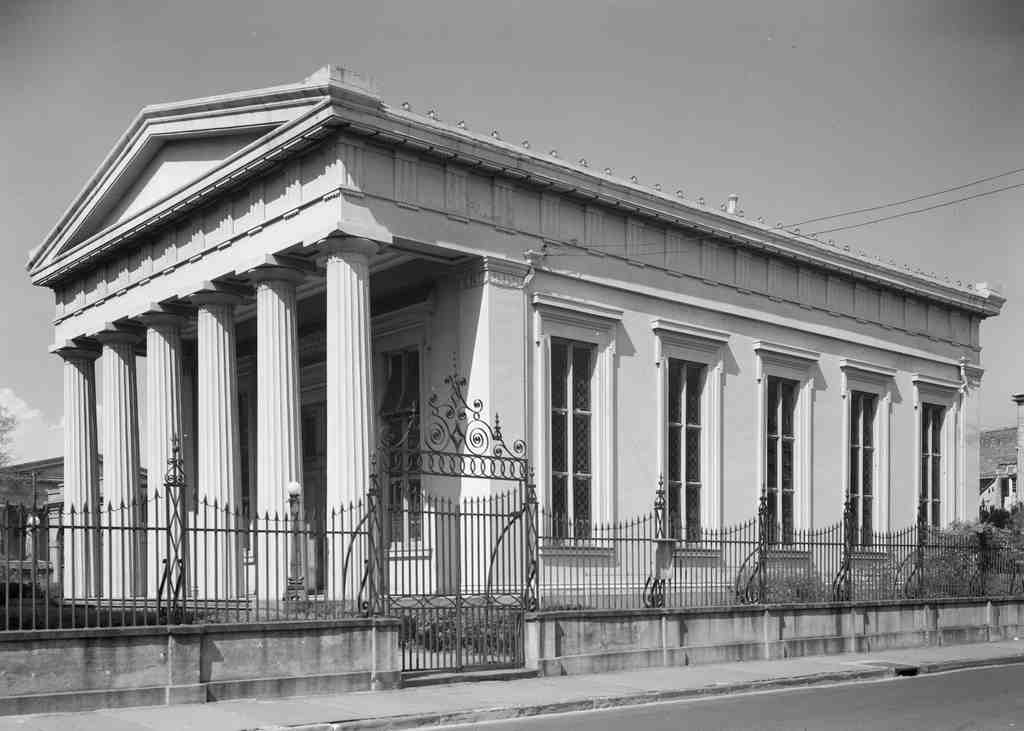
Look for a bright white, rectangular building with six grand columns out front and tall windows running along the sides, just behind a black wrought-iron fence at 90 Hasell Street-trust me, it’s hard to miss!
Alright, you’ve got a real jewel of Charleston history in front of you! Standing here, if you listen closely, you might almost hear the distant chatter of early merchants and the rustling of silk-echoes from 1749, when a group of Sephardic Jews arrived from London to make Charleston their new home. This grand structure, Kahal Kadosh Beth Elohim, or KKBE for short, may look like a Greek temple with its enormous Doric columns, but inside, it’s a living legacy of Jewish faith, resilience, and reinvention.
Picture the year 1793 when Charleston bustled as a busy port-fresh shipments of tea, rice, and spices arriving on the tides. That’s when the very first version of this synagogue was built, filling the city with the melodies of ancient Portuguese rituals. But then disaster struck: in 1838, a roaring fire swept through Charleston, devouring over 500 buildings, including their house of worship. You can imagine the crackle and roar as flames consumed the synagogue. But out of those ashes, something remarkable emerged-a new Greek Revival temple, built by the hands of enslaved Africans owned by David Lopez Jr., right here in 1840. Deep truths, both painful and honest, are embedded in every brick.
KKBE is special for another reason, too: it’s the mother ship of Reform Judaism in America! Back in the 1820s, a group here wondered, why not try something new? Chanting the same prayers as their ancestors in Lisbon and Amsterdam was meaningful, but maybe, just maybe, it was time to write a few new pages in the prayer book. So, they did-sparking a uniquely American version of Reform Judaism, often with ideas as spicy as Charleston’s pepper pot!
This building is the oldest synagogue in continuous use in the country and keeps watch over the oldest Jewish cemetery, just nearby. Inside, a mural shows a Jewish Confederate soldier-sword broken, eyes downcast-capturing the bittersweet struggles of the past. There’s more: heroes, leaders, and even a soldier named Joseph Levy once filled these seats.
In 2021, a monument appeared out front. Rabbi Stephanie Alexander said it was time to be honest about who built this place-acknowledging the forced labor and honoring those stories, too. As you stand here in the shade of these grand pillars, remember: Charleston’s spiritual heart beats with memories of joy, loss, courage, and hope. Or as I like to say, it’s a story with more twists than my grandma’s challah bread!


