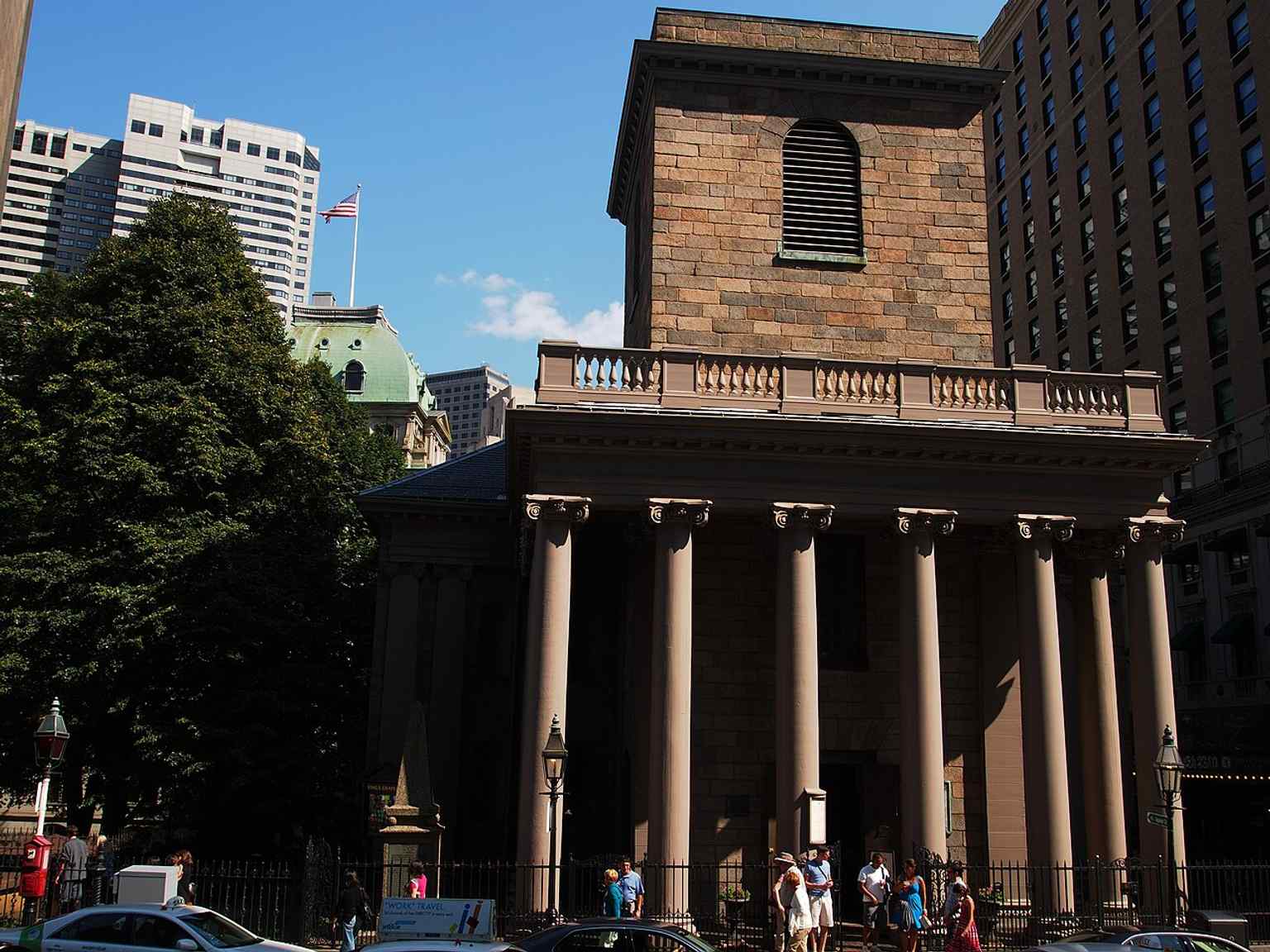
On your left, King's Chapel is a hefty gray stone church with a broad rectangular body, tall arched windows, and a square tower carrying its famous bell.
This place has a calm, stubborn presence... like it decided centuries ago that it belonged on this corner and never bothered to argue about it again. King’s Chapel began in sixteen eighty-six, when Royal Governor Sir Edmund Andros started the first Anglican church in colonial New England during the reign of King James the Second. That did not make him popular here. In fact, no local resident wanted to sell land for a church that wasn’t Congregationalist, the official faith of Massachusetts at the time. So the congregation set its first chapel, a wooden one, right on the public burying ground beside it.
Then the story takes a wonderfully strange turn. In seventeen forty-nine, architect Peter Harrison designed this stone chapel, and builders raised it around the older wooden church like a shell growing around a smaller creature. When the new building was done in seventeen fifty-four, workers took the wooden church apart piece by piece and passed it out through the windows. That timber sailed all the way to Lunenburg, Nova Scotia, where it became Saint John’s Anglican Church.
The building in front of you was meant to have a steeple, but money ran short, so the tower stopped where you see it now. Somehow that unfinished note works. It gives the chapel a grounded, no-nonsense look, even though it was one of the finest colonial designs in Boston and later earned National Historic Landmark status.
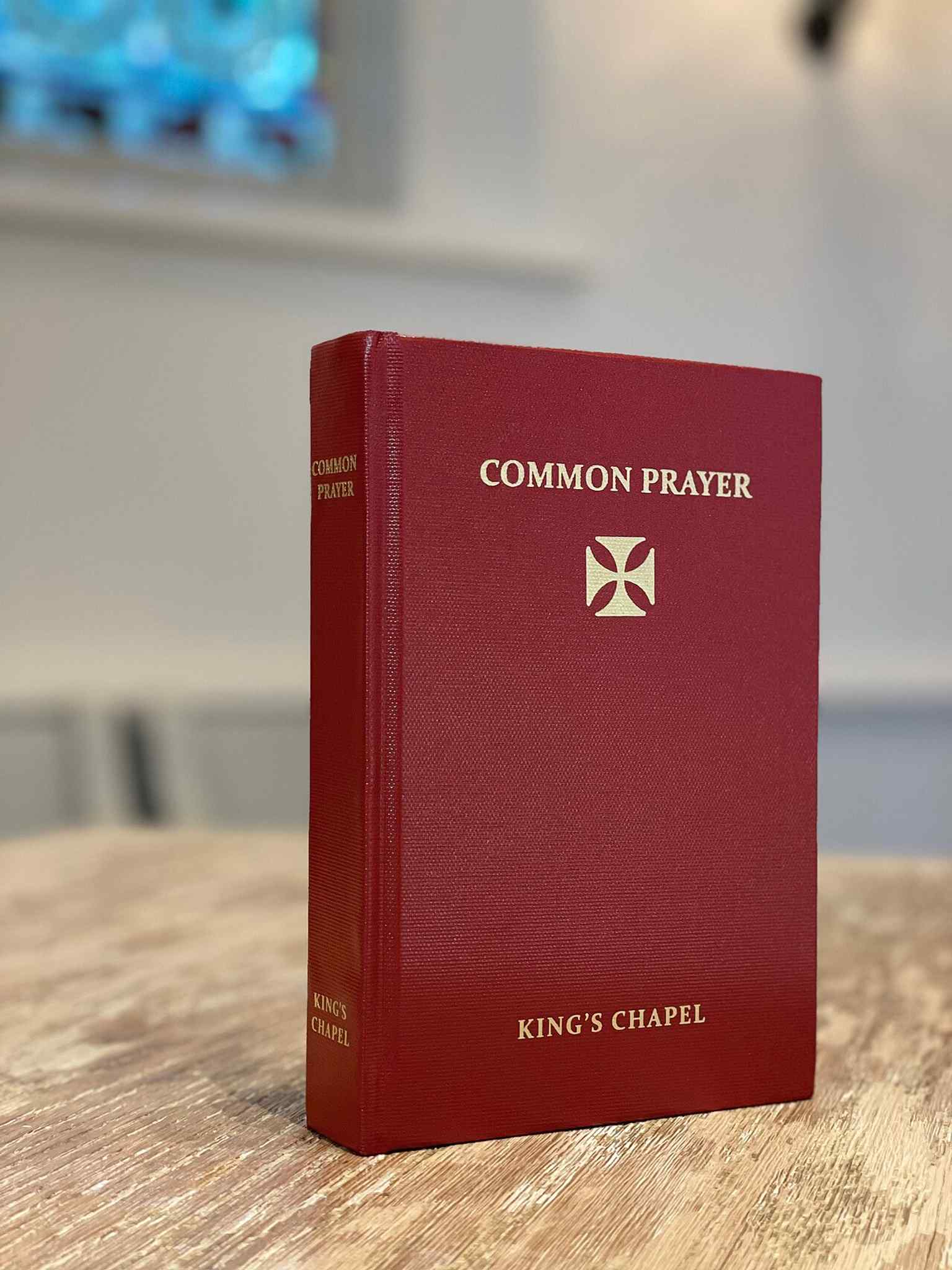
During the American Revolution, this place stood empty and people simply called it the Stone Chapel. Many Loyalist families left for Nova Scotia or England. When the church reopened in seventeen eighty-two, James Freeman pushed it in a new direction. He rewrote the Book of Common Prayer, the set form of worship, along Unitarian lines in seventeen eighty-five. An Episcopal bishop named Samuel Seabury refused to ordain him... and King’s Chapel basically shrugged and kept going anyway. That independent streak still defines it: Unitarian in belief, Anglican in worship style, and governed by its own congregation.
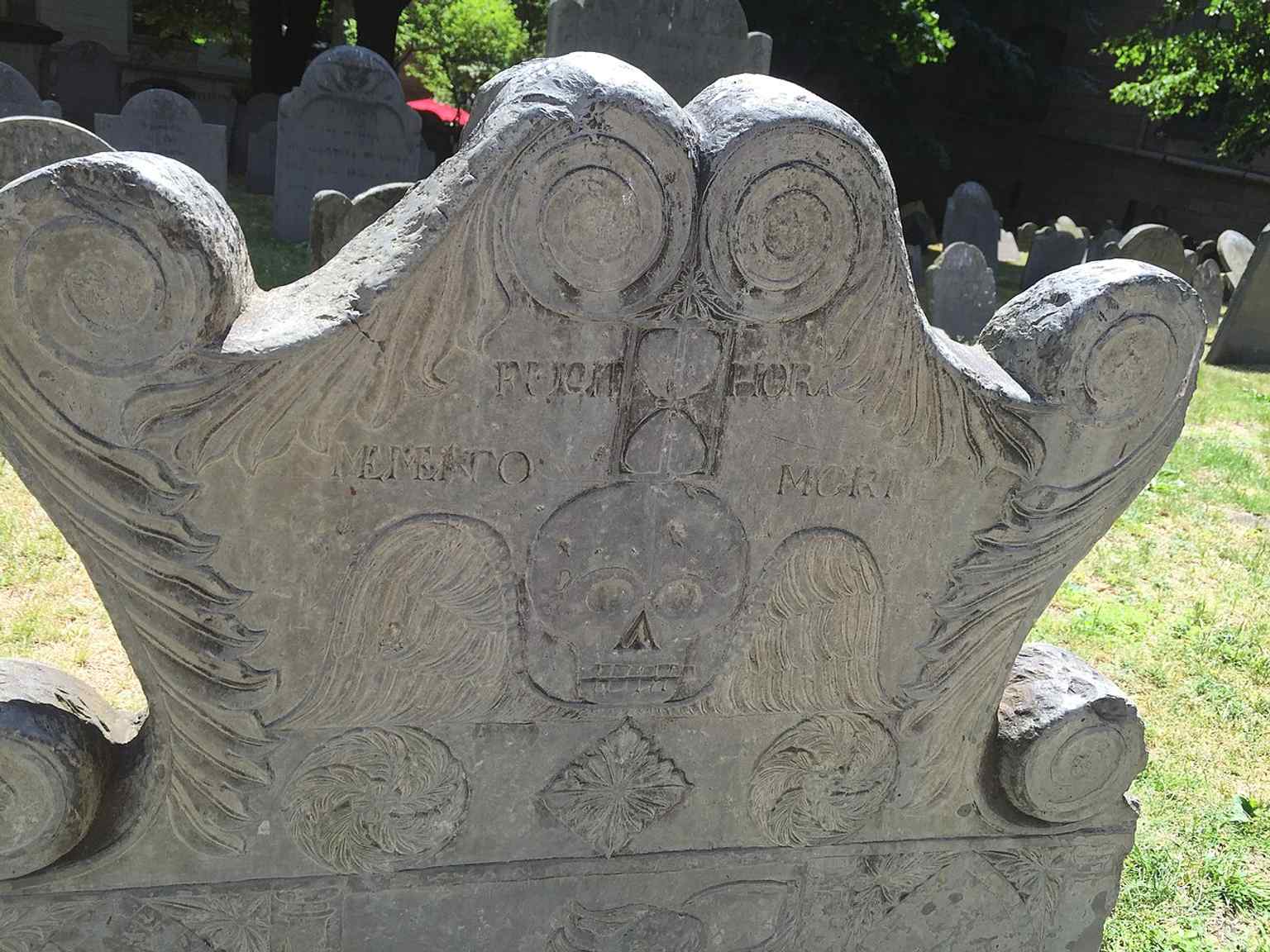
If you want a quick side-by-side of that staying power, the image in the app shows how the chapel barely changes while the city around it keeps changing costumes.
Look up at that tower and think about the bell. England cast the first one, workers hung it in seventeen seventy-two, and when it cracked in eighteen fourteen, Paul Revere and Sons recast it. That bell is the largest one the Revere foundry ever made, and the last they cast during Paul Revere’s lifetime.
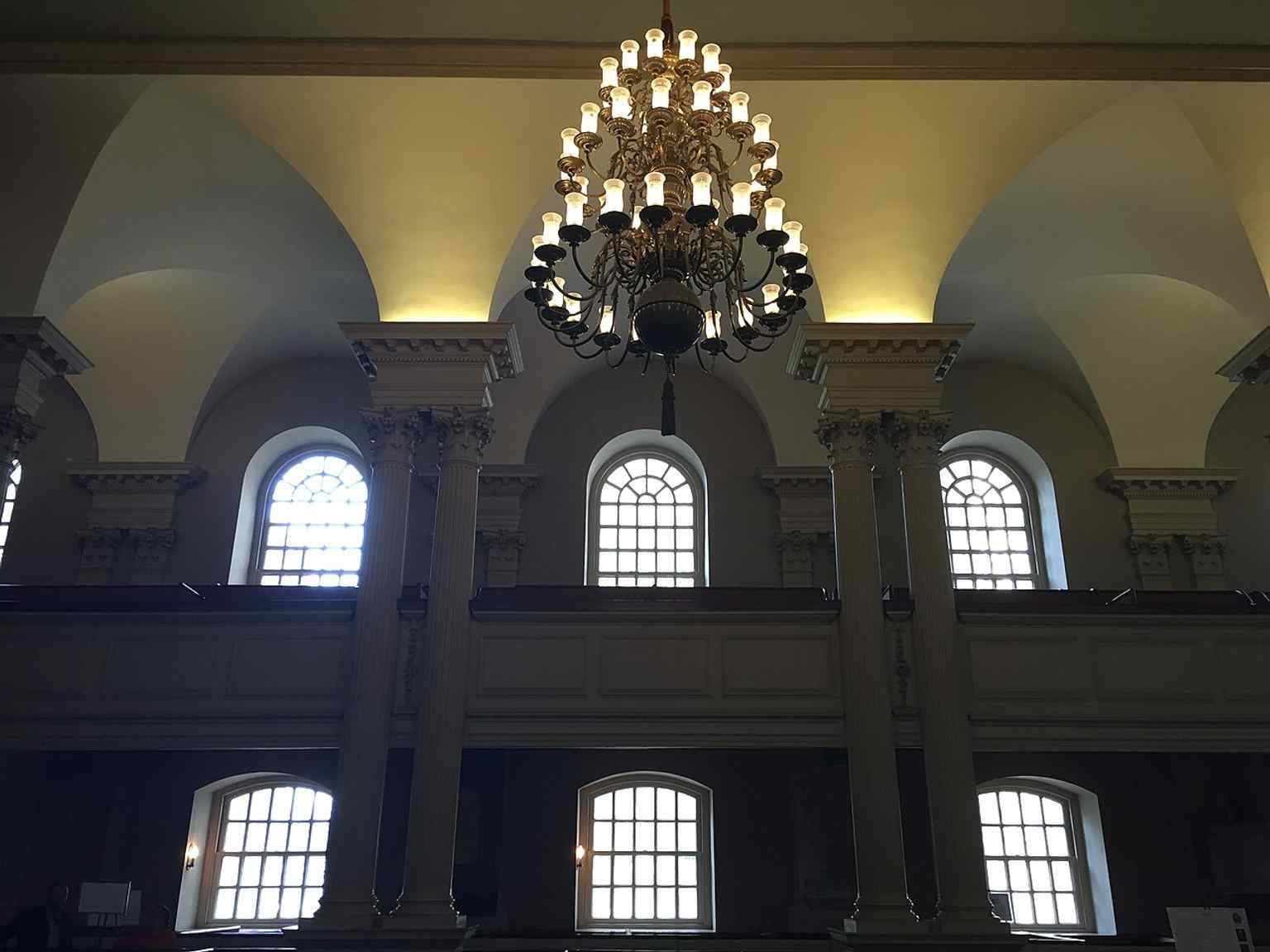
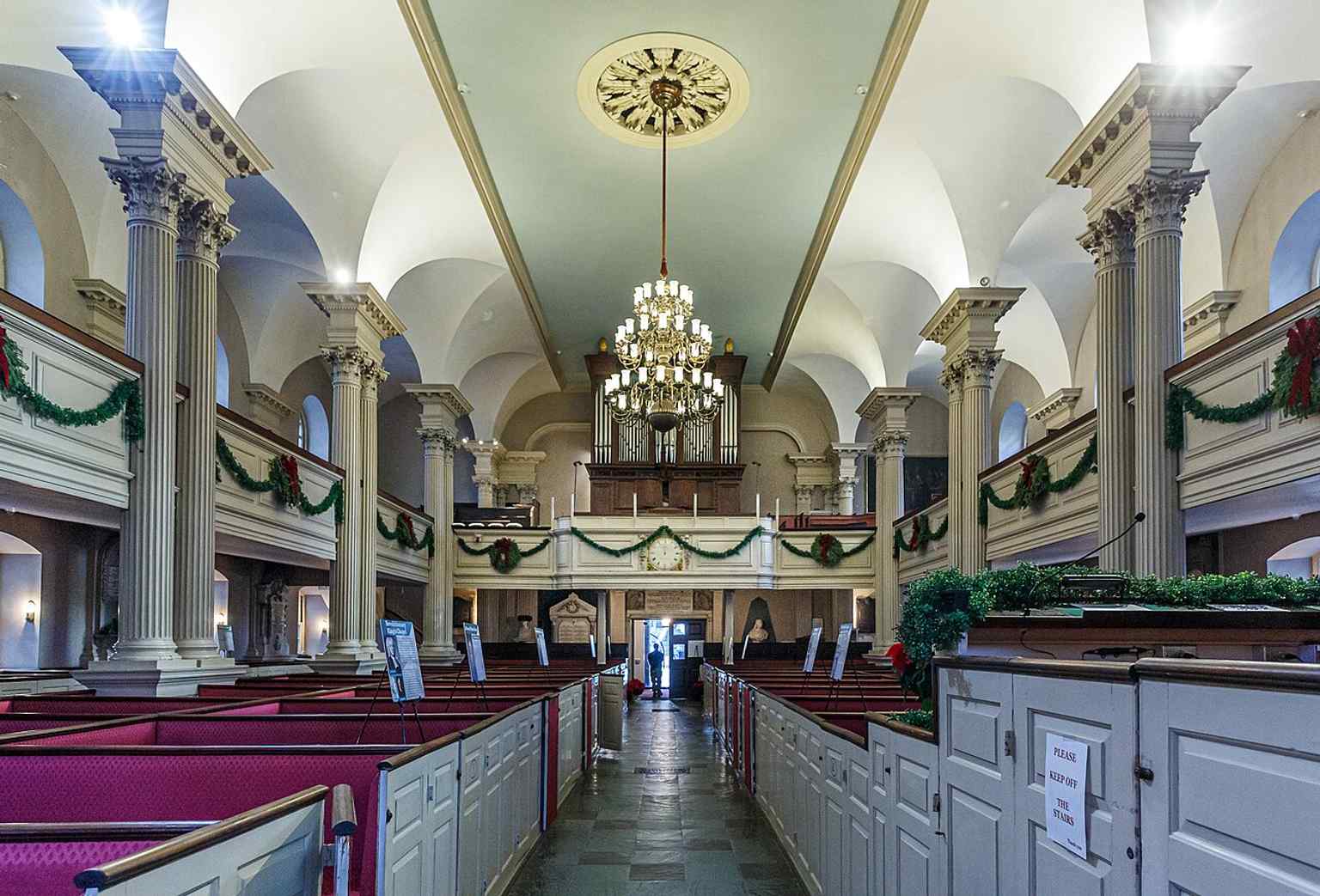
And if you glance at the interior photo on your screen, you’ll see the old pulpit and altar panels carried over from the earlier wooden chapel... the first church still living inside the second.
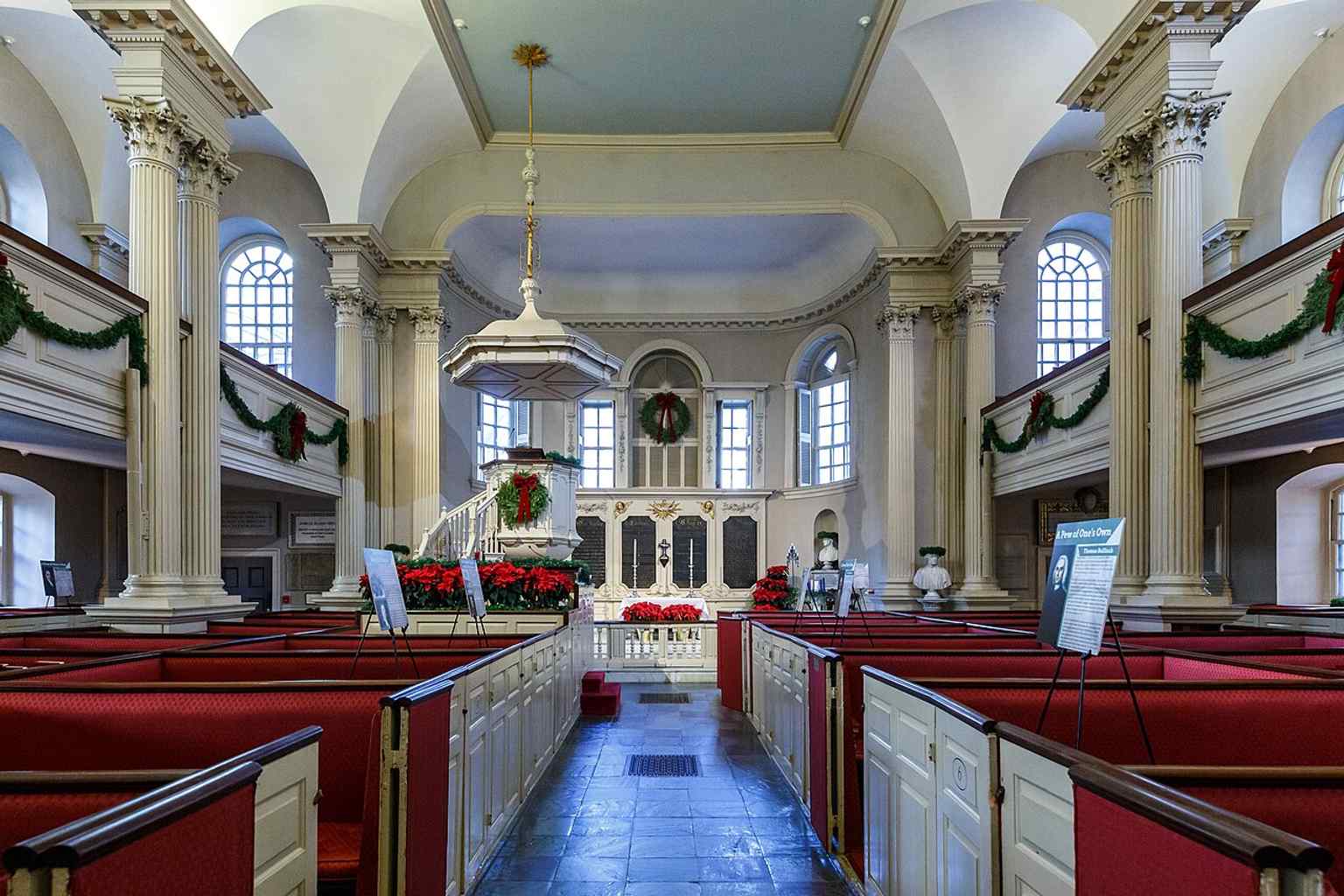
If you want to come back inside later, King’s Chapel is generally open Monday through Saturday from ten in the morning to five in the afternoon, and closed on Sunday.
King’s Chapel feels like Boston in miniature: loyalist roots, revolutionary disruption, and a stubborn talent for reinventing itself without losing its shape.
Take a minute here, and when you’re ready, we can head on to the next stop.