
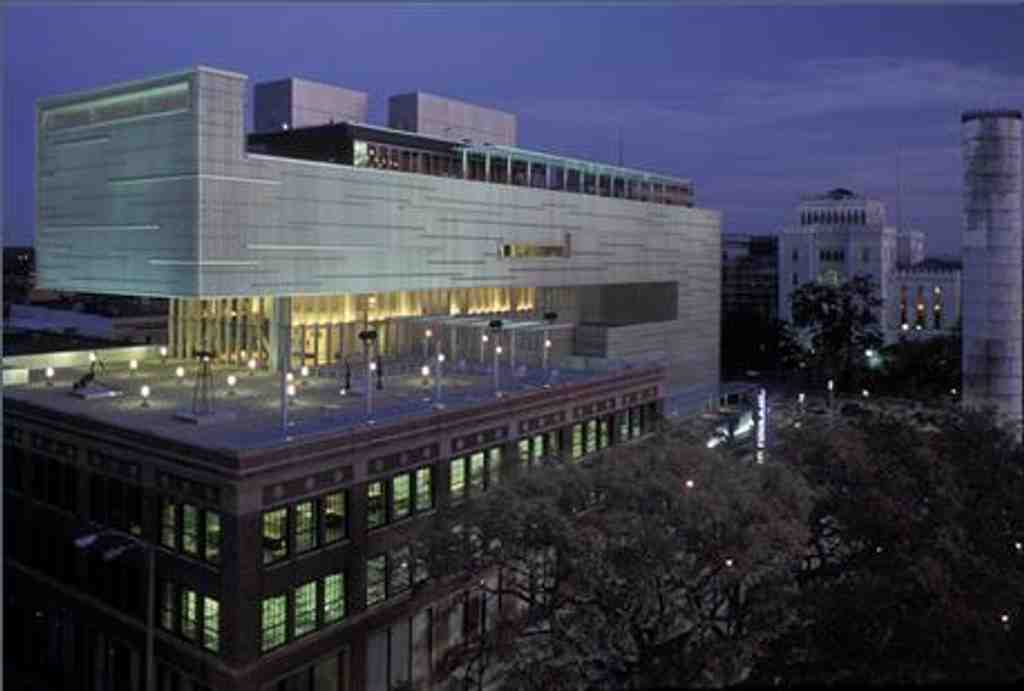
Over on your left is a massive, rectangular complex where a sleek upper structure clad in frosted glass floats directly above a heavy historic brick base. This is the Shaw Center for the Arts. If you want to see how this city constantly rewrites its own story, building bold futures right on top of its history, just look at this architecture. Pull up the image on your app to see how dramatically these two eras collide.
That heavy brick foundation belongs to a 1922 Auto Hotel, an early parking garage that eventually became an abandoned downtown eyesore. When developers decided to build a sixty million dollar arts center here in 2005, bureaucrats insisted a massive public and private partnership simply could not be done. The developers essentially asked, why not? They tore down most of the ruined garage but kept the northern and western Art Deco walls. Art Deco is a design style from the nineteen twenties known for its geometric brickwork and structured lines.
So now, you have this stunning architectural clash. Rising out of that vintage brick is a futuristic skin of translucent channel glass, a specialized architectural glass manufactured in Germany that lets light filter through without being completely transparent. This bold design helped kickstart a one point seven billion dollar downtown revitalization.
But there is a lot more going on inside than just what you can see from the street. Somewhere inside those walls is a massive, secret five thousand square foot storage room. Its exact location is hidden for security reasons because it holds over five thousand priceless works of art for the LSU Museum of Art. The collections manager designed it as a perfect ecosystem with airtight cabinets and custom hanging racks. When the museum wanted to bring in a Zen garden exhibit in 2016, she forced the team to thoroughly wash, rinse, and dry four hundred pound boulders before they were allowed inside, just to make sure no outside bugs compromised the pristine environment. Talk about strict standards.
The galleries here have also hosted intense local drama. In 2009, organizers of a major summer art show took down a photograph of a nude woman after some attendees complained. This sudden censorship sparked massive public outrage and a fierce debate over whether the capital was truly ready for serious contemporary art. The museum has also tackled painful local history, hosting an incredibly powerful exhibition marking the tenth anniversary of Hurricane Katrina. It featured stark photos of the 2005 shelter crisis right down the street, giving the city a vital space to process the upheaval.
You can explore the museum, theater, and rooftop restaurant Tuesday through Sunday, with varying operating hours. Now, we are going to pivot from artistic controversies to intense political ones. Let us head just a short walk away to the Hilton Baton Rouge Capitol Center, where political drama once reached an absolute fever pitch.


