
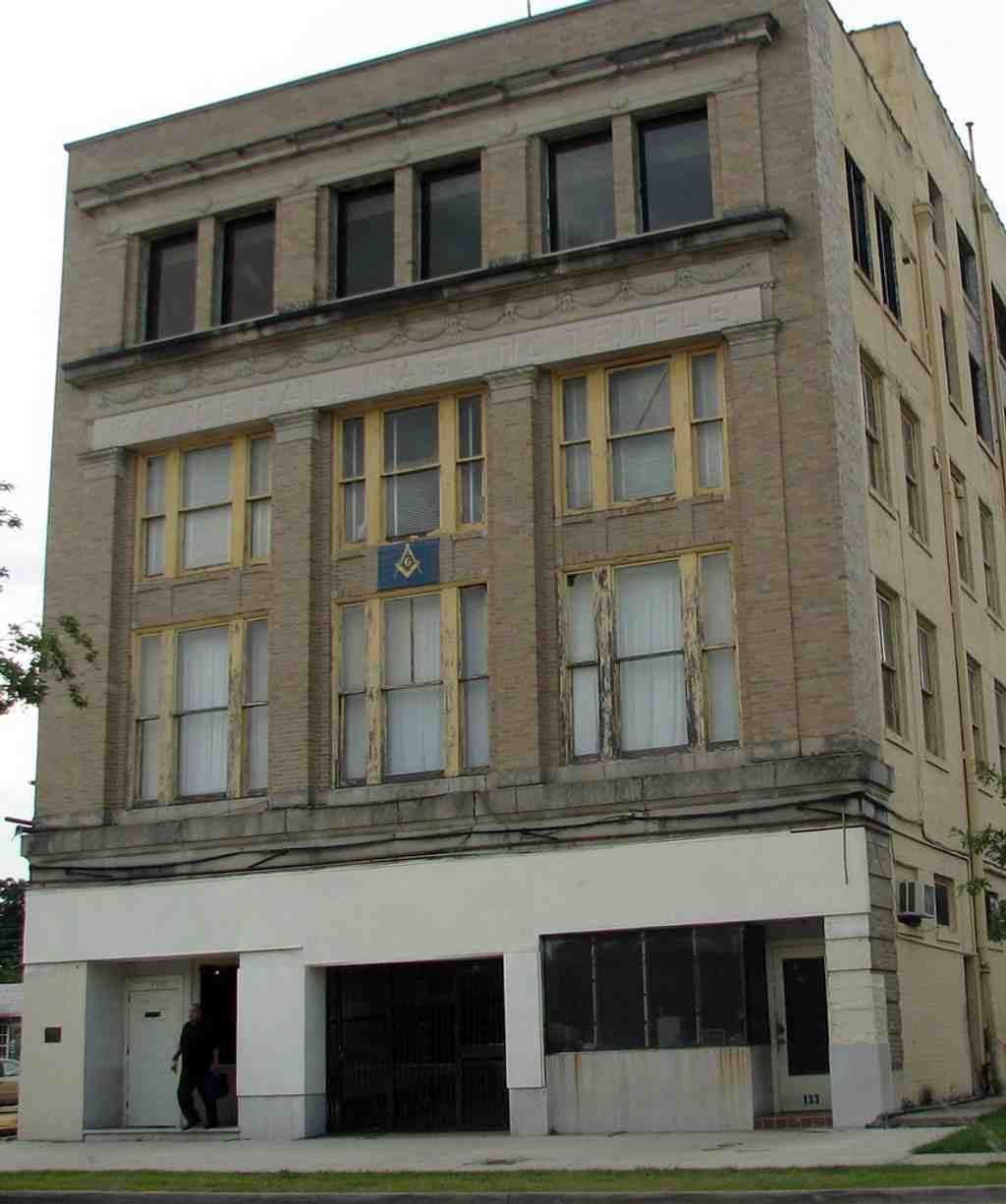
Look up at that tall rectangular brick structure, where the pale concrete bands contrast with the masonry and a bright blue Masonic square-and-compass emblem sits squarely between the middle windows. This building is a masterclass in living multiple lives. Originally built in 1924, it has constantly shifted its identity, transforming from a fraternal lodge to a vibrant entertainment mecca, and later into a vital command center for civil rights. It perfectly sets the stage for a city that constantly reuses its spaces, always forging its next era straight out of the framework of the past.
Built by a prominent local Black contracting company, Conner, Bryant and Bell, this Neo-Classical building, meaning it borrows symmetrical monumental elements from ancient Greece and Rome, was initially a meeting hall for the Grand United Order of Odd Fellows. But it was what happened inside that made it legendary. Upstairs, the Temple Roof Garden, often called the Grand Ballroom, was the absolute pinnacle of glamour for Black social functions in Baton Rouge. Downstairs, the Temple Theatre, run by local legend Uncle Fred Williams, served as the premier spot for movies and live stars for the segregated community. Take a peek at your app to see its historical facade.
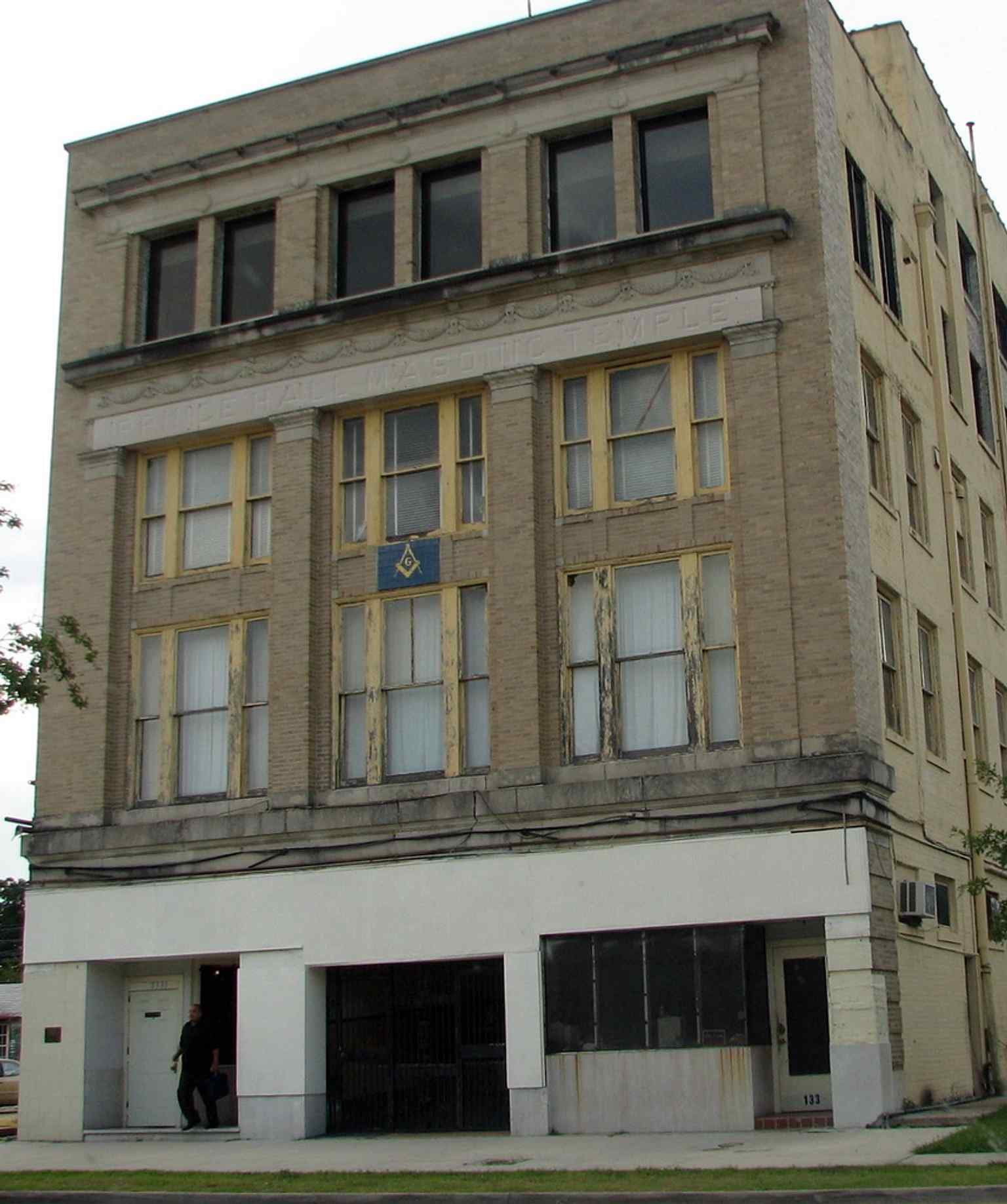
Because Black entertainers were barred from white-owned hotels during the era of forced segregation, legends traveling the Chitlin Circuit, a historic network of venues safe for African-American performers, made this their home. Imagine the massive windows thrown wide open, pouring the live swinging music of Duke Ellington, Louis Armstrong, and Cab Calloway out into the streets. It was pure magic. A 1938 ad even crowned it the finest dancing hall South.
Though it faced financial ruin in the Great Depression, the Prince Hall Freemasons bought it in 1948, turning these very dance floors into a vital strategy hub for the historic 1953 Baton Rouge bus boycott. This place proves how architecture evolves alongside its people. Now, as we leave this monument of vibrant history, we are going to walk about sixteen minutes to explore a completely different kind of ambition, the grand yet distinctly flawed urban planning of Beauregard Town.


.jpg)