
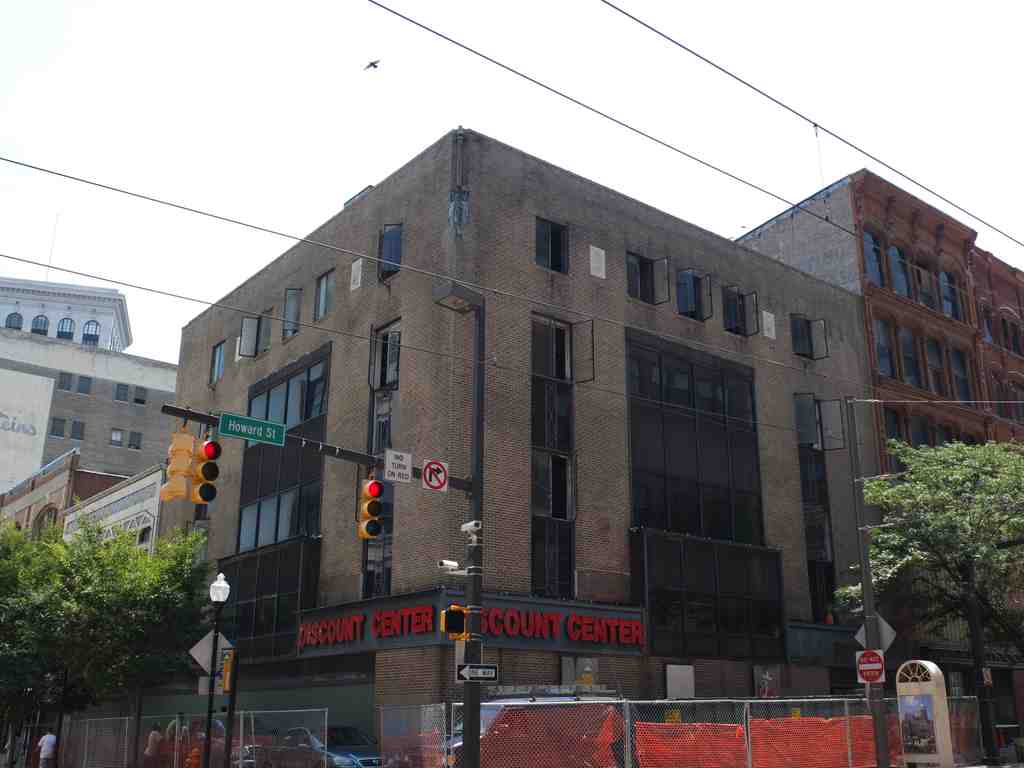
To spot Read’s Drug Store, look for a plain tan brick building with blacked-out windows and a big red “DISCOUNT CENTER” sign at the corner of Howard and Lexington Streets-sandwiched between taller, older brick facades and next to construction fencing.
Now, picture yourself standing here in the heart of Baltimore, just a step away from a landmark where, back in 1955, history was quietly rewritten. There’s a touch of mystery in the air-after all, not many buildings can claim they changed America while keeping such a low profile! This was once the pride of William Read, whose family sold the store to the Nattans in the days when folks rushed in with the jingle, “Run Right to Reads.” It bustled with shoppers and clinking soda glasses at the counter, a classic slice of American life.
But the real story simmered beneath the surface. Imagine: it’s a chilly January day, and a handful of students from Morgan State University, working alongside the local CORE chapter, stroll in. They aren’t looking for root beer floats-they’re about to stage one of the country’s first anti-segregation sit-ins. No dramatic speeches, no shouting, just a quiet, powerful act. Seven people, half an hour, and suddenly, the rulebook on “who gets served” starts to crumble. Dr. Helena Hicks, one of those students, later remembers how spontaneous it all felt; yet, within 48 hours, the store’s president, Arthur Nattans Sr., tells the world in the Afro-American newspaper, “We will serve all customers throughout our entire stores, including the fountains…”
The soda fountains whirr and fizzle, not caring about the color of anyone’s hands holding the glass. Don’t be fooled: this legendary sit-in happened a full five years before the more famous Greensboro protests-but the world, caught in its own routine, hardly blinked an eye.
Over time, Read’s was sold to Rite Aid and the Nattans moved on. The original buzz faded and the store finally closed, but oddly enough, Read’s Drug Store-closed for four decades-still found its way into Rite Aid’s bankruptcy filings as recently as 2025. Nowadays, you’re looking at a building trapped between its legendary past and an uncertain future. Preservationists and activists argue: turn the old pharmacy into a civil rights museum, or let development sweep it away? Here, every cracked window seems to beg for a new purpose, while the city debates whether to preserve the memory or move on. Baltimore Heritage and the Jewish Museum of Maryland push for preservation, standing in solidarity with the spirit of early desegregation.
So as you gaze at this old structure, you’re standing at a crossroads of memory, protest, and change. Sometimes, the biggest stories wear the plainest bricks.




