
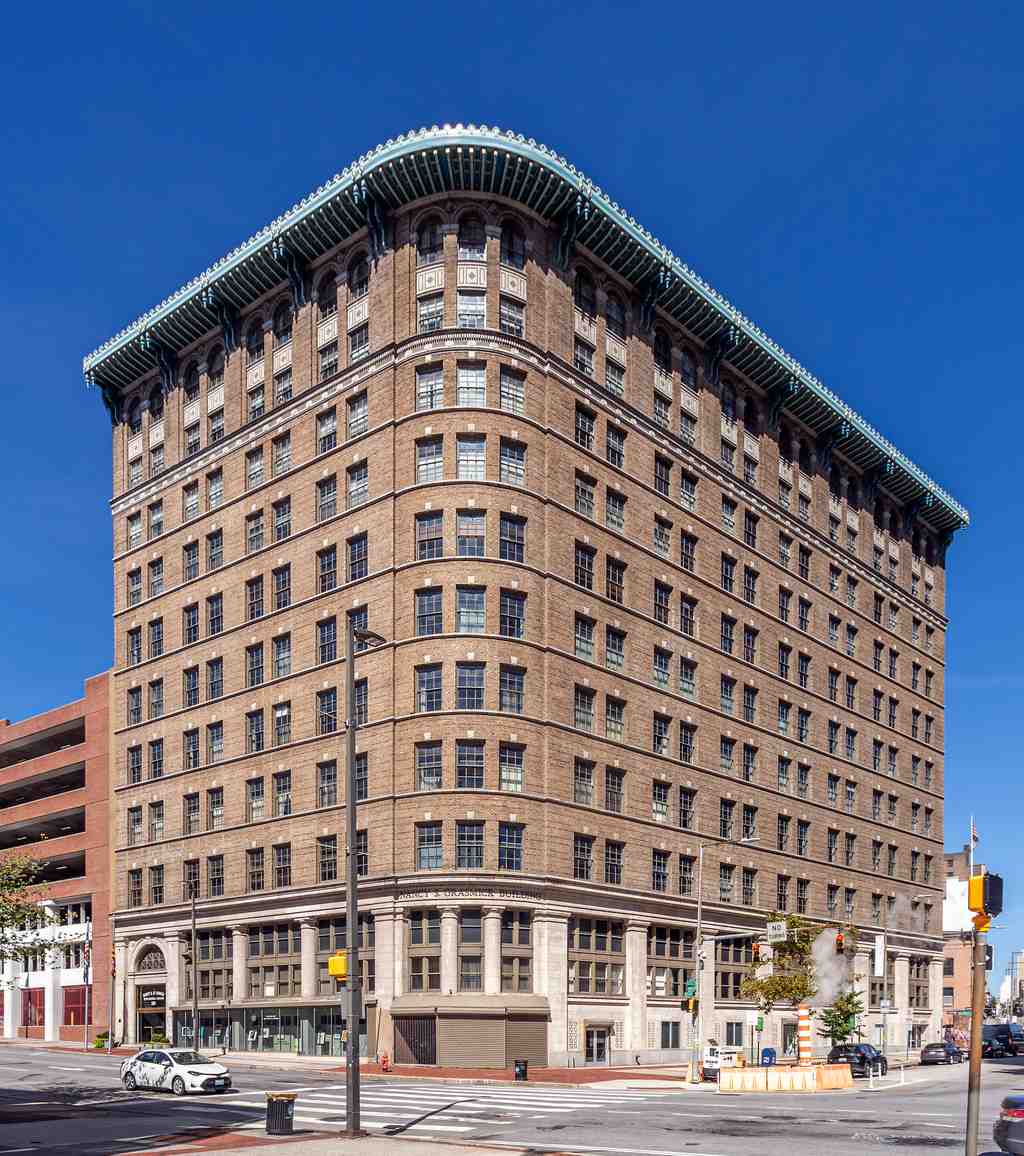
To spot the Maryland State Department of Education, look for a tall, sturdy-looking brick building with many windows and a unique blue-green trim at the top, standing at the corner, just ahead of you.
All right, welcome to the beating heart of education in Maryland! As you stand before this grand, twelve-story brick building, tap into your inner student for a moment-just don’t worry, I’m not handing out any pop quizzes. This landmark, known as the Nancy Grasmick Building, has looked out over downtown Baltimore since it was chosen as the headquarters for the Maryland State Department of Education. Imagine all the decisions about Maryland’s 1,400 schools and 900,000 students breezing through these windows. That’s a lot of school lunches, a mountain of homework, and more than a few snow day debates.
Now, if you prick up your ears, you may almost hear the bustling footsteps of Baltimore’s young scholars from years past. The story of Maryland’s quest for education starts way back in the 1800s, when the very first state superintendent of schools was authorized in 1865. At that time, public schools were just starting to blossom across the varied Maryland countryside. In Baltimore, formal education had taken root even earlier: the city welcomed its first public schools in 1829 (two for boys, two for girls), and by 1839, its first boys’ high school, delightfully called simply “The High School.” It would go on to become the third oldest public high school in the entire United States-so you can say Baltimore’s always been at the head of the class!
As the decades rolled on, Maryland worked to make education available to everyone. Even when challenges loomed-like regional differences stretching from the Appalachians to the sandy shores of the Atlantic, or long battles for fair schooling for African-Americans-progress kept moving. In 1867, a dedicated elementary school for Black children finally opened in Baltimore, followed by the pioneering Frederick Douglass High School, whose roots go back to a private “Douglass Institute” founded just after the Civil War. Picture the applause as Frederick Douglass himself presided over its dedication-now that’s a guest speaker!
The years saw more milestones-the rise of manual training schools like Baltimore Polytechnic Institute in the 1880s, the creation of the second “colored high school” in 1910, and the eventual shift to co-ed and vocational schools. And in 1954, in a momentous wave, Maryland followed the Supreme Court's Brown v. Board of Education ruling, ending official school segregation.
Of course, Maryland didn’t rest on its laurels (or its report cards). In the years following World War II, as suburbs sprawled and the baby boom echoed through the classrooms, modernization became the name of the game. By the 1970s, the clever folks who worked in this building helped redefine the Department of Education, making it a chief player in state government and helping Maryland leap into the top ranks nationwide.
By 2009, Maryland’s public schools were top of the class-not only in test scores but in offering college-level courses, too. The state is so proud of those bright young minds that analyzing test scores and boosting academic performance is the name of the game here, every day.
And as you stand in front of this impressive building, remember that inside, a parade of superintendents, from Nancy Grasmick to Mohammed Choudhury, have worked tirelessly to keep Maryland’s schools among the best in America. The journey hasn’t always been easy-just imagine sorting through $5.5 billion in school funding while figuring out who eats what for lunch! But somehow, among thick policy reports and the occasional spilled coffee, they manage to keep Maryland’s education story rolling along.
So give a wave-this building might not hand out gold stars, but it sure has helped generations of Marylanders earn them!




