
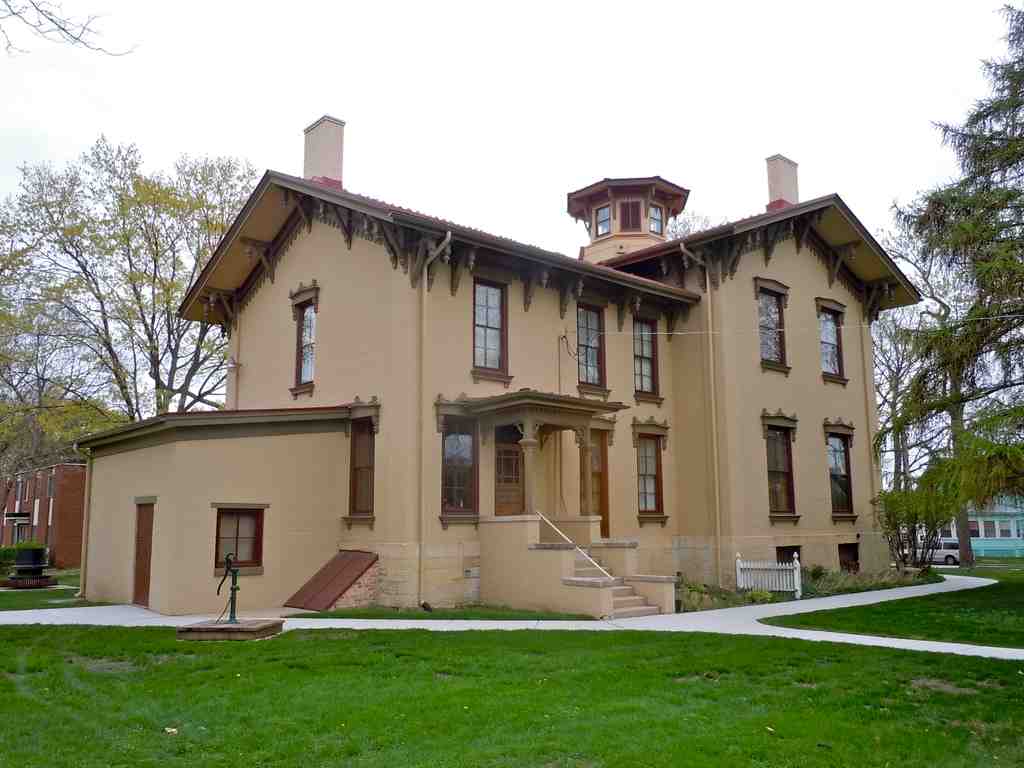
On your right, look for a two-story brick house with a cross-shaped massing, tall Italianate proportions, and an octagonal cupola rising from the center like a small lookout.
This is the William Tanner House Museum, and it starts with a man who helped imagine Aurora before most of it even had lines on paper. William A. Tanner arrived in eighteen thirty-five, one of the city’s earliest settlers, and he wore more than one hat: surveyor, farmer, and later a hardware merchant whose business lasted until nineteen seventy-nine, longer than any other in town. He did not just make a living here... he helped map out how Aurora would grow. Streets, lots, neighborhoods - those practical marks of a surveyor’s hand quietly shape the lives that come after.
Tanner first worked land on the west side of the river, then went back to New York in eighteen thirty-nine to marry Anna Plum Makepeace. They returned the next year, raised ten children, and eventually outgrew simpler quarters. So in eighteen fifty-seven, Tanner put up this house, a confident Italianate home - that style loved height, symmetry, and a little drama. The plan forms a Latin cross, meaning the rooms branch from a longer central axis, and that cupola above the roofline crowns the whole place like a thought made visible.
If you check the image in the app, you can get a clean look at how composed the exterior feels, almost formal, but still deeply domestic. Inside, the first floor held the parlor, music room, kitchen, dining room, library, and even the main bedroom and bath. Upstairs belonged to the children and family sleeping rooms. It is easy to talk about city-building in terms of mills, banks, and big public buildings, but some of it begins in rooms like these, where accounts were kept, letters were written, and futures were planned around a family table.
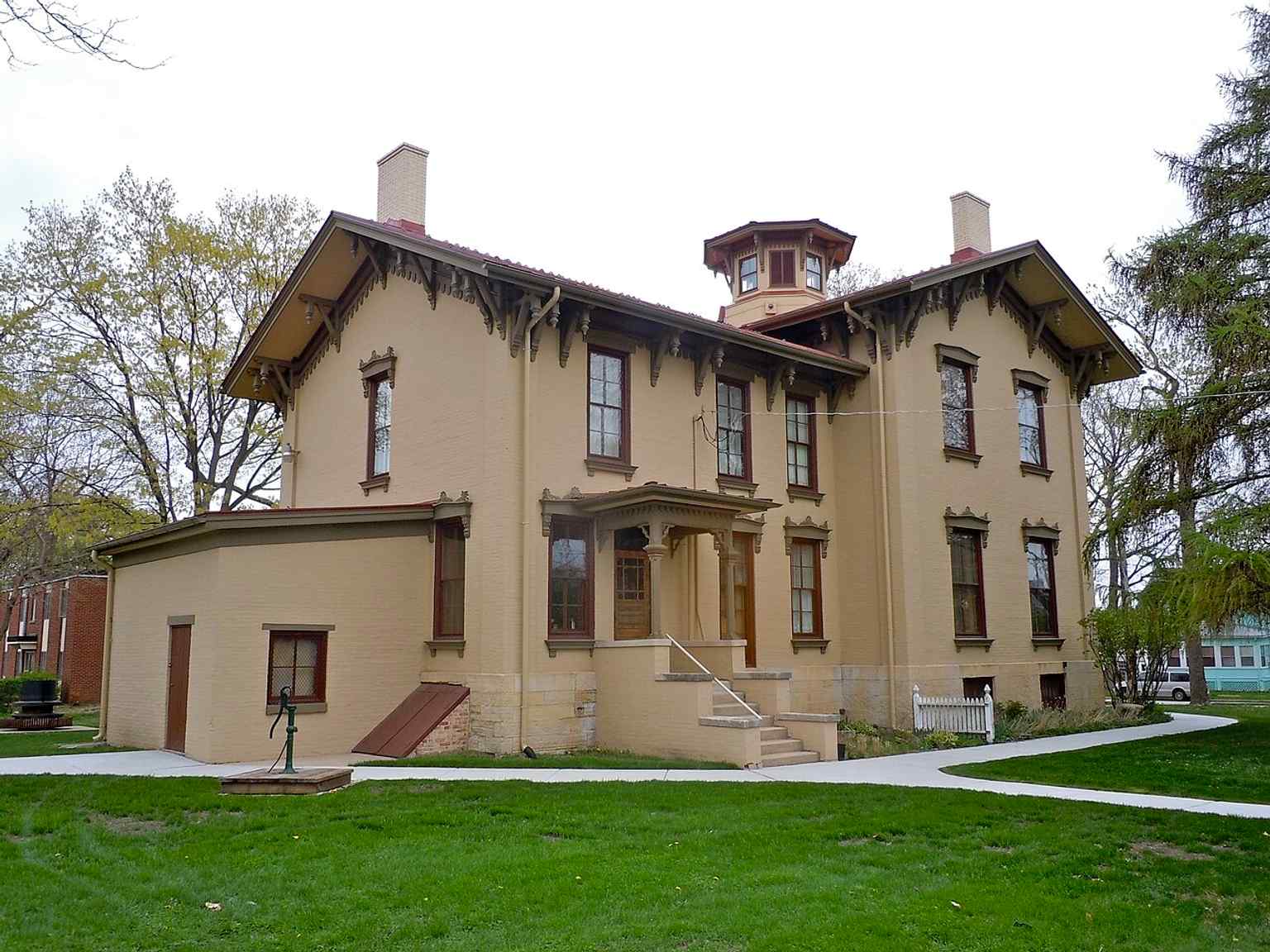
The Tanner descendants stayed here until nineteen thirty-six, when two of the children gave the house to the Aurora Historical Society. After that, the place kept changing its role. First it served as a local-history museum, and later curators leaned into its identity as an upper-middle-class Victorian home, so what visitors see now is both preservation and careful historical staging. During the shutdown years, staff even created a video tour that revealed hidden layers most visitors never see - basement art restoration, ornate plasterwork, the bells, and the cupola, which is normally closed.
One of the most intimate surviving objects is almost startlingly personal: a daughter made artwork from twists of hair from each of the Tanner children. Suddenly history is not abstract anymore. It is touch, memory, family.
So here is the question this house leaves hanging: if you were helping draw a young city into being, would you care more about where the streets ran... or about the private lives those streets might shelter?
From here, the story grows grander at the Col. Ira C. Copley Mansion, about a fifteen-minute walk away, where family success expands into public influence. If you want to return for a tour, the museum is generally open Wednesdays and Sundays from one to three.





