
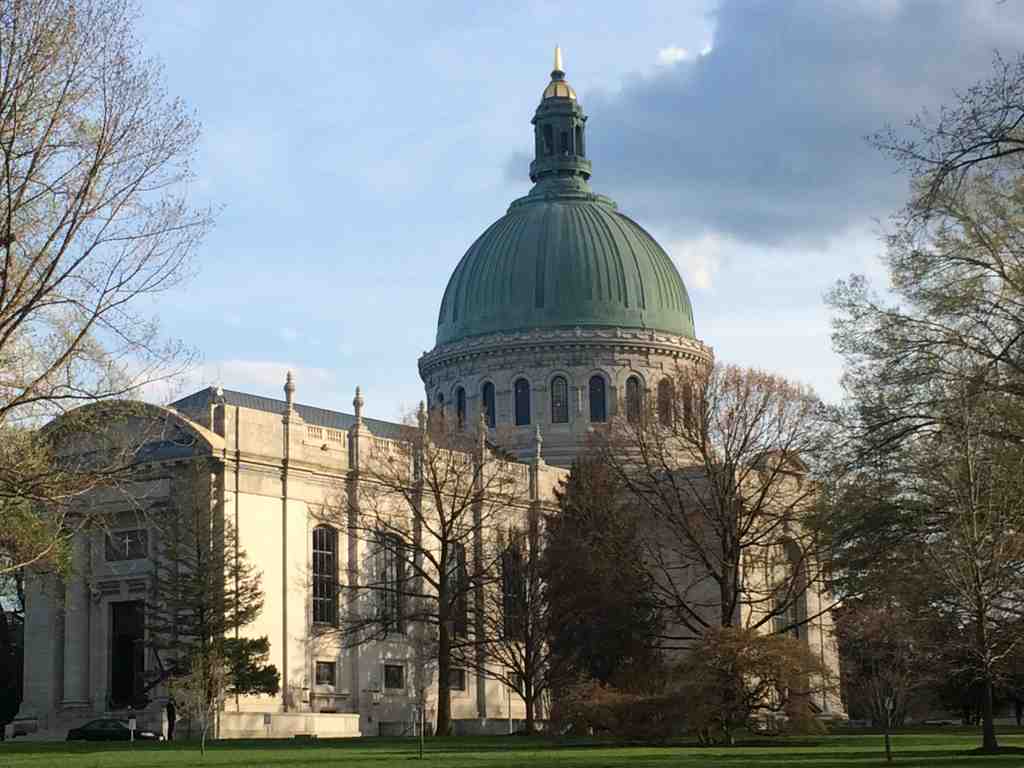
You will spot the Naval Academy Chapel on your left by its massive green copper dome resting atop a grand cross shaped structure of pale stone, crowned with a gleaming gold cupola pointing skyward.
Throughout history, leaders and architects in Annapolis used grand monumental structures to project untouchable power and prestige. But as any engineer will tell you, building a myth out of stone and mortar is a risky business, often leading to spectacular failures. Take this very building. In the early nineteen hundreds, architect Ernest Flagg designed a sprawling master plan for the Academy in the Beaux-Arts style, a highly decorative and theatrical approach to architecture meant to impress and intimidate. He positioned this chapel on the highest ground as the campus spiritual center, anchoring an ambitious ten million dollar project, roughly three hundred and fifty million today. He even planned a massive boat basin aligned with the dome, forging a direct visual link between divine providence and the high seas.
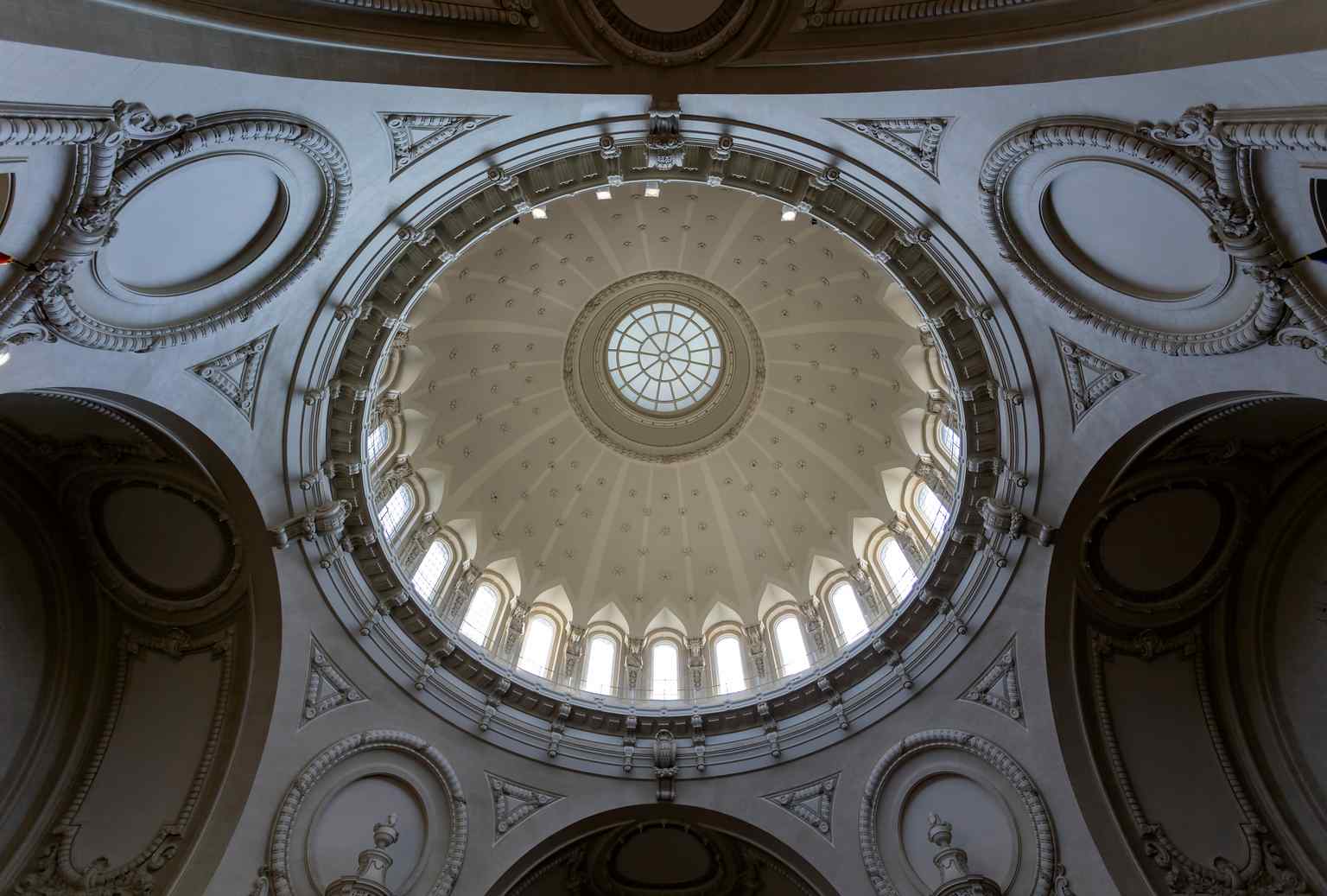
Look up at the chapel's iconic green dome. Now, pull up your screen and take a look at the detail image. Can you imagine that dome covered in decorative terracotta instead of the copper sheathing you see today? Terracotta is baked clay, and Flagg's original design called for it in spades, earning the chapel the nickname the frosted wedding cake. There was just one problem. Terracotta is porous. It eagerly absorbed the local moisture, expanded, and began to shatter. The architectural ambition literally crumbled when a massive chunk of the frosted masonry plummeted straight down into the sanctuary. By nineteen twenty eight, the Navy surrendered to physics, ripped off the crumbling clay, and installed the copper you see now.
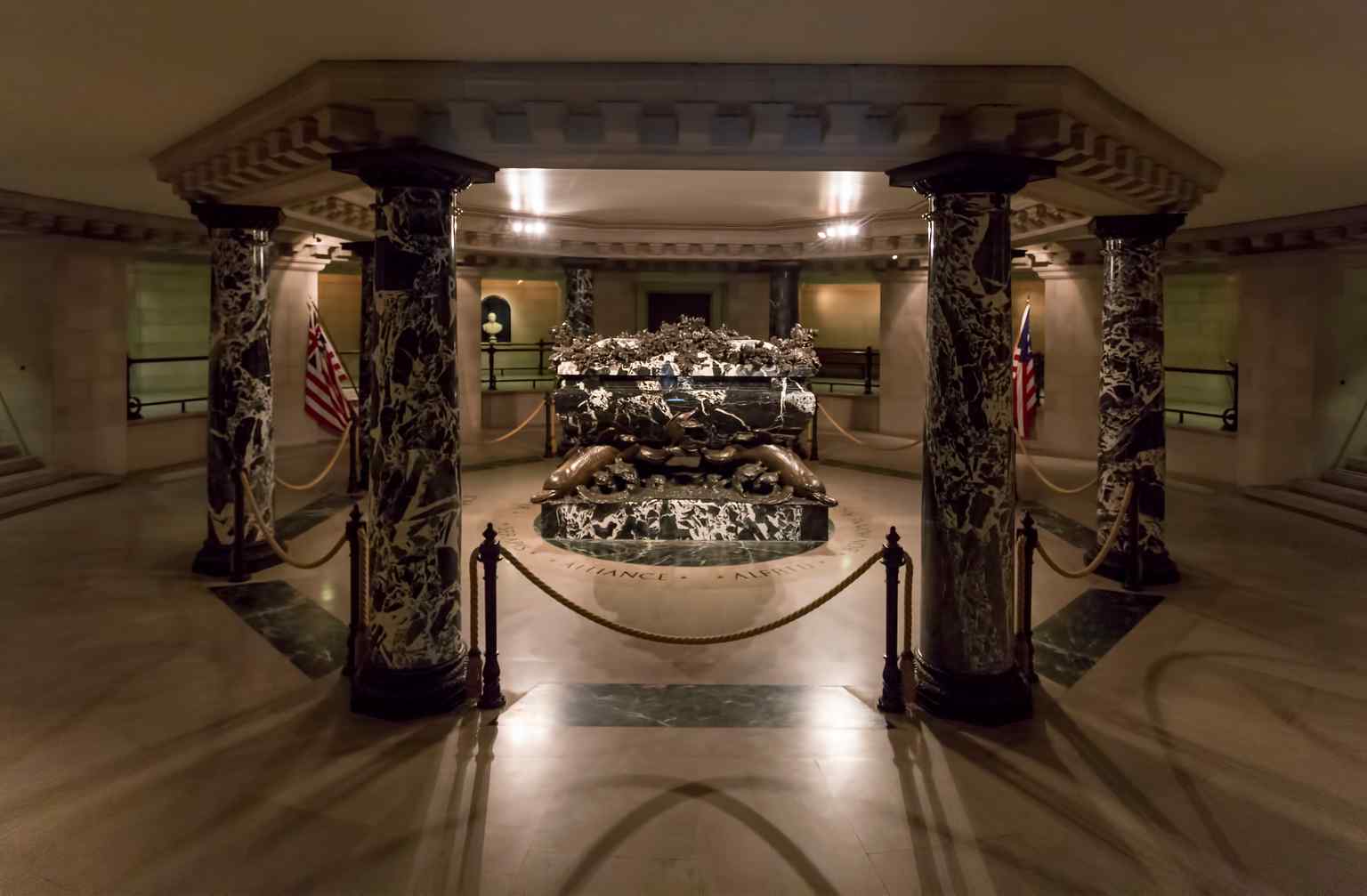
Beneath the floorboards, the clash between polished legend and grim reality continues. The basement houses the crypt of Revolutionary War hero John Paul Jones. Look at the interior image on your app. He rests in a twenty one ton sarcophagus, a massive stone coffin carved from black and white Italian marble. It looks eternally dignified. But the journey here was a mess. General Horace Porter spent six years and thirty six thousand dollars of his own money, over a million today, to find Jones's forgotten grave in Paris. He finally unearthed him in nineteen oh five beneath a laundry, a grocery store, and a cheap hotel. Even after a grand memorial ceremony in nineteen oh six presided over by President Theodore Roosevelt, Jones spent another seven years parked in Bancroft Hall while Porter begged a reluctant Congress to fund the crypt. Porter never got his money back.
If you want to view the crypt or the stunning twenty foot oculus, a round skylight hidden in the dome above, you can go inside Monday through Friday between eight and four. Just be prepared for the irony of a building where midshipmen were once forced to worship under threat of expulsion, a rule declared unconstitutional in nineteen seventy two, now serving as a veritable wedding factory for freshly graduated officers.
Now, let us step off the Academy grounds and discover the extravagant ambitions of the city's early colonial governors, as we walk to Jennings House.


