
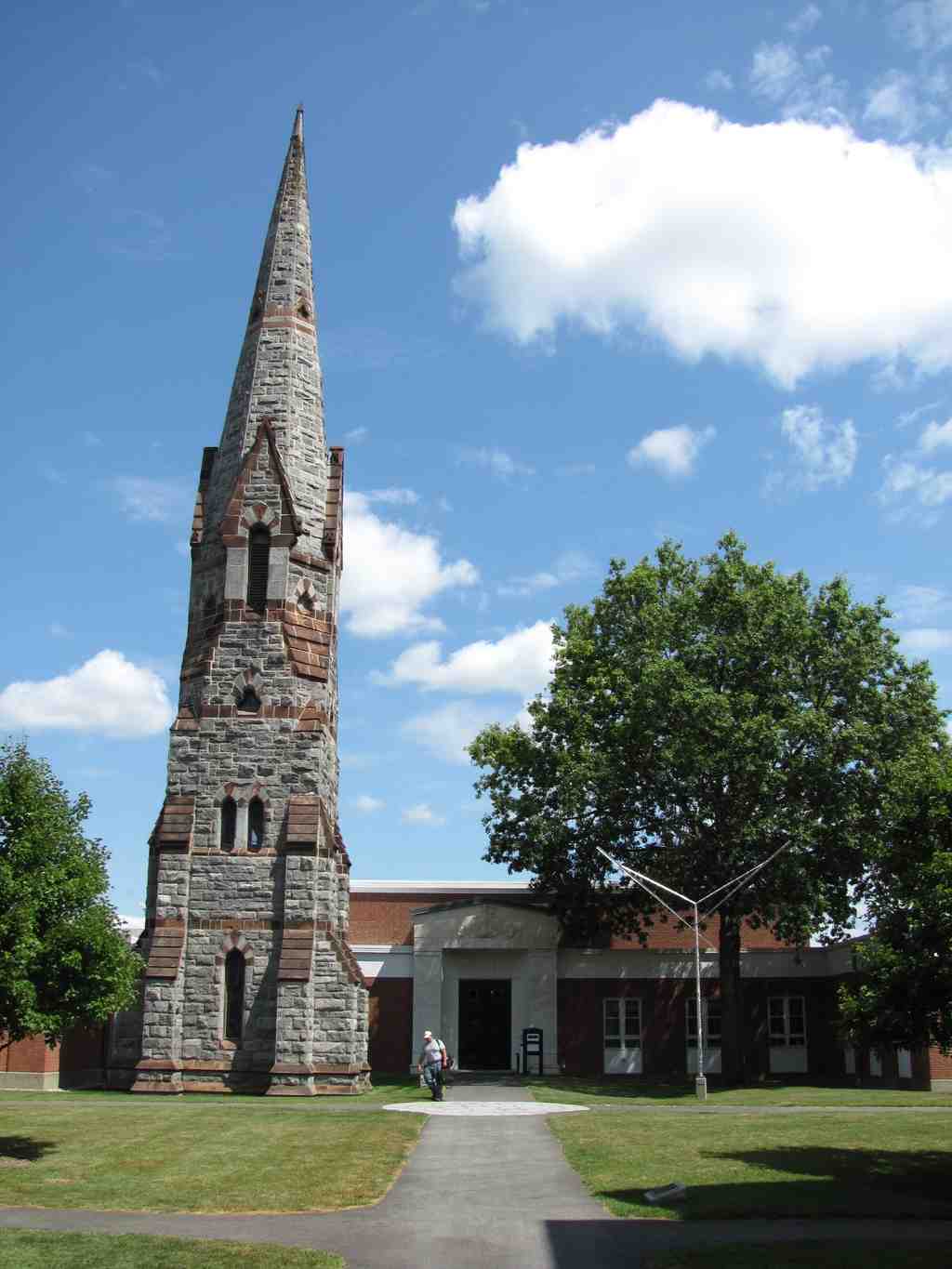
To spot the Mead Art Museum, look for a modern red-brick building set low and wide, with a dramatic stone tower rising up beside it-almost as if someone parked an old Gothic church spire right next to an art gallery!
Now, as you stand here in front of the Mead Art Museum, imagine the doors swinging open and a faint, echoey footstep on polished floors. You’re about to enter one of the liveliest collections of art in Western Massachusetts. This museum isn’t just about dusty paintings and old statues-though it does have plenty of those! Opened in 1949, the Mead is named after William Rutherford Mead, a big deal in the world of architecture-you could say he put the “Mead” in “McKim, Mead & White.” Thanks to his wife, Olga, who left her fortune to Amherst College, the collection keeps growing, and-good news for your wallet-this place is always free!
Inside, the Mead holds about 19,000 items-yes, you heard right, that’s enough art to fill your average castle, or at least several very large closets. You’ll find everything from American and European paintings to colorful Mexican ceramics, mystic Tibetan scrolls, and bold West African sculptures. There’s even a slice of 17th-century England right here: don’t miss the Rotherwas Room, complete with carved wood and paneling from an actual parlor that once sat in an English manor. Picture a crackling fire, nobles sipping tea, and maybe the awkward silence when someone mentions the weather for the thousandth time.
But if you want a real adventure, you have to check out the Assyrian reliefs. Back in the 1850s, Amherst’s third president Edward Hitchcock decided that what the college truly needed was some walls… from 9th-century BCE Iraq! So he arranged to have panels shipped all the way from King Ashurnasirpal II’s palace at Nimrud. These slabs traveled by mule, by boat, and, at one point, were even shaved thinner and chopped into squares just so they’d fit on the ships. The carvings show the king himself, decked out in royal robes, doing his best to look heroic while pouring offerings to the gods. He’s flanked by genii-no, not the genie from the lamp, but fierce winged spirits-and the walls are covered with cuneiform that basically says, “Look how awesome I am.”
Just imagine ancient craftsmen in bustling Nimrud, dust swirling, the clang of chisels against stone, surrounded by 60,000 people in a city that never slept-quite the commute compared to Amherst’s quiet quad. Fast-forward to 1945, and a whole English room gets waltzed across the Atlantic, courtesy of the collector Herbert Pratt, who decided the Rotherwas Room deserved some new fans.
Besides the art, the Mead buzzes with life in the present: student-led tours, community programs where you might catch a pop-up drawing session, and even study breaks with snacks during Finals-because everyone needs a cookie with their Caravaggio. It’s a space that tosses you between centuries, continents, and cultures faster than you can say, “Can I touch that? Oh wait, probably not.”
Here at Mead, art isn't just on the walls-it's alive in the stories, the people, and the history waiting for you behind every corner. And all you have to do is walk inside.
Ready to delve deeper into the collection, points of interest or the programs? Join me in the chat section for an enriching discussion.




