
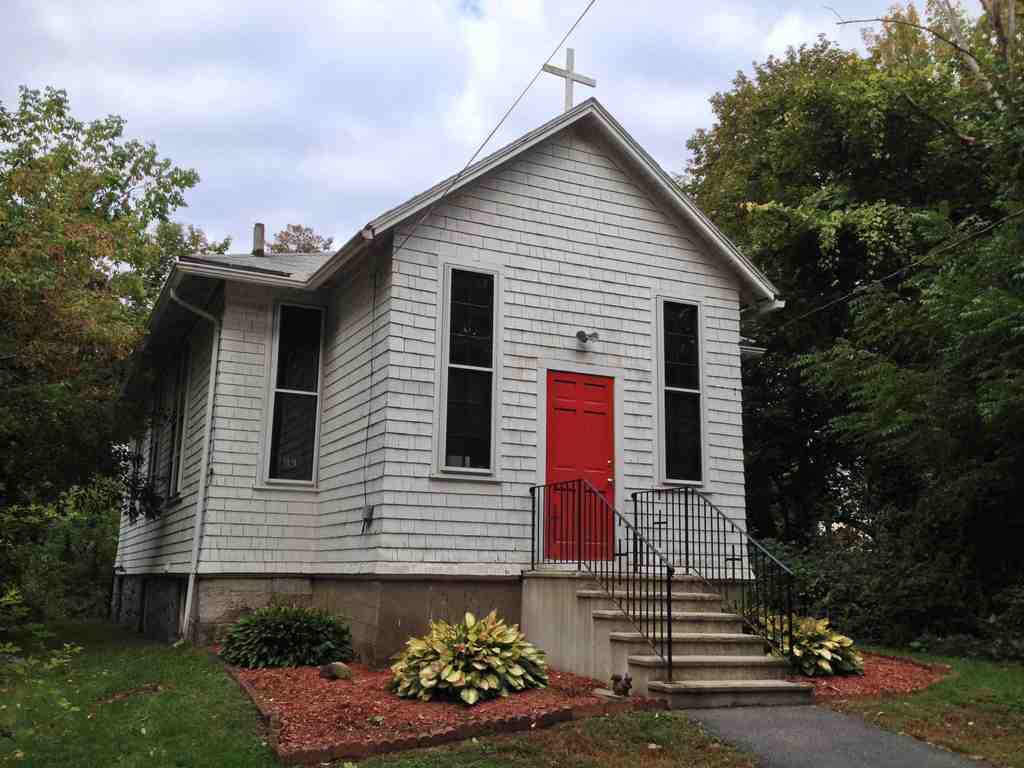
To spot the Goodwin Memorial African Methodist Episcopal Zion Church, look ahead for a small white chapel with shingled walls, a bright red door, and a cross perched on its peak, nestled among trees at the top of a short set of steps.
Here you are, right in front of the Goodwin Memorial AME Zion Church! Imagine Amherst about 150 years ago: quieter streets, horses clopping, and the distant sounds of families emerging from Sunday services. Now, picture this spot transforming into a beacon for those seeking hope and belonging-a place where music spills out the windows and warm laughter greets newcomers at the door.
After the Civil War, many African Americans journeyed north, searching for a fresh start and a taste of freedom’s promise, but even here, true equality remained out of reach. Still, they banded together, building a new life and a special kind of strength. In 1869, the first congregation gathered in a modest chapel on Amherst College property-Zion Chapel. They came mostly from an area called Westside, and their dreams quickly outgrew the little building.
As the African American congregation flourished and the white congregation dwindled, the Zion members dreamt even bigger. They wanted a church of their own. College officials said no, but the determined members-led by Moses and Anna Goodwin-didn’t take no for an answer. They dubbed themselves the Union Church, held services in Amherst Town Hall, and started passing the hat around town. Even Booker T. Washington paid a visit in 1904 to help shake loose some donation dollars-imagine that fundraising speech!
With $611.10 in their pockets (which was a LOT back then-they probably counted every penny more than once), the church community bought this piece of land in 1907. By 1910, the church was up-a sturdy little building with exposed rafter ends, a shingled roof, and a real sense of welcome. The cornerstone you see on the foundation bears the date 1910, chiseling their story into Amherst’s landscape forever.
Moses Goodwin was the sort of person you’d want fixing your bike-or running your church. Born in South Carolina, he moved here after the war and opened a bicycle repair and locksmith shop downtown. Together with his wife Anna-her apple pie was so famous it might have had its own zip code-the Goodwin family became the heart of the congregation. On Sundays, the church would buzz with activity all day long: services, choir practice (their daughter Amy led the choir for a while), and, if you were lucky, one of Anna’s homemade meals.
The church never lost its spirit. It became the Goodwin Memorial AME Zion Church in 1967, honoring Moses and his family’s decades of devotion. Today, it’s still a lively hub: a place for worship, gospel music, bell choir festivals, weddings, baptisms, family potlucks, and Sunday school classes for kids. Each year, the fried chicken cooked up in the basement goes so fast it’s almost a local legend.
Step closer and peek through the windows: inside, sunlight streams through a stained glass window that honors a dedicated parishioner, Pearl Hawkins, with diamond panes and the letters “PH.” The building’s design is simple and sturdy-just as it was when folks poured every ounce of determination and hope into its walls.
And the legacy keeps growing. In 2014, the church welcomed Bishop Mildred B. Hines-the first female bishop of the African Methodist Episcopal Zion Church-for a hugely anticipated visit. The service was buzzing with excitement and, if you walked by, you’d have heard hymns rising up through the trees and laughter drifting down Woodside Avenue.
Listed on the National Register of Historic Places since 2000, the Goodwin Memorial AME Zion Church isn’t just a building-it’s a living testament to the power of community, self-determination, and a little bit of stubborn “yes we can” spirit when everyone else says “no you can’t.”
Intrigued by the goodwin family, church today or the historic building? Make your way to the chat section and I'll be happy to provide further details.




