
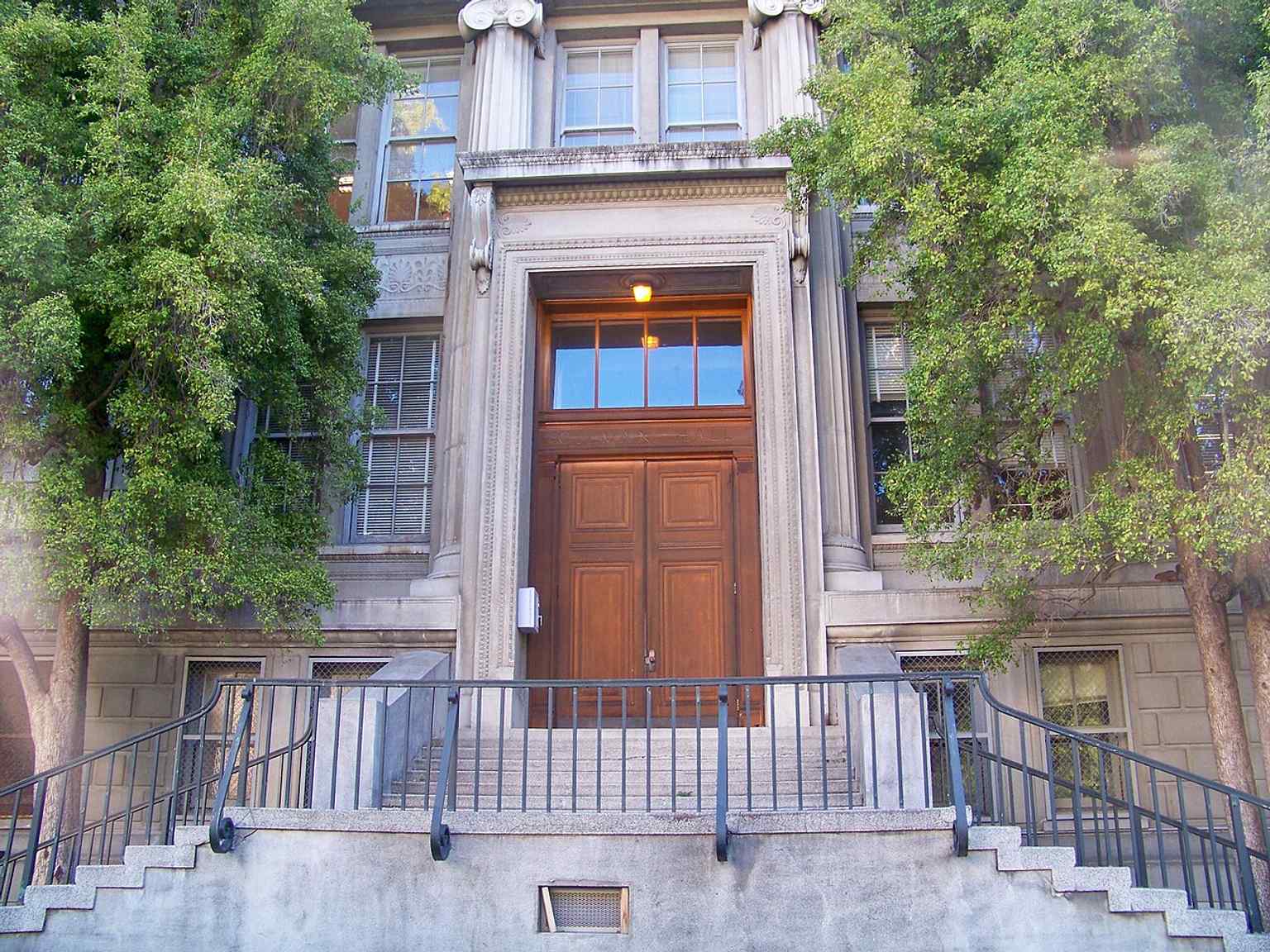
On your right, Gilman Hall is a pale stone, rectangular Beaux-Arts building with tall vertical windows and a formal central entrance framed by classical detailing.
It has the look of order... the kind of place that promises clean logic and careful thought. And for a while, that was the dream here. John Galen Howard designed Gilman Hall in the nineteen teens for Berkeley’s growing College of Chemistry, and Gilbert N. Lewis pushed hard to make it real after years of squeezing chemistry into a temporary wooden building. Lewis wanted a serious laboratory, a place where physical chemistry, inorganic chemistry, and later nuclear chemistry could grow up together.
He tied so much of himself to this building that, for part of his Berkeley life, he actually kept a tiny bedroom and shower up in the attic here during the week. His family lived farther out in the country, and only after the university objected did he move to the nearby Faculty Club. That little detail changes the feeling of the place, doesn’t it? Gilman Hall was not just where Lewis worked. It held the shape of his days.
If you glance at the image on your screen, you can see how formal the front still feels, almost calm enough to hide what happened inside.
In the basement, Berkeley chemists installed a liquid hydrogen facility in nineteen twenty-one, reportedly one of the first in the United States. That let researchers study matter near absolute zero, meaning temperatures as close as possible to the coldest limit physics allows. William Giauque did prizewinning work from that foundation and later earned the Nobel Prize in Chemistry in nineteen forty-nine.
But Gilman Hall did not stay only a temple to elegant research. Plutonium’s identification in Room three oh seven happened here on the twenty-third of February, nineteen forty-one, when Glenn Seaborg and his coworkers confirmed a new element after a maddening sequence in which the tiny sample seemed to appear, disappear, and reappear. That ordinary lab room became a doorway into the atomic age.
Most tourists never realize that the top floor of this building turned into a fenced-off classified zone during the Second World War. The attic rooms, where chemistry students once trained, became restricted wartime space. Half the rooms had little balconies that served as outdoor fume hoods, and because the old hoods worked more like chimneys than machines, workers finally installed electric fans to pull dangerous gases away. Young Berkeley Ph.D.s like John Gofman, Robert Connick, and Leo Brewer carried out secret nuclear chemistry here under intense pressure, in the same building where they had only recently been students.
That is the hard knot at the center of Gilman Hall. It produced two Nobel Prizes in Chemistry, including Seaborg’s in nineteen fifty-one for transuranium elements, yet the same brilliance fed the Manhattan Project. Admiration belongs here... and so does unease.
Lewis’s own story ended inside this building in nineteen forty-six, when he died in his laboratory during a fluorescence experiment, a study of how substances glow under energy. So Gilman Hall became memorial, workplace, warning, and monument all at once.
If you look at the plaque in the app, notice how a whole moral earthquake gets pinned to one modest room number.
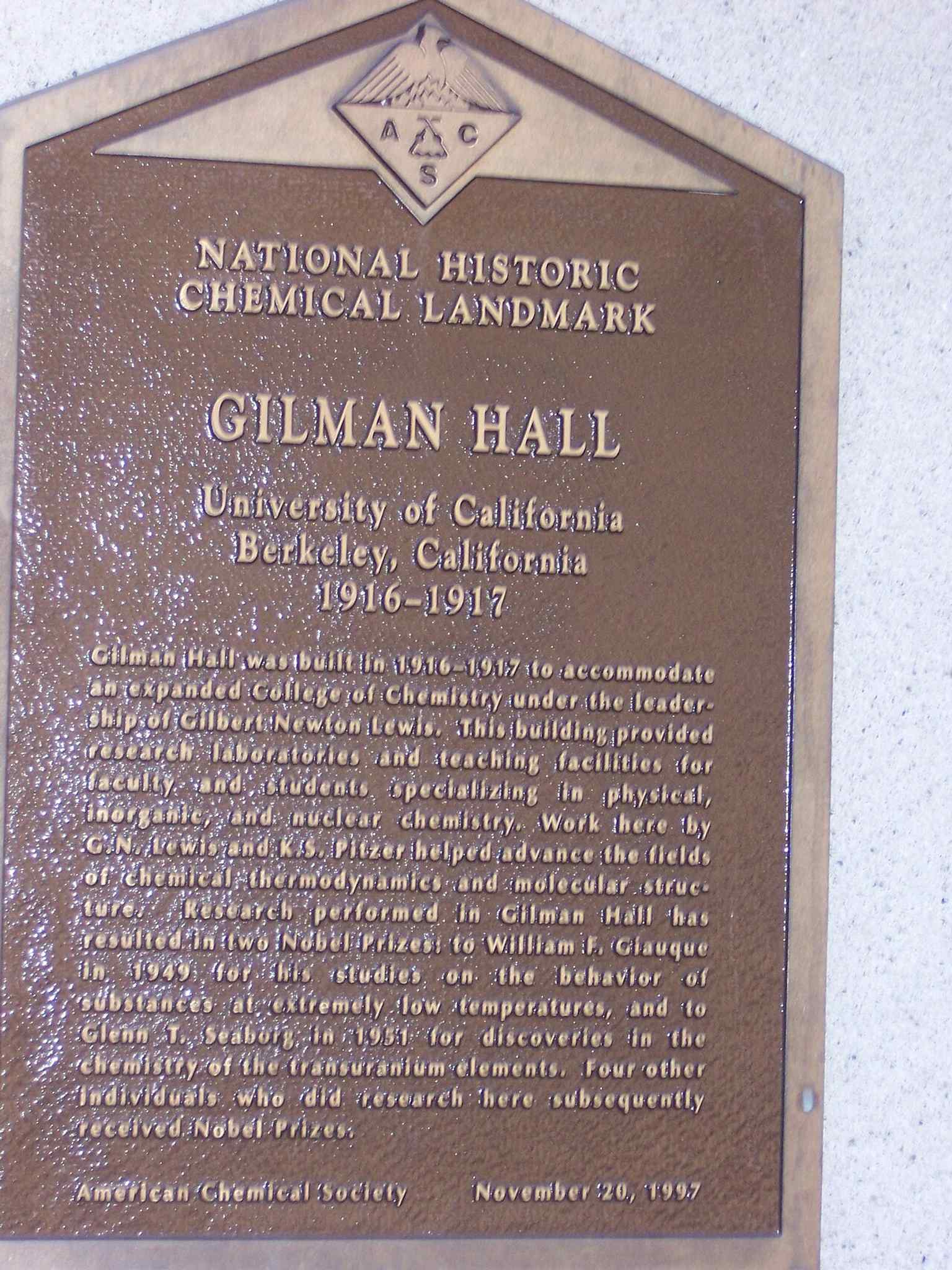
And that is what lingers here: Room three oh seven... a badge of honor, and a warning. When you’re ready, we’ll head on in about three minutes to the Hearst Memorial Mining Building.






