
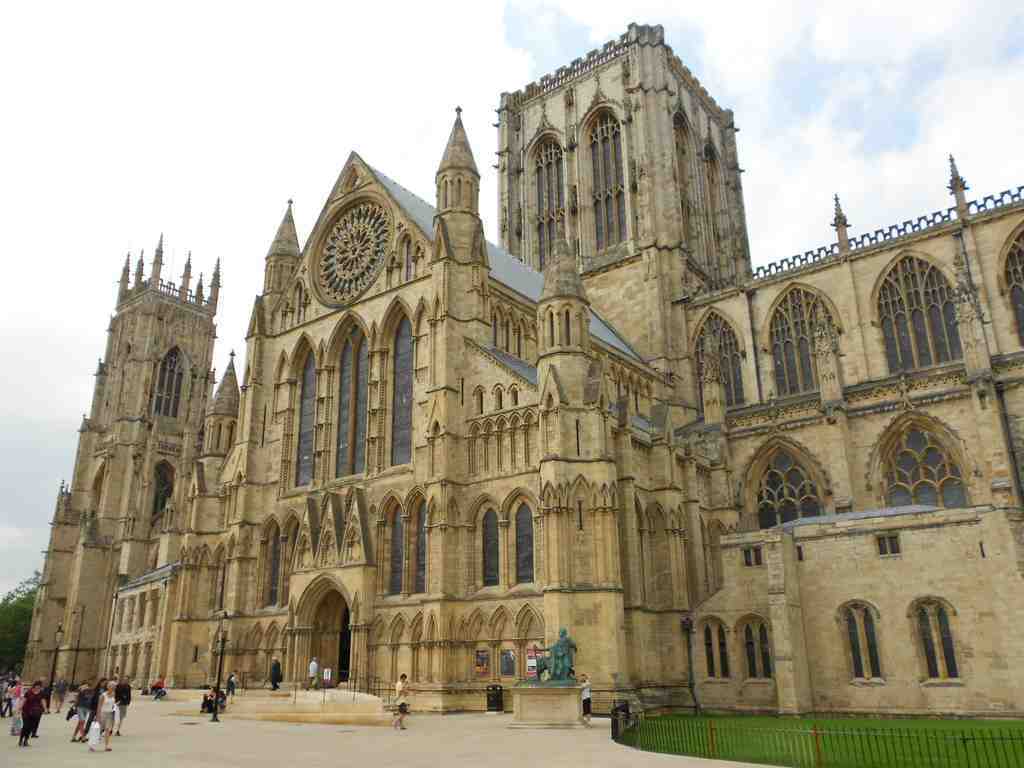
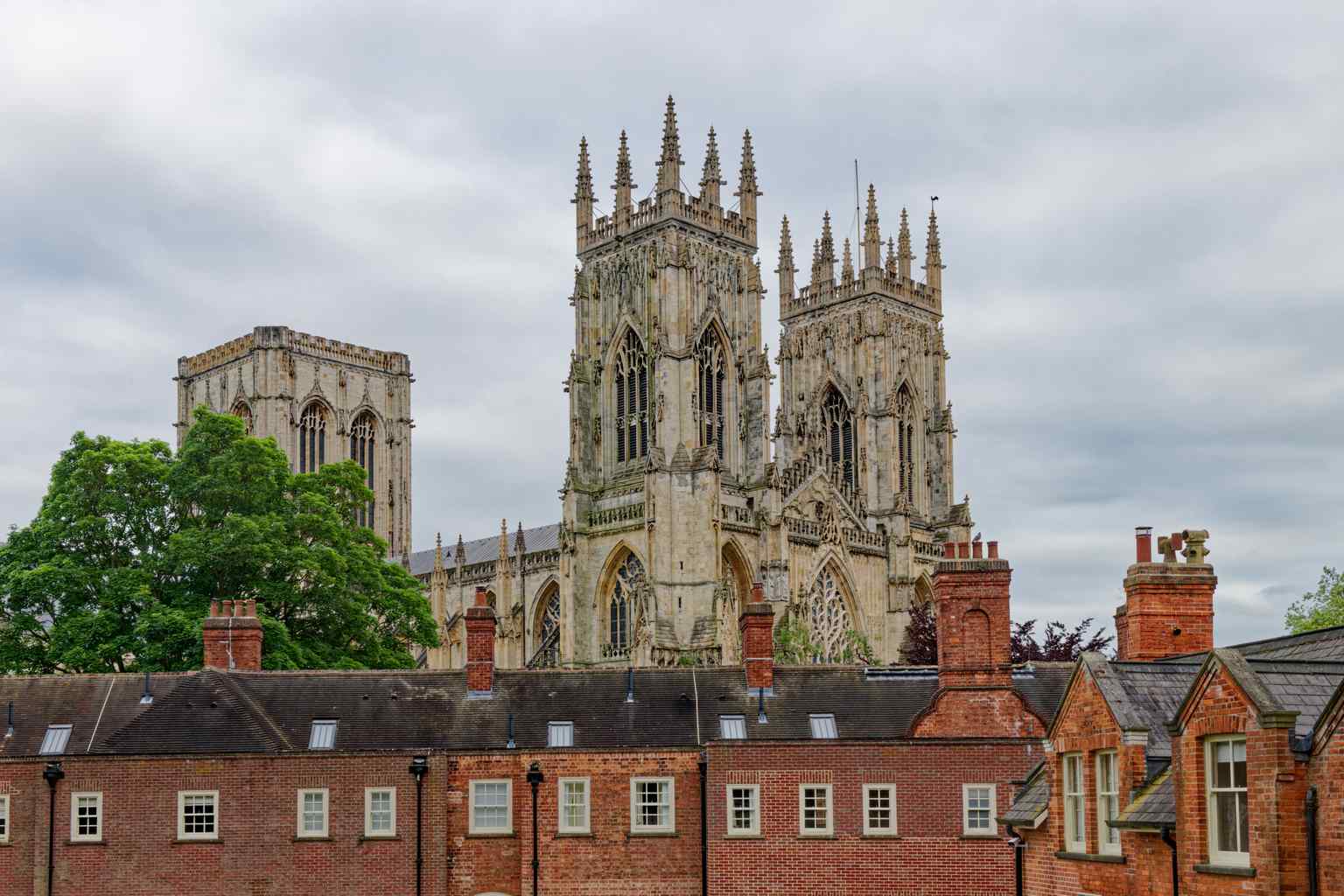
You'll easily spot York Minster on your left by its massive, creamy-white limestone exterior, towering Gothic spires, and the striking, intricate circular rose window set high in the central facade. Just a short stroll from 35 Stonegate, which we saw earlier, we now find ourselves standing before a true giant of human devotion and history. This is the largest Gothic cathedral completed during the medieval period in Northern Europe, and taking it in all at once is almost impossible. The stone you see is magnesian limestone, quarried nearby, which gives the building its luminous, pale glow. Generations of stonemasons dedicated their entire lives to this structure, as the bulk of what you see was built over two and a half centuries, between 1220 and 1472.
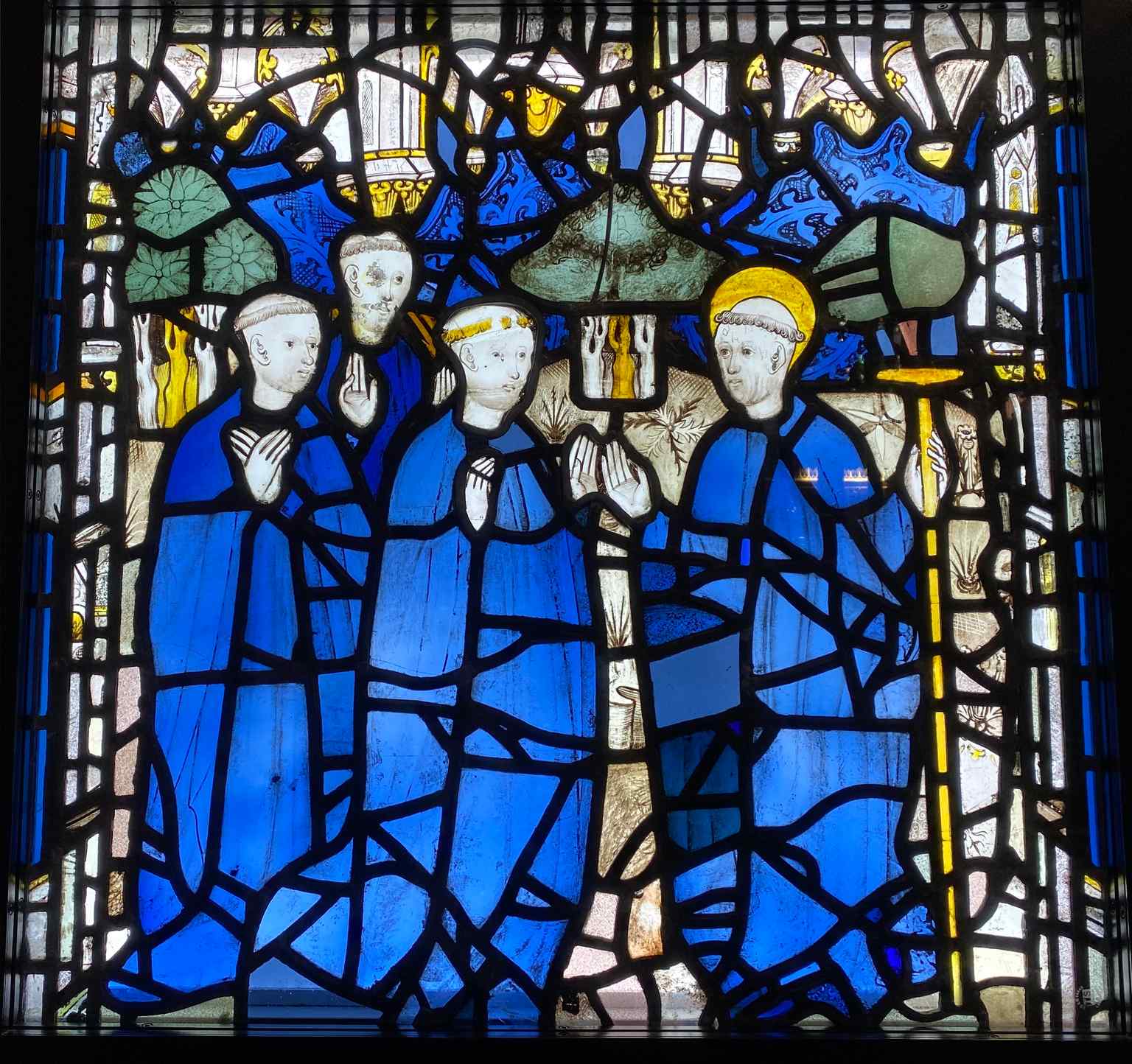
Inside, this building holds one of the greatest surviving collections of medieval stained glass in the world. The Great East Window alone is the largest single expanse of medieval glass in the country. It was designed in 1405 by a master glazier named John Thornton. He was paid sixty-six pounds for his work, which would be roughly sixty thousand dollars today. It depicts scenes from the Book of Revelation across over three hundred individual panels. Then there is the Five Sisters window in the north transept... the transept being the arm of the church that crosses the main hall to form a cross shape. This window features five tall, narrow, pointed openings known as lancet windows. Instead of colorful Bible stories, they are filled with grisaille glass, which is a beautifully subtle, grayish-green glass painted with delicate geometric patterns.
But the story of York Minster is not just about ancient triumphs... it is also about survival. In the early morning hours of July ninth, 1984, a devastating fire broke out in the south transept. A subsequent investigation found an eighty percent chance that the fire was sparked by a lightning strike to a metal electrical box on the roof. The heat was so intense that the glass of the beloved rose window shattered, though its lead framing miraculously held the pieces together. To save the rest of the great cathedral, firefighters had to make a heartbreaking choice. They deliberately collapsed the burning wooden roof of the south transept by pouring tens of thousands of gallons of water onto it. It was a drastic measure, but it worked, saving the heart of the Minster.
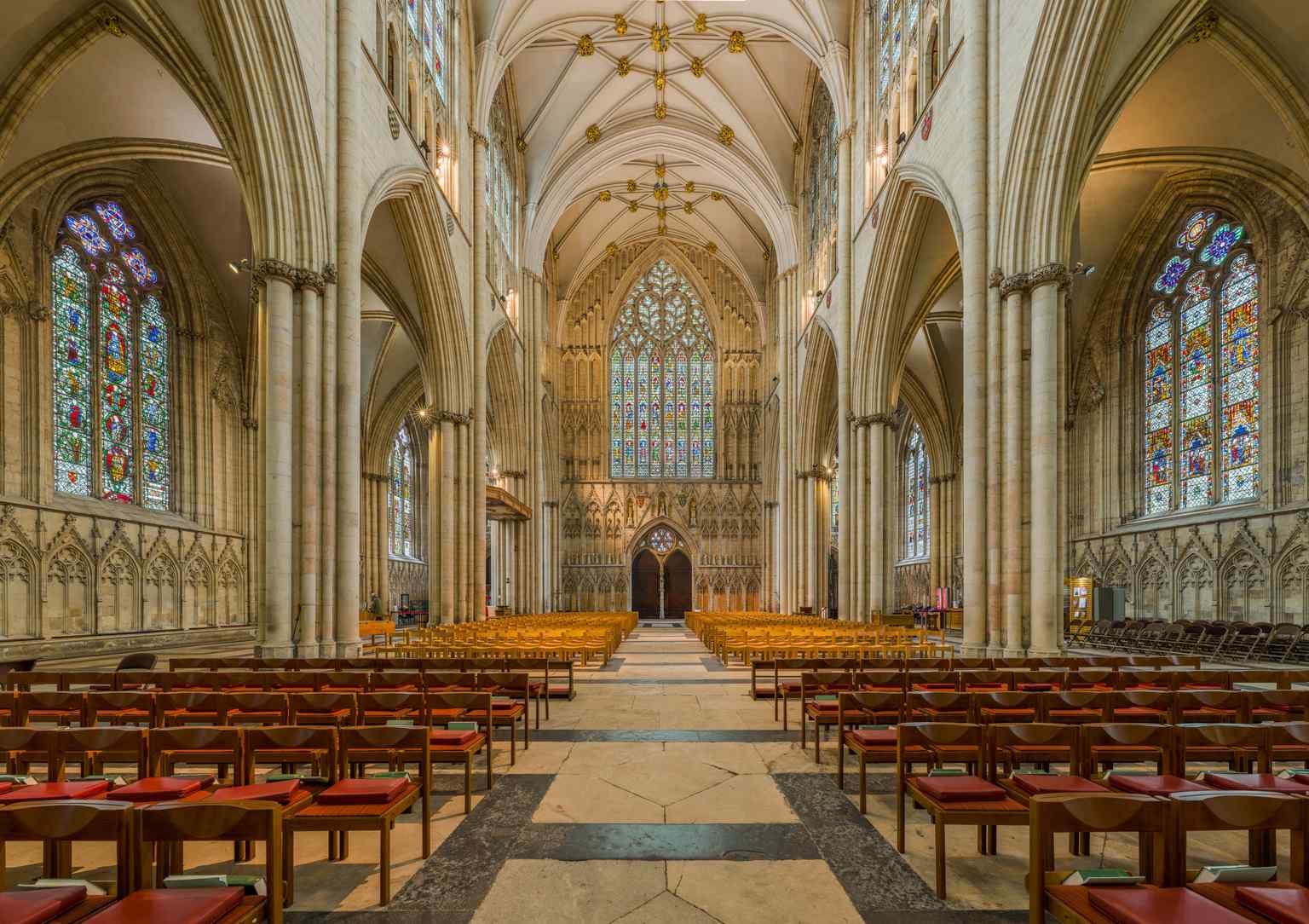
The restoration that followed brought out the best in the community. When it came time to replace the roof bosses... the decorative carved wooden blocks where the ceiling beams intersect... the cathedral used new designs. Five of these were actually designed by children who won a competition on a popular British television program. It is a beautiful reminder that this ancient building is still a living, breathing part of the community today, and if you would like to explore the vast interior, the Minster is generally open to visitors from nine thirty to four Monday through Saturday, with a shorter window on Sundays. Look up at the magnificent spires one last time before we follow the path to our next destination.






