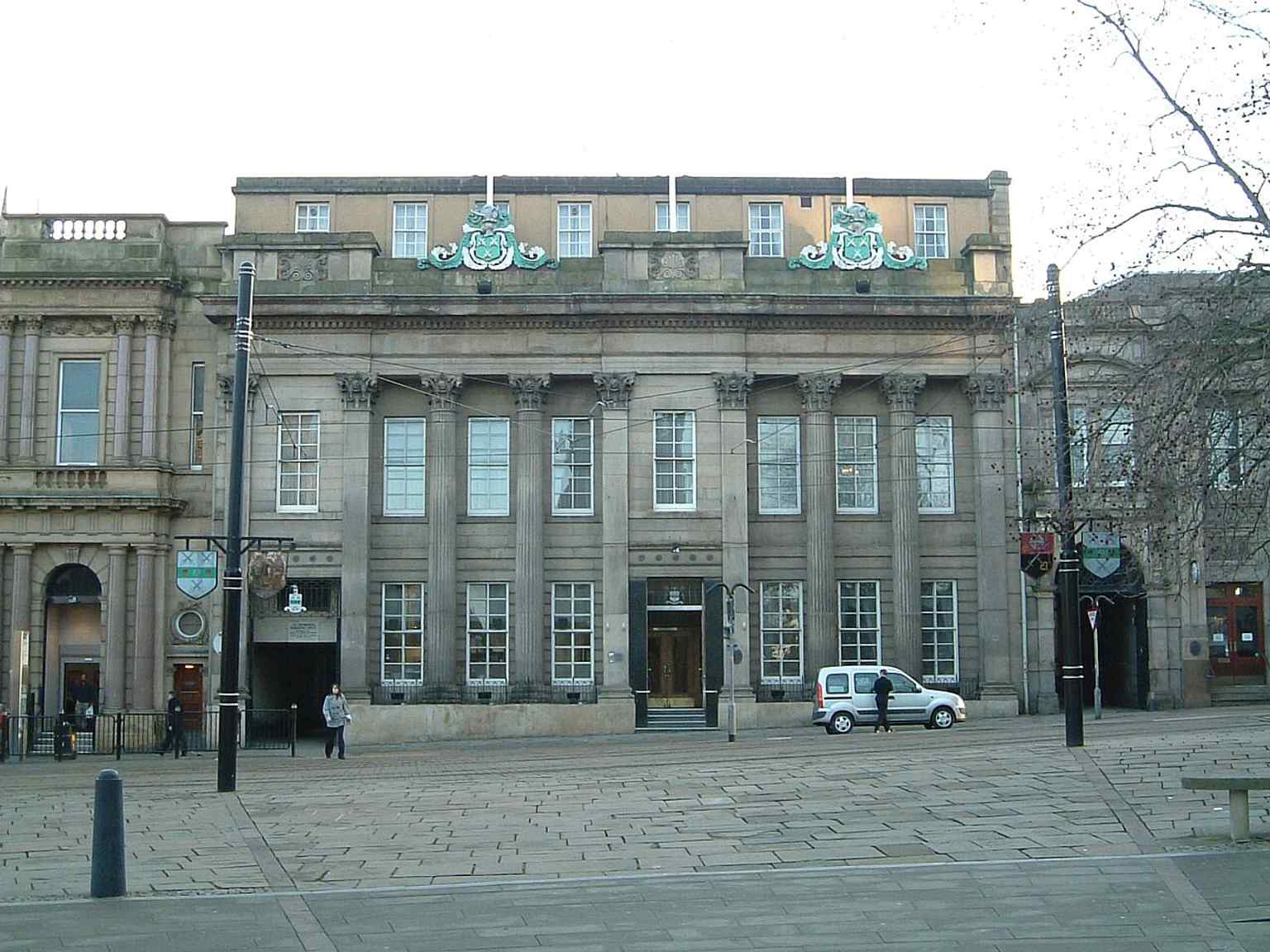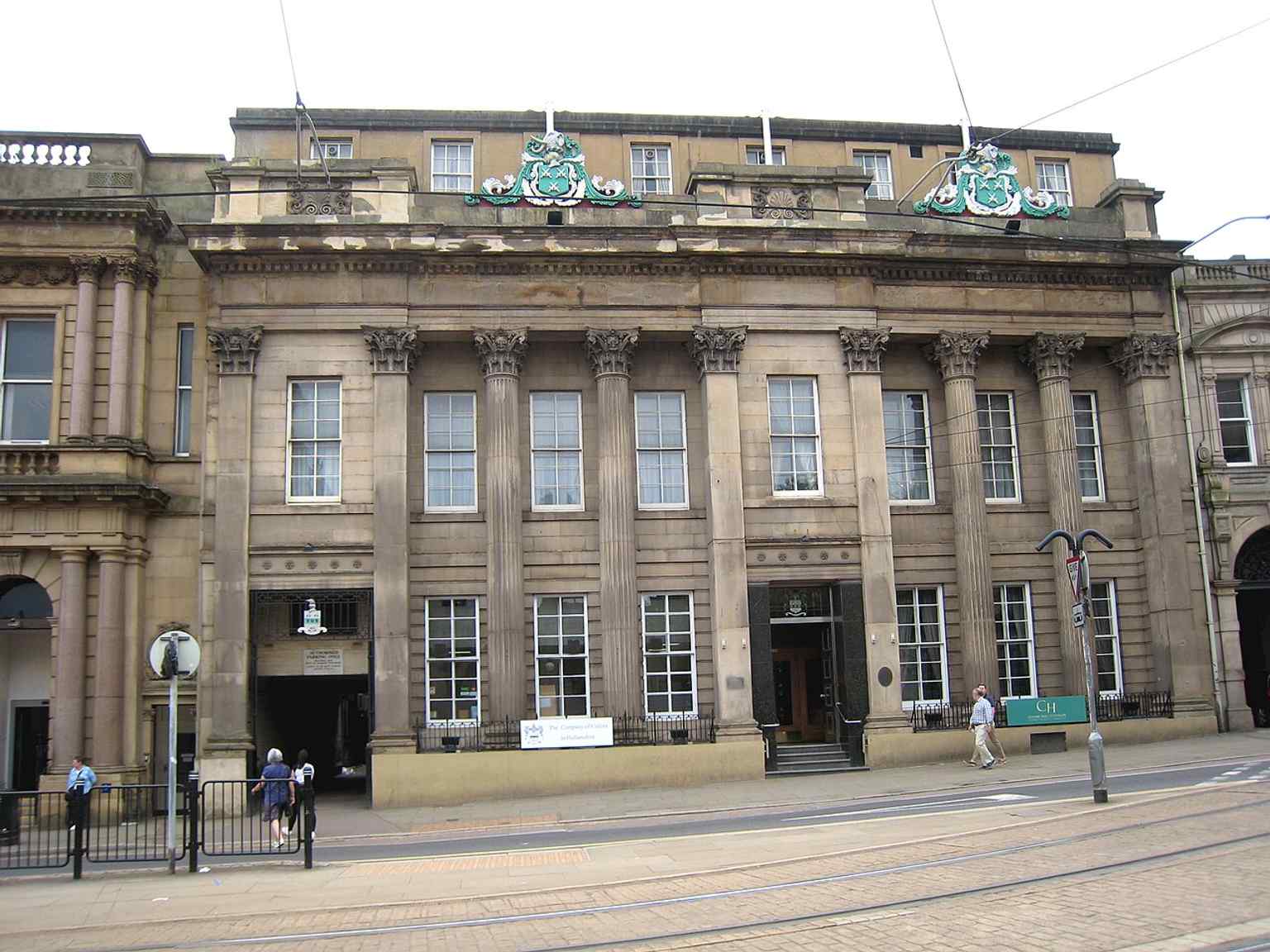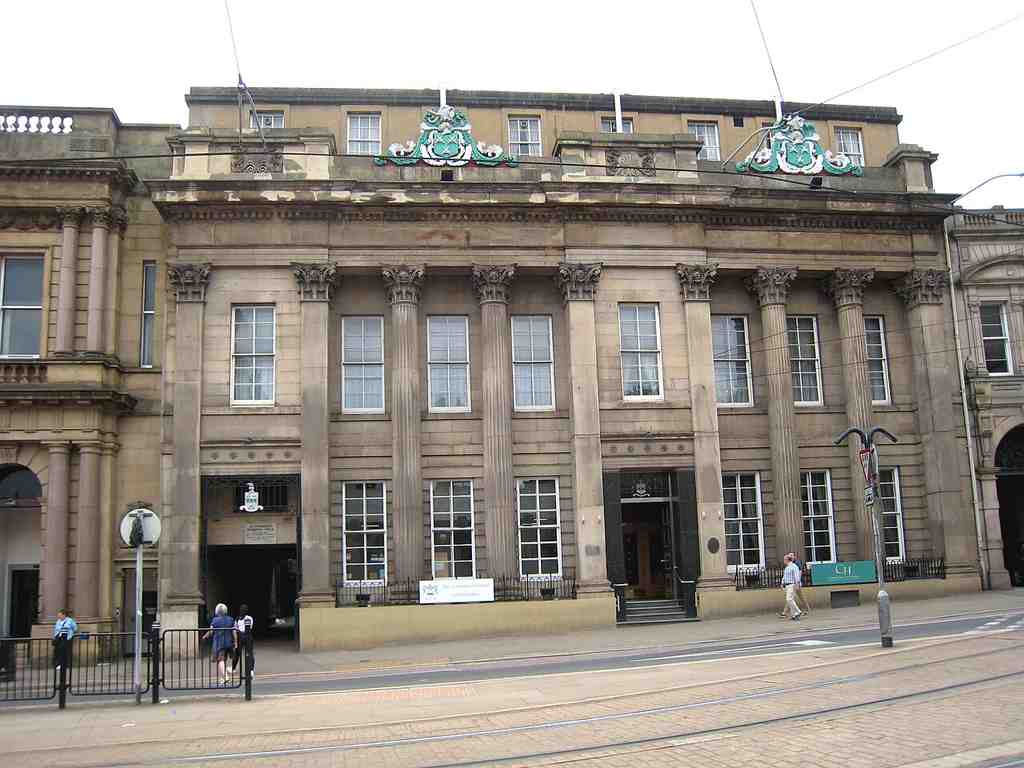
On your right stands a pale stone hall with a temple-like front, tall Corinthian columns, a broad triangular pediment, and heavy steel entrance doors below.
This is where Sheffield’s metal trade put on its best coat. The Company of Cutlers in Hallamshire got its charter by Act of Parliament in sixteen twenty-four, and the law handed it authority over everyone making knives, blades, scissors, shears, sickles, and other iron and steel wares within Hallamshire - the old name for the Sheffield area - and within six miles of it. Each year the company elected a Master Cutler, the polite peak of the trade, quite distinct from the workshop-floor Little Mesters it claimed to regulate.
This is the third hall on this exact site. The first went up in sixteen thirty-eight, a second followed in seventeen twenty-five, and then Samuel Worth and Benjamin Broomhead Taylor raised this one in eighteen thirty-two and eighteen thirty-three. Since sixteen twenty-five, the Cutlers’ Feast has met every year - one of England’s oldest continuous civic dinners.
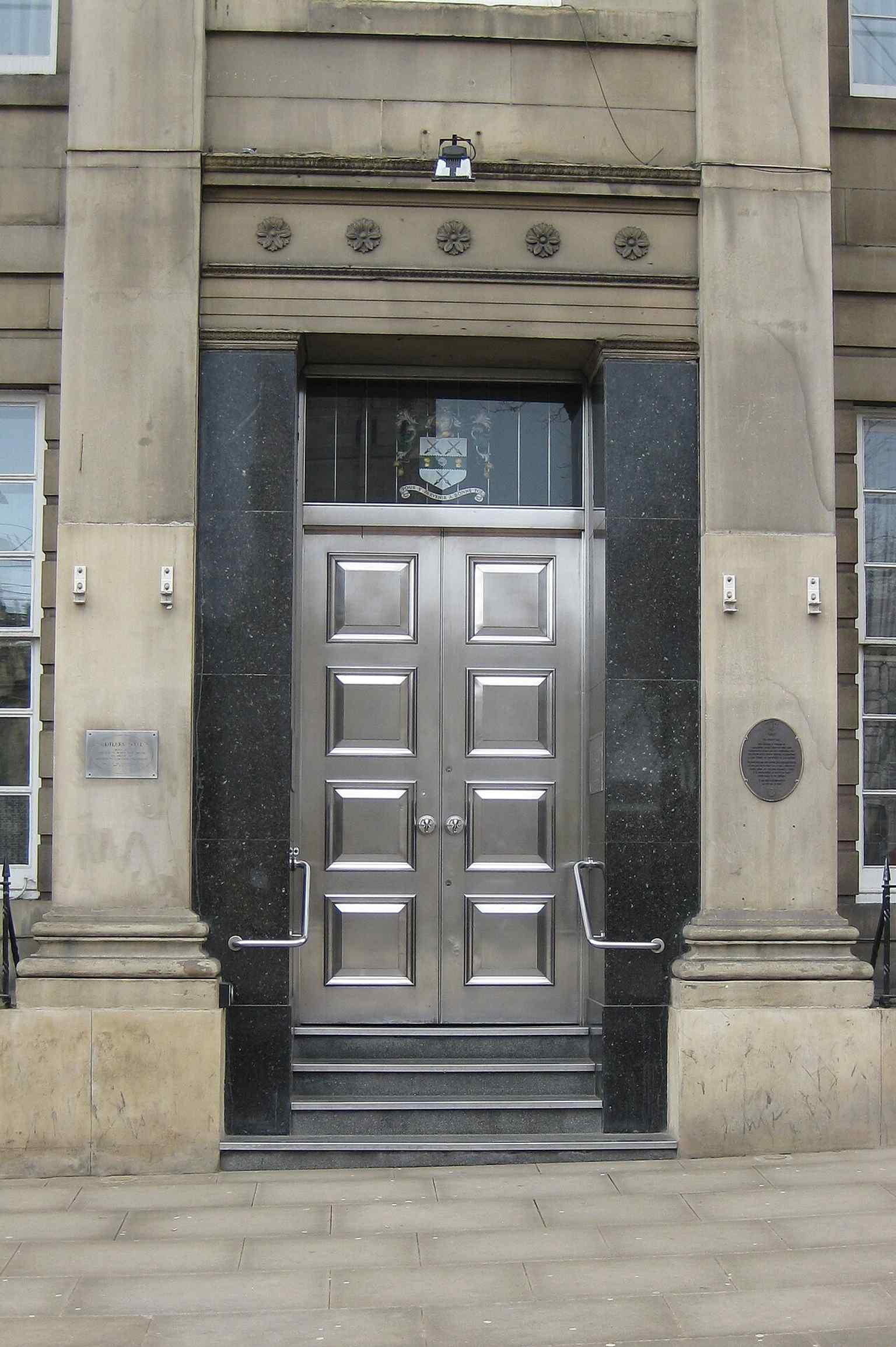
Sheffield never dealt only in knives. Around seventeen forty-three, Thomas Boulsover created Old Sheffield Plate, silver fused to copper; from the eighteen forties, electroplated nickel silver took over. In seventeen seventy-three, the cutlers joined Matthew Boulton of Birmingham to win the right to assay silver - to test and hallmark it officially. Sheffield took the crown; Birmingham got the anchor. If you fancy a detail the street won’t give you, have a look at the steel door on your screen.
Across Church Street, the parish church stands under the cutlers’ eye. Cross the road; James Montgomery is waiting in the cathedral churchyard... then Tudor Square is about a six-minute walk away. If you plan to come back, check the current opening times before you go.