
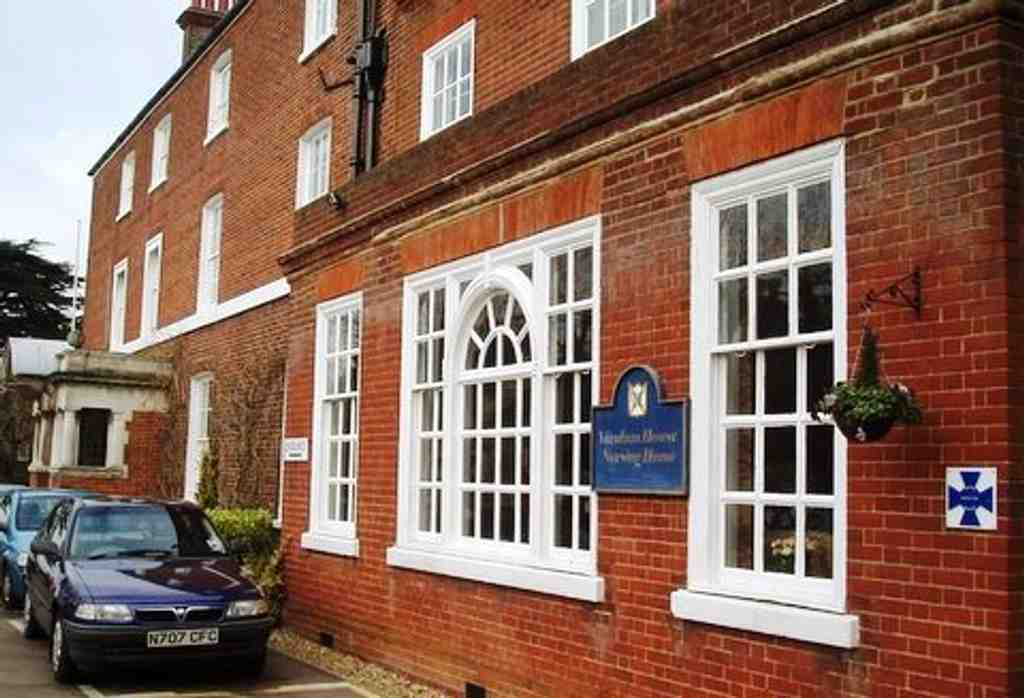
To spot Verulam House, just look for a handsome red brick building with large white-paned windows, a blue nursing home sign out front, and a distinctive arched window right by the entrance.
Now, if you’re standing here-take a step back in time with me! Picture yourself on Verulam Road in the roaring 1820s, the air practically humming with the clatter of horse-drawn coaches. This spot was once the grand Verulam Arms coaching inn, welcoming tired travelers from the superhighway Thomas Telford built-yes, the “Colossus of Roads” himself! Imagine the excitement: new arrivals, clinking glasses, gossip swirling around the fire.
But, as the iron horses-trains, that is-started rumbling into the world and stealing all the travelers, the busy inn faded into a quieter life. By 1849, the inn was sold, stable boys packed away their hay forks, and the old stables were cleared to make room for a brand new church. Talk about repurposing! But hold on, here comes a dash of drama: the local MP, Alexander Raphael, who started building the church, passed away before he could finish-and without a will to boot! Enter Isabella Worley, a kind benefactor who swooped in to complete the church’s construction and donate it to the Church of England. Even today, if you peek to your left up Verulam Road, you’ll spot the old church’s Lombardic style tower, keeping watch over the street.
The house itself played host to some very fashionable families-not only the Palins, but also, through marriage, the Vyses, famed for their straw hat factory. So next time you see a snazzy straw hat, just think, “That could’ve started right here in St Albans!”
But here’s my favorite twist: In 1908, the house was upgraded to “Bishop’s Palace,” rolling out the red carpet for the Anglican Bishop of St Albans. And as if that wasn’t enough, by 1926 the house was echoing with spiritual conversations as a Diocesan Retreat and Conference Centre. Then, World War II swept through Britain, and this house transformed yet again-this time into a bustling maternity hospital for evacuees from central London. If these walls could talk, they’d probably give you baby names! Over two thousand babies took their first breaths right here between 1939 and 1946.
After the war, and many more twists and turns, the house finally settled into its present life as a caring nursing and residential home. Services are still held in the old chapel, so trace your fingers along the brickwork and imagine all those generations-innkeepers, bishops, newborns, and more-who’ve called this place home. Isn’t it amazing how much history can fit behind a single red-brick façade?


