
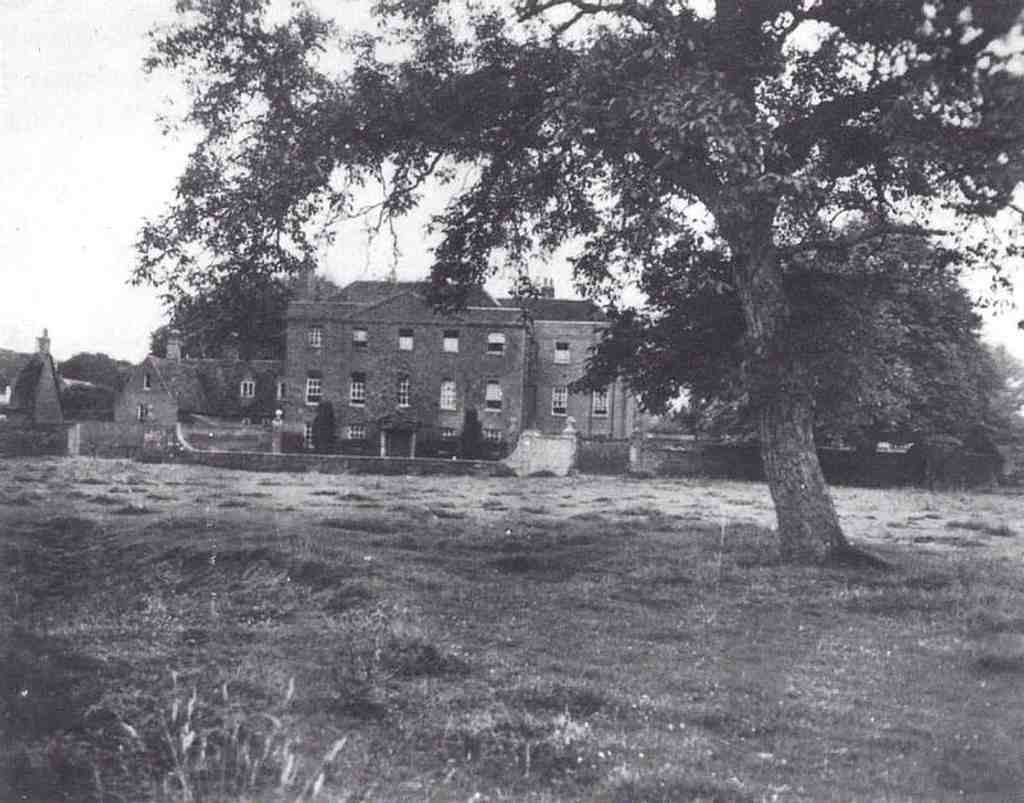
To spot this landmark, look for a large, old brick country house with many windows, set back behind a low wall and partly shaded by a big leafy tree-if you peer through the branches, you can’t miss its stately presence across the open grass.
Welcome to one of the best-kept secrets of World War II! Right here, in what looks like a perfectly ordinary English manor house, the final, desperate days of the conflict played out with a twist worthy of a real-life spy novel. Imagine it: the year is 1945, the war is nearly over, and British intelligence has just rounded up ten of the brightest German scientists-men who could have changed the course of history with their knowledge. Their destination? Not a grim prison, but this very house: Farm Hall, right here in Godmanchester.
As you stand before it, picture the scene unfolding. The brilliant minds behind Nazi Germany’s nuclear ambitions-people like Werner Heisenberg and Otto Hahn-land dazed after being swooped up by Allied special forces. Some were plucked from quiet German towns, others right out of academic meetings. The Alsos Mission, led by a determined group of British and American agents, wanted to know: just how close had Hitler come to building the atomic bomb? The answer, they hoped, would be hidden in the everyday chatter of these men. So, the Allies turned Farm Hall into a high-stakes listening post, filling it with hidden microphones in vases, behind walls, and under the floorboards.
Now imagine the days and nights that followed here. The house seemed peaceful-a world apart from bombed cities and crumbling battlefields. But inside, conversations crackled with tension and nervous laughter, echoing through the old corridors. The scientists, many used to respect and status back home, were now just guests of Her Majesty, sipping tea while British intelligence agents eavesdropped on every word.
Sometimes, the drama of the place turned almost comedic. When Max von Laue learned he’d be taken to England, he protested, “Impossible! Tomorrow is my colloquium. Can’t you come another time?” (Honestly, only a physicist would put a conference above a top-secret international operation.) And Walther Gerlach, once a high-ranking figure in Nazi science, found himself rifling through a trash barrel for an empty can after asking for a glass of water. The guards, it seemed, were as unimpressed by “the plenipotentiary for nuclear physics” as by anyone else needing a drink.
But it wasn’t all fun and games. On August 6, 1945, a shattering piece of news broke the routine: America had dropped an “atomic bomb” on Hiroshima. Imagine the scientists grouped together in a parlor, the crackling of the radio half drowned out by the murmurs of disbelief. Some of them thought it was a hoax, couldn’t believe what they were hearing. Hahn, the legendary chemist who first split the atom, turned to his former colleagues and declared, “If the Americans have a uranium bomb then you’re all second-raters.” There were stunned silences, arguments, and a lot of soul-searching about what they’d done-or failed to do-for Hitler’s regime.
Despite all their intellect, the transcripts show these men had wildly overestimated how much uranium it would take to make a bomb. Heisenberg, the supposed genius of quantum physics, calculated it would need a thousand times more uranium than reality. The German nuclear program was never as close as the Allies feared.
The British agents upstairs listened night after night, recording thousands of words onto shellac-coated metal discs. Only the juicy bits-the technical secrets or the gossip about the bomb-were typed up and sent to the top brass in London and Washington. Everything else, all the casual talk about food or homesickness, ended up lost, the recordings destroyed after the war.
The house itself has quite the past. Before hosting secret meetings of Germany’s top physicists, Farm Hall was used by MI6 to brief agents heading off to occupied Europe. And after the war, its eerie stillness gave way to whispers of bugged rooms and history-changing secrets.
Decades later, the story found its way to stage and screen, becoming BBC dramas, radio plays, and even a hit performance in the West End. Now you stand here, in front of this old, quiet house, where the fate of the atomic age once hung by a wire and a whisper. Not just a piece of English countryside, but a little slice of international intrigue-so don’t be surprised if stepping away from here makes you want to check behind the wallpaper for microphones. After all, at Farm Hall, you never really knew who was listening.
Exploring the realm of the background, transfer to england or the farm hall transcripts? Feel free to consult the chat section for additional information.




