
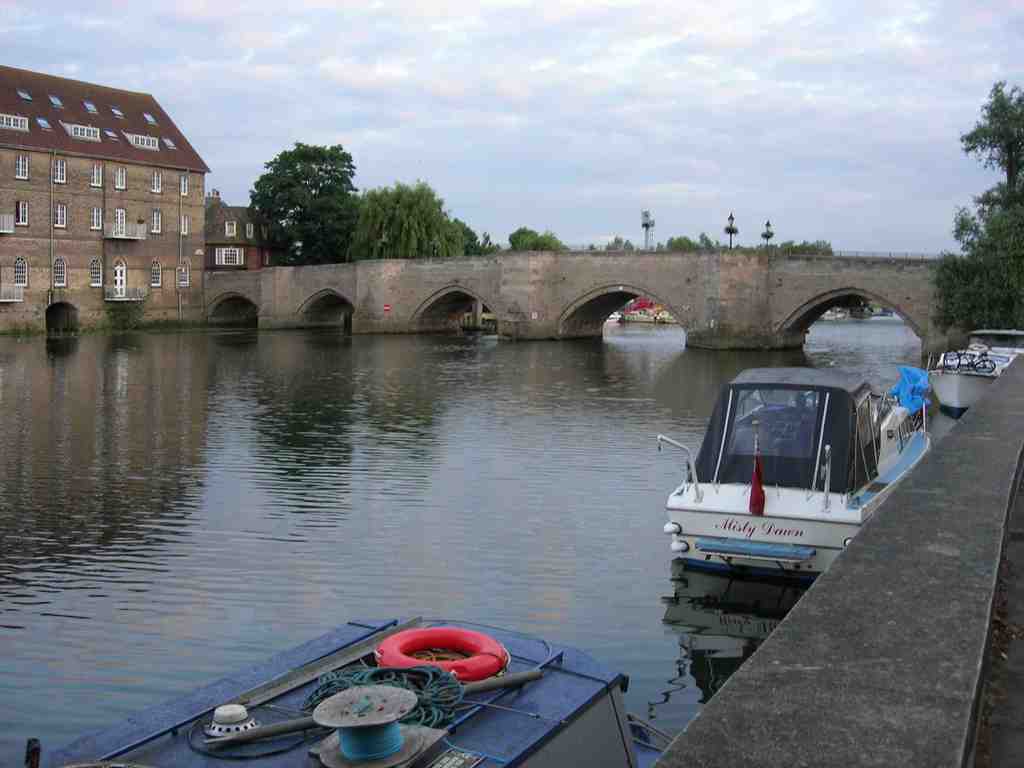
You’re looking for a wide stone bridge stretching over the River Great Ouse, with six graceful arches reflecting in the water-just glance ahead, and you’ll see its pale stone shape connecting the two riverbanks, right in front of you.
Alright, pause here for a moment and imagine the river almost a thousand years ago. It’s misty, a bit chilly, and you can hear the splash of horses’ hooves as they wade across a shallow ford somewhere nearby. Back then, there was no stone bridge at all-just a spot for travelers and traders bumping their way along the old Roman road, Ermine Street, trying not to lose a shoe in the mud. Along came Edward the Elder in the early 900s, deciding enough was enough. He ordered a wooden bridge to be built a little to the west, and as soon as folks got used to that, they started arguing about who would fix it the next time it broke!
Fast forward to the 1200s, and the bridge was in such a sorry state you might have thought it was held together by wishes and a bit of string. Finally, in 1259, the county agreed to make the bridge toll-free-if they promised to look after it. Spoiler alert: they didn’t! By 1329, it was so wobbly, even the ducks were nervous. That’s when they built the very bridge you see now. Construction began from both sides at once, but the two teams didn’t quite line up-so there’s a little kink in the middle, proof that even the finest medieval builders had their “oops!” days.
Picture the noise and bustle: horses’ hooves clopping on stone, traders shouting, the river lapping below. You’d find people pressed into the triangular and semi-hexagonal recesses in the parapets, giving way to carts and maybe grumbling about traffic. Today, the bridge only lets light vehicles cross; the biggest trucks go the long way.
So, next time you grumble about potholes, just remember-the folks of Huntingdon have been arguing over bridge repairs for nearly 800 years!




