
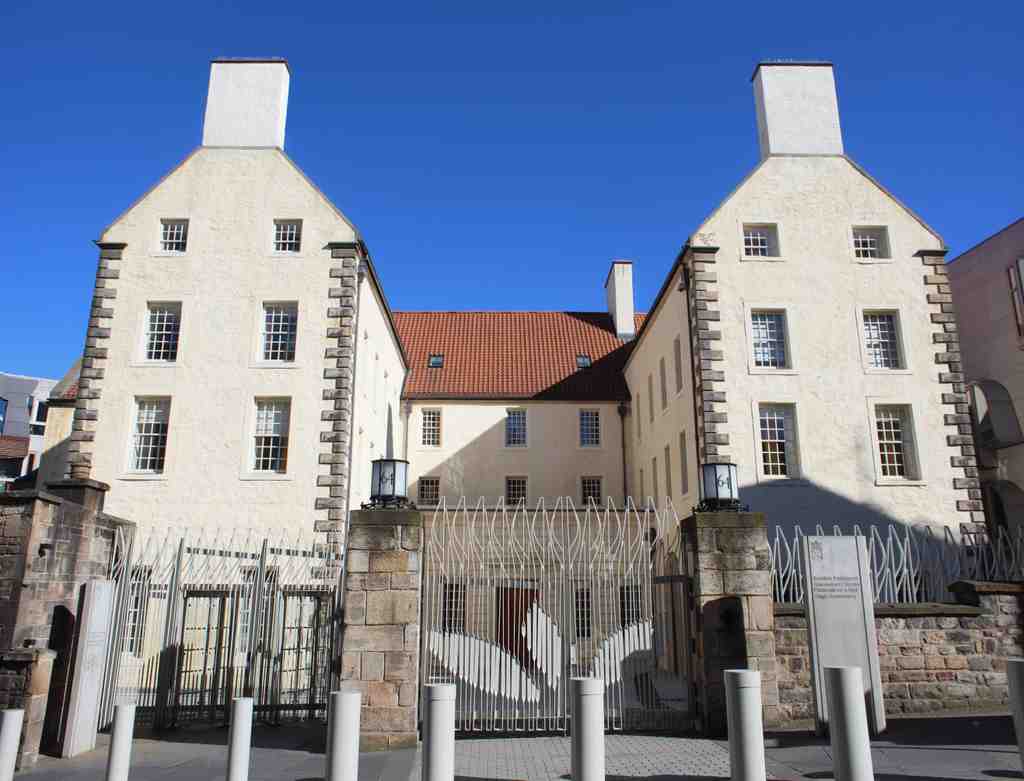
To spot Queensberry House, just look ahead for a pale stone mansion with tall, square chimneys and rows of large windows, flanked by high iron fencing-it stands out on the south side of the Canongate, right where old Edinburgh meets the new parliament.
Now, picture yourself in the bustling 1600s, when this fine mansion first rose from the ground-built to impress, with its simple yet stately walls. Imagine the rustle of silk skirts and the hurried clack of boots as Dame Margaret Douglas of Balmakellie made this her grand home. A few years later, Charles Maitland, Lord Hatton, moved in, swapping luxury lodgings at the palace for this new prize. But even in those days, things were not always what they seemed: beneath the aroma of roasting meat in the kitchens, there was the sharp scent of molten metal as silver and gold were secretly worked and tweaked-perhaps not just for honest coin! You see, Lord Hatton was master of the Scottish Mint, and rumors swirled that this house’s kitchen became a shadowy workshop to fudge the royal treasury.
The stone foundations even run deeper, once supporting the home of Jerome Bowie, the king’s wine cellar master. Yes, this house has been the residence of those who know their way around both coins and claret!
In 1686, the building switched hands to the Douglas family, and here’s where things turn truly dramatic. William Douglas, the 1st Duke, breathed his last within these walls, but his son, the 2nd Duke, would really shake history. Picture the tension in 1707: James Douglas, the 2nd Duke, signing away Scotland’s independence in the Treaty of Union. The angry rumble of the Edinburgh mob outside was no joke. For some, this mighty house stood as a symbol of new power-and old betrayal. The Duke was called a traitor, his house was stormed, and dangerous secrets filled every corner.
And now, for a tale with a dash of horror and a good shiver! That same year, in the kitchen, a quietly terrifying tragedy unfolded. While the Duke went to Parliament, he left behind his eldest son, James Douglas-reputed to be violently insane-and a young servant. By nightfall, the kitchen’s cozy fire was host to a grim scene: the servant’s body roasting, while James idly turned the spit. The city whispered that the Duke ordered his own son’s death in retribution, but truth slipped into legend. The boy was whisked away, vanishing into family estates, while locals insisted his spirit lingered, haunting the old house ever after.
The drama didn’t stop there. Catherine, Duchess of Queensberry, welcomed poets and artists while Jacobite soldiers nursed wounds here after the Battle of Prestonpans in 1745. As the city shifted and the rich moved north, Queensberry House saw itself stripped of luxury, serving as cheap rooms, a hospital during deadly cholera outbreaks, then a night asylum for the homeless, and finally a home for the elderly who had nowhere left to go.
Queensberry House survived over three centuries of change, mystery, ghosts, and government deals. Today, it’s part of the modern Scottish Parliament-if you listen closely, in the hush behind those white-walled windows, maybe you’ll still catch a whisper of old secrets or the echo of that long-ago kitchen fire. The past may be hiding, but here, it never truly sleeps!




