Colchester Audio Tour: Legends, Landmarks, and Echoes of Empires
Roman stones whisper and medieval towers cast shadows across Colchester’s winding lanes—this is a city where faith, rebellion, and unlikely legends have shaped every block. Explore it all on a self-guided audio tour that peels back layers of history most visitors rush past. Hidden in quiet corners and grand facades are gripping tales only heard by those who linger. What secret sparked flames atop St Botolph’s Priory during siege? Which eccentric bishop rewrote church traditions from behind the thick flint walls of St James the Great? And why were stained glass masterpieces quietly swapped between churches, out of sight and memory? Stride from Roman ruins to Victorian bricks and encounter forbidden worship, wartime scars, miraculous escapes, and one-too-many confused postmen. Every turn promises fresh drama, discovery, and a new view of Colchester. Ready to unlock the secrets hidden in plain sight? Press play—and let Colchester reveal its wildest stories.
Tour preview
About this tour
- scheduleDuration 40–60 minsGo at your own pace
- straighten3.7 km walking routeFollow the guided path
- location_onLocationColchester, United Kingdom
- wifi_offWorks offlineDownload once, use anywhere
- all_inclusiveLifetime accessReplay anytime, forever
- location_onStarts at St James the Great, Colchester
Stops on this tour
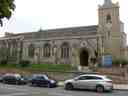
To spot St James the Great, look for a majestic stone church with a tall square tower topped with battlements and a clock, Gothic arched windows, and a welcoming arched doorway…Read moreShow less
To spot St James the Great, look for a majestic stone church with a tall square tower topped with battlements and a clock, Gothic arched windows, and a welcoming arched doorway right behind a small green garden above the street. As you stand before St James the Great, imagine the air thick with the sounds of medieval Colchester, where horses’ hooves clattered on cobbles and townsfolk whispered stories of saints and miracles. This grand old church has watched over the street since the 13th century, which is long enough to collect a few interesting secrets-and probably a ghost or two, though they seem to keep mostly to themselves! Its flint-studded walls and soaring windows would have sparkled in the sunlight as bakers, merchants, and even the odd knight passed by. If you listen closely, you might almost hear the echo of old prayers and the gentle humming of hymns, drifting out from under that tall, sturdy tower. Over time, the church was restored-perhaps with the smell of fresh timber and the clatter of scaffolding-by a chap named Teulon, who gave it a new lease on life in the 1870s. Even today, St James the Great keeps some traditions close to its chest, like its love for the old ways of the Church and its connection with bishops who specialize in sticking to the classics. And don’t forget: once, the future Bishop of Tewkesbury, Robert Springett, learned his first tricks of the trade right here. So when you gaze up at those ancient stones, remember: you’re not just looking at a building, you’re looking at hundreds of years of faith, friendship, and just maybe-one or two stubborn spirits!
Open dedicated page →In front of you is a sturdy church with a tall, rough stone tower and timeless arched windows; to spot it, look for the square, red-brick top of the tower rising above the street…Read moreShow less
In front of you is a sturdy church with a tall, rough stone tower and timeless arched windows; to spot it, look for the square, red-brick top of the tower rising above the street and flanked by old, leaded-glass windows. Welcome to the heart of Colchester’s living history, where churches of every era brush shoulders and whisper tales of mystery, loss, and even a bit of miraculous luck. You’re looking at just one example in a town where there’s practically a church on every corner and each one seems to guard a chapter of the town’s story. Take a moment and breathe in the cool, slightly earthy scent of old stone and the crisp air, imaging how long this scene has looked much the same to every passer-by. Let’s jump back in time-way, way back-nearly 1,700 years ago. Here in Colchester, long before spires and stained-glass windows, Roman citizens bustled near the Maldon Road roundabout. Then, built between AD 320 and 340, a curious long, narrow building rose from the ground. Archaeologists would later discover 371 Roman graves and believe, with strong evidence, this could be Britain’s earliest Christian church. The remains sleep peacefully now, peeking through the grass along a public footpath, almost daring you to look closer. If you listen closely, you can practically hear the faint footsteps of worshippers from long ago. Now, drift forward several centuries to the medieval period, when the church you see in front of you was just one of many-each with its own quirks. St Helen’s Chapel, they say, was founded by the saint herself-talk about laying the first brick yourself! Over the years, it wore many disguises, from a home to a school, Quaker meeting house, warehouse, and finally as a cozy home for worship once more in the 21st century. If those bricks could talk, they might boast about outlasting fashion trends, firewood shortages, and a few overly competitive pigeons. The grand old All Saints’ Church, now turned Natural History Museum, was once the stand-in during hard times for other parishes, like St Botolph’s Priory. Poor St Botolph’s had a rough ride-once a mother church of the Augustinian order, it faced the destructive fires of war, seeing its spire burned out after the Siege of Colchester in 1650. After that, its parishioners wandered over here and there, finding a home wherever a door was open. Tucked on Trinity Street, Holy Trinity stands as Colchester’s oldest surviving church. The tower-built around 1020-carries an ancient Anglo-Saxon doorway. Its triangular head is rare; think of it as medieval architects flexing their creative muscles before blueprints were even a thing. Famous names, too, rest in the churchyard: William Gilberd, the man who discovered electricity’s magnetic pull, and the composer John Wilbye, whose music would float out the windows if you time-traveled back a few centuries. Now, not every church had an easy life. St Mary-at-the-Walls was once battle-scarred-a gun emplacement during the Civil War, its tower shattered by artillery, its bell moved away, and its organ now serenading another town. Today, it’s transformed into Colchester Arts Centre-where dramas take place on stage rather than outside the walls. Others, like St Leonard’s-at-the-Hythe, saw actual fighting on their doorsteps-its south entrance still carries the scars of musket fire, a chilling reminder of the 1648 Siege of Colchester. Imagine the echo of battle in streets now lined with parked cars and cafés. Not every story is sad, though! The Garrison Church-built for cheerful, boot-stamping soldiers heading to the Crimean War-now welcomes the Romanian Orthodox community. And let’s not forget St James the Less-built in 1837, expanded in 1909, and still a beacon for worshippers. So as you stand here among Colchester’s churches, remember you’re not just looking at ancient stones and spires. You’re standing in a crowd of centuries, among saints and sinners, soldiers and schoolchildren, all leaving their marks on this remarkable city. You’re travelling through time-and you didn’t even need a flux capacitor! Want to explore the early churches, medieval churches or the georgian churches in more depth? Join me in the chat section for a detailed discussion.
Open dedicated page →If you look ahead on Priory Street, you’ll spot St James the Less and St Helen Church by its tall, dark brick façade with grand arched windows and a splash of red on the…Read moreShow less
If you look ahead on Priory Street, you’ll spot St James the Less and St Helen Church by its tall, dark brick façade with grand arched windows and a splash of red on the doors-just across from St Thomas More Catholic Primary. Now, take a moment to imagine yourself in Colchester all the way back at the end of the eighteenth century. Picture narrow, cobbled lanes and, tucked away in this old Roman town, a small but determined community of Roman Catholics-many of them exiles fleeing the turmoil of the French Revolution. At that time, Catholicism was still viewed with deep suspicion in parts of England, so gathering openly for worship took quite a bit of courage. Maybe you can almost hear the distant sound of whispers as these early parishioners exchanged stories of home. Fast forward a few decades, and now Irish Catholic soldiers are stationed in Colchester, bringing their faith with them. They met in makeshift chapels and borrowed halls, sometimes with a French priest-Fr Amand Benard-leading Mass for both civilians and soldiers alike. It wasn’t until 1831 that things started to change: a generous local, William Dearn, donated a place for Catholic worship near North Hill. Finally, a spiritual home-albeit a humble one. But the parish was dreaming bigger, and in 1837, Catholic hopes soared as the present site was donated by James Hoy, a local farmer. The foundation stone, laid with fanfare by Bishop Thomas Griffiths, marked the birth of this church. The architect, Joseph John Scoles, was inspired by the ancient ruins of St Botolph’s Priory just around the corner-which explains the church’s Romanesque arches and solid, fortress-like brickwork. The cost? £2,750, a hefty sum back then! And here’s a curious detail: the outside had no statues or images at first, to keep the peace with Colchester’s more skeptical residents. Nobody wanted to stir up trouble-church construction was risky business! Originally dedicated to Saint James the Greater, the church switched names a few times as Colchester’s population grew and changed; after all, you can’t have two “St James” churches on East Hill without confusing the postman. By 1902, it became St James the Less and St Helen, an extra twist honoring St Helen, whom local legend claims was actually born in Colchester. Fancy that-a royal saint possibly born just down the street! As you stand here, picture the buzz during the 1850s Crimean War, when the place overflowed with uniformed Catholic soldiers. For a time, the military outnumbered the locals! By the 1900s the church hall was added next door-thanks to Joseph Scoles’ own son, keeping it a proper family business. Canon Bloomfield, the parish priest from 1902 to 1932, oversaw even more changes, including the addition of north and south aisles, as more and more people crowded in for Mass, weddings, and Sunday socials. Additions were paid for by generous parishioners and architects alike-everyone had a hand in building this community. In 1911, a lively new hub-the Cardinal Bourne Institute-opened its doors beside the church, its halls soon filled with children’s laughter, the shuffle of parish dances, and the solemn steps of Sisters of Mercy who’d arrived from Brentwood to teach and care for the poor. There’s even a mystery lurking in the stained-glass windows; added in 1987, these colorful panes originally adorned another church, and were crafted to dazzling effect by Augustus Pugin, one of the most famous designers of the era. Imagine sunlight flooding through them in the late afternoon, lighting up the dark arches with rainbow colors. These days, St James the Less and St Helen is still at the heart of Colchester’s Catholic life-so vital, in fact, that it serves as the base for nearby churches in West Mersea, Mile End, and Monkwick, with Masses in both English and Polish. So, whether you’re drawn by history, faith, or just the beauty of sturdy old brickwork, you’re standing outside a living piece of Colchester’s story-a place where exiles, soldiers, builders, and believers have come together for nearly two centuries. Now, shall we keep walking? I promise: the next stop is another hidden gem!
Open dedicated page →
Show 11 more stopsShow fewer stopsexpand_moreexpand_less
- location_on4
English Heritage - St John's Abbey Gate
Buy tour to unlock all 18 tracksTo spot St John's Abbey, just look for the tall, grand gatehouse standing proudly ahead of you, decorated with pointed towers and intricate stonework-it's the only substantial…Read moreShow less
To spot St John's Abbey, just look for the tall, grand gatehouse standing proudly ahead of you, decorated with pointed towers and intricate stonework-it's the only substantial piece of the original abbey still marking its place after almost a thousand years. Now, as you stand in front of this majestic gatehouse, imagine yourself stepping back in time-through this very archway, monks in long black robes once shuffled, the distant clang of the abbey’s ancient clock marking the hours for prayers and work. Picture the year 1095, when this very ground was chosen by a Norman lord, Eudo Dapifer, who, after claiming he witnessed a miracle here, decided to build a Benedictine abbey on a spot once known for mysterious, miraculous voices and an old Saxon church. The first stone was laid with great ceremony, using rubble scavenged from the ruined Roman city all around. Of course, starting a monastery wasn’t easy-imagine monks arguing and even leaving, Eudo losing hope, only for him to try again after meeting new friends in high religious places. At last, thirteen mighty monks from York settled here, and their leader, Hugh, became the very first abbot. When Eudo died in France, his body was brought here in a great procession, and he rests somewhere beneath your feet. There’s more action here than an episode of your favourite medieval drama. In 1133, disaster struck--a great fire swept through Colchester, burning much of the abbey. The monks didn’t skip a beat, though! They rebuilt bigger and grander than before, setting the stage for centuries of drama. At one point, they even cared for a drop of St Thomas Becket’s blood, a miracle in a bottle that would overflow and heal the sick, or so the locals said. Kings and queens popped by-Henry III sent 15 oak trees for repairs, Henry VII stayed here (albeit a little suspiciously), and even Catherine of Aragon visited before Henry VIII had other ideas about abbeys. But all wasn’t peace and quiet. The abbey had constant squabbles with the townsfolk and feisty neighbors, sometimes involving outright brawls over bread, ale, and-believe it or not-grazing rights for sheep! The monks even faced sieges and riots-one time, rebels in the Peasants’ Revolt stormed in, forcing the abbey to beef up its defenses. More than once, the monks themselves ended up in fights with townsfolk or even each other-imagine monks in a medieval punch-up outside this very gate! The abbey had plenty of treasures, grand lands, and enough drama to fill a season or two of a historical soap opera. There were scandals with runaway monks, arguments over mills, and a plot or two involving the highest seats of power. The abbot was no mere church leader-by the 1400s, he could sit in the House of Lords with a shiny mitre on his head, representing this very institution. It wasn’t all about prayers and relics, though. The monks tried their best to dodge royal taxes, occasionally declared the townsfolk Lollards (a medieval insult, I assure you), and kept their gate well guarded-although the odd townsman might try to sneak in a sheep or a loaf of bread. With all this power came trouble: the last abbot, John Beche, bravely refused to hand the abbey over to Henry VIII during the dramatic Dissolution of the Monasteries. For his stubbornness, he ended up paying the highest price-executed right here on his own lands. After that, the abbey was stripped, stones carried away to build new houses. The mighty Lucas family made a grand home here, but centuries later, war found them. During the 1648 siege of Colchester, Parliamentarians and Royalists fought tooth and nail among the ruins. The proud Lucas mansion was destroyed, and all that remains today is the gatehouse standing watch, battered yet unbroken. Look around and imagine the clamor-parades, fires, the clop of horses, the chants of monks-and know you’re standing where tales of miracles, rebel riots, and royal secrets echo between these old stones even now. And if you ever hear mysterious voices on the wind, well, don’t say I didn’t warn you!
Open dedicated page → - location_on5
Garrison A Cricket Ground
Buy tour to unlock all 18 tracksFor decades, Essex played their big games right here, twenty-five times in total. Come rain or shine-actually, sometimes the rain made them move! In 1958, Castle Park was so…Read moreShow less
For decades, Essex played their big games right here, twenty-five times in total. Come rain or shine-actually, sometimes the rain made them move! In 1958, Castle Park was so soggy, even the ducks had started their own cricket league, so the match came here instead. In 1966, another game’s first two days were washed out there, so day three sprinted over to Garrison A to finish up. Not just for county stars, this ground has a bit of military muscle, too. Today, the Army plays matches here. The last Army clash on record was in 2008, when they took on Huntingdonshire-a real standoff, I imagine, minus the tanks. And now, the wonderfully named Real Oddies Cricket Club graces this turf, keeping the tradition alive. So, if a ball comes your way, try to catch it-extra points for not spilling your tea!
Open dedicated page → - location_on6
The Minories, Colchester
Buy tour to unlock all 18 tracksTo spot The Minories, just look for a long, handsome red-brick building with white window frames and a grand entranceway-it sits right by the east end of High Street, with “THE…Read moreShow less
To spot The Minories, just look for a long, handsome red-brick building with white window frames and a grand entranceway-it sits right by the east end of High Street, with “THE MINORIES” written above the main door, and it’s hard to miss as you come up the road. Now, as you stand here in front of The Minories, picture this: the street is buzzing with the present, but you’re right next to layers of Colchester’s history, all packed into one elegant, rather mysterious building. The story of The Minories begins back in the Tudor era-that’s when this house first sprang up. But don’t be fooled by the Georgian charm: this place has reinvented itself more times than you might change your socks! Imagine it’s 1731. Isaac Boggis, a baize manufacturer (that’s a fancy kind of felt used for snazzy tablecloths and billiards), has just bought this house for £420. It’s a chilly morning, and Colchester’s streets are filled with the clip-clop of horses’ hooves, as the Boggis family moves in, ready for nearly 200 years of home-cooked dinners and family secrets behind those sturdy walls. Later, Isaac’s son, Thomas, gets all ambitious and calls in an architect-most likely John Alefounder, a real hotshot in his day-to turn parts of it into a classy Georgian mansion. Imagine fine parties with candlelight flickering against fresh plasterwork, the scent of woodsmoke curling up from warm hearths. From 1821 all the way to 1915, The Minories welcomes a string of colorful owners and tenants. One of them is Dr. Becker, a local GP. His son, Harry Becker, paces the rooms, sketchbook in hand, learning how to become an artist-one who’ll go on to be one of East Anglia’s best-loved painters. Imagine the creak of the floorboards, the hush as Harry admires the view from the window, colors swirling in his mind that will one day find their way onto canvas. 1915 rolls around, war clouds on the horizon, but inside The Minories, there’s a new buzz: Geoffrey Crawford Bensusan-Butt and his wife, Dr. Ruth Crawford, take over. Geoffrey is an artist, and Ruth, not only one of the first female GPs in Colchester but a pioneer in her own right. She turns the front rooms into consulting offices, and it’s here that Colchester sees its very first infant nursery-cries of newborns blend with the soft click of a doctor’s pen. Ruth’s brother-in-law is none other than Lucien Pissarro, adding a touch of artistic stardust to the house. Now, let’s fast-forward to 1956. Dr. Ruth is older now, and she sells The Minories and its gardens to the Victor Batte-Lay Trust. This isn’t just any trust-it’s named after a passionate art collector who wanted Colchester to sparkle as a beacon of creativity. The trust promises The Minories will live on as a center for art, and so it does. The old house next door, number 73, joins the party as a new exhibit space in 1975, and the walls here have never looked better. Imagine the excitement of gallery-goers, the quiet awe as people discover prints by artists like John Nash, Eric Ravilious, even a handful of haunting drawings by Camille Pissarro himself! Times aren’t always easy-by the 1990s, the art world’s glitter is dimmed by tight budgets, and The Minories has to close its doors for a while. But, like some kind of historic superhero, the gallery reopens with fresh determination, thanks to Firstsite taking over the lease. The art inside shifts with the times, from old-school regency portraits to wild, modern experiments that make you scratch your head and smile at once. Today, The Minories isn’t just a museum for art, but a living, breathing hub: it houses the Colchester School of Art’s postgraduate programs, and you can have a slice of cake and cup of tea in a garden watched over by a splendid 18th-century Gothic Folly-yes, an actual folly, just for fun! Wilkin & Sons run the Batte-Lay Tearoom now, and the garden is a blooming sanctuary, lovingly kept by the Friends of the Minories, who host events to keep the place thriving. You might not see the art collection on permanent display anymore, but echoes of its greatest treasures linger in the walls, the collection’s best works popping up now and then in exhibitions around town and farther afield. Whenever you need a dash of inspiration, remember The Minories-where a Tudor dream, Georgian elegance, and a parade of artists and doctors come together in a house that refuses to stand still. And who knows? Maybe as you gaze at those windows, you’ll hear the faint tapping of an artist’s brush or the deep laughter from one of Ruth’s garden parties on a summer’s eve. Wondering about the the victor batte-lay trust, the victor batte-lay trust collection or the current use? Feel free to discuss it further in the chat section below.
Open dedicated page →
7Hollytrees Museum
Buy tour to unlock all 18 tracksLook ahead for a tall, grand red-brick Georgian house with extra-large white windows and a neat white doorframe, sitting just behind a patch of green grass-this is the Hollytrees…Read moreShow less
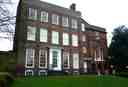
Look ahead for a tall, grand red-brick Georgian house with extra-large white windows and a neat white doorframe, sitting just behind a patch of green grass-this is the Hollytrees Museum. Imagine yourself standing here nearly 300 years ago, with the smell of fresh-baked bread wafting from the kitchens and the echo of carriage wheels crunching across gravel. This house, Hollytrees, was once a very lively home-oh, and its family drama could easily have filled a soap opera! The first home on this spot was actually called “Symnells”, owned by a man named Mr. Symnell-until the Shaw family stepped in. If you think your family has complicated traditions, the Shaws would pass the house from one John Shaw to another like an endless relay race, until young John Shaw IV, sadly, passed away too soon. The house slipped into the hands of the law, and finally Jane Lessingham, John’s mother, bought it-only to hand it over to someone else after her own story ended. Enter Elizabeth Cornelisen, a woman with her own vision! She looked at the aging house and said, “Nope, not good enough!” Down it came, replaced in 1718 with this sparkling new mansion, built for about £2,000-a fortune at the time (imagine the number of cups of tea you could buy). Though Elizabeth didn’t get to enjoy her new digs for long, her niece Sarah moved in, followed by her husband Charles Gray. Laura Ashley, eat your heart out-by 1729, Charles had planted two holly trees in the garden, giving the property its forever name: Hollytrees. Through twists, turns, and several rounds (literally, the Round family!), the house changed hands, until it was bought by Colchester’s town council in the 1920s, thanks to a generous donation from Viscount Cowdray. Today, it’s no longer just a house-it’s a museum full of Colchester’s stories, and even home to the town’s Visitor Information Centre. So, as you gaze up at those brilliant sash windows, remember: behind each one, there’s a secret or two whispering from centuries past. Fancy stepping inside and making some stories of your own?
Open dedicated page →
8Colchester Castle
Buy tour to unlock all 18 tracksTo spot Colchester Castle, look directly ahead and you’ll see a massive, squat stone fortress with thick, rough walls, an arched entrance guarded by flags, and a wooden bridge…Read moreShow less
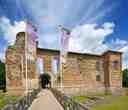
To spot Colchester Castle, look directly ahead and you’ll see a massive, squat stone fortress with thick, rough walls, an arched entrance guarded by flags, and a wooden bridge leading straight toward it. Welcome to Colchester Castle! Take a deep breath and listen, because this keep has more secrets than your grandma’s attic. Imagine it’s the late 1000s. The air hums with the clattering of armor, and you stand on a site with bones much older than the Normans themselves-because right under your feet are the ruins of the Roman Temple of Claudius. The clever Normans thought, "Why build new foundations when you can use the Romans'?" It’s like historical recycling, but with extra grandeur. The castle keep looms grandly-at an astonishing 152 by 112 feet, it’s the largest of its kind in all of Europe. That size isn’t just to impress visitors or intimidate invaders; it’s because medieval builders piggybacked on the massive Roman podium, making this spot the heavyweight champion of medieval architecture. The walls blend ancient stones and Roman bricks-talk about upcycling! Once, this fortress may have stood two, three, or maybe even four stories high. No one’s quite sure, and it’s a mystery historians love to argue over tea. The castle wasn’t all "knights in shining armor," though-it’s seen its share of drama. In 1216, it was under siege for three long, tense months. Picture anxious defenders peering over the battlements while John’s army, with mercenaries and barons galore, tried everything to get inside. Eventually, the garrison surrendered, and if you listen really closely, maybe you’ll catch the echo of their exhausted footsteps. Yet after centuries of sieges, royal squabbles, and legends, the castle faced a different fate: neglect. By the 1600s, stone by stone, it was nearly demolished-some dynamite and a bit of desperation included. But demolishing Colchester Castle proved tougher than a stale biscuit, and the ruins remained. During these years, its walls housed all sorts: prisoners accused of witchcraft, a gaoler, and, for a time, a legendary librarian named Mary Ann Smith. Believe it or not, she lived here her entire life! She even planted the sycamore tree on the castle’s southwest tower, either to remember the Battle of Waterloo or maybe just for some shade. That’s long-term planning for you. Colchester Castle has had more uses than a Swiss Army knife. After being a royal stronghold, it moonlighted as a prison, a grain store, and eventually a grand garden pavilion. In the 17th century, suspected witches were interrogated within these walls (thanks to the Witchfinder General, who clearly didn’t have enough hobbies), and two Royalist leaders faced execution just behind the castle. Local legend says grass won’t grow where they fell, so keep an eye out for that stubborn patch. By the 18th and 19th centuries, the castle was more genteel. Charles Gray, an MP, restored parts of it and built a summer house shaped like a Roman temple up on the Norman earthworks-imagine sipping tea while pretending to be Caesar! The castle even got its own library, which explains why it’s now the proud home of Colchester Museum. The doors opened in 1860, and today the castle can boast one of the UK’s most significant collections of Roman treasures. But it was almost lost for good! In the 1920s, the future of the castle depended on a timely rescue-courtesy of the Borough Council and a generous industrialist. They bought the castle and its parkland, sprucing it up into the castle you see now. In the 2010s, a massive restoration modernized the museum, making it even brighter and more interactive for visitors like you. All these centuries later, Colchester Castle stands proud, a patchwork of ages-a Norman heart with Roman bones, a dash of medieval mystery, and more than a few ghost stories. So, as you gaze up at those ancient walls, remember: the hardest part about storming Colchester Castle today is deciding where to start your adventure!
Open dedicated page →- location_on9
St Martin's Church, Colchester
Buy tour to unlock all 18 tracksTo spot St Martin’s Church, just look ahead for a rugged old stone building with a blunt, flat-topped tower and a blue door behind an iron fence-it almost looks as if history…Read moreShow less
To spot St Martin’s Church, just look ahead for a rugged old stone building with a blunt, flat-topped tower and a blue door behind an iron fence-it almost looks as if history itself has stopped for a quick rest here! Imagine you’re standing right at the edge of Colchester’s long and twisting history. In front of you, St Martin’s Church rises from the ground with its thick walls of rough flint, the surface pitted and flecked with stone and hidden pieces of ancient Roman rubble-like a giant’s patchwork house. The sunlight sneaks through the gaps in the trees and glances off the old gravestones, some of which lean sideways as though they’ve grown tired after centuries of standing watch. Now picture this church back in the 12th century. The bells would have rung out from its tall, proud tower-until the English Civil War crashed through in 1648. That’s when the tower took a beating, leaving it broken and stunted, which is why it looks like the top’s been lopped off with a giant sword. People say a church can be a survivor, but this one really tested that theory! After the Civil War, things got even rougher. By the 1700s, a local historian named Philip Morant wrote that St Martin’s was “ruinous,” as if it were a haunted relic where only the wind dared whisper. But-plot twist! In the 19th century, a renaissance of hope arrived. An architect named Giles Gilbert Scott came along and revealed the wagon-shaped roof over the chancel: a hidden masterpiece above your head, left to dazzle in the filtered light. Though another grand restoration was dreamed up by Rev Ernest Geldart, it never made it past the drawing board, and the church slowly faded back into neglect. It was even declared officially redundant in the 1950s-imagine being put out to grass after nearly 900 years of service! Yet St Martin’s wasn’t finished. For thirty years, the old church rang with laughter and applause-yes, it became a theatre! But then, structural trouble loomed, and the church seemed destined for another sad ending... until the Churches Conservation Trust swooped in during the 1990s, a team of modern-day knights. They patched the building, scrubbed away decades of black paint, restored the ancient tiled plaques, and brought back the glory of the barrel-vaulted roof-plus added some wheelchair ramps for good measure. Today, as you stand here, it’s lively once more and home to the Orthodox congregation from St Helen’s Chapel. So, take a deep breath and imagine all those voices-prayers, laughter, drama, and song-echoing through these ancient stones. If you look closely, you’ll even spot a mysterious green man carved above the chancel arch, grinning down on everyone as if he’s been in on every secret, every joke, and every rescue all this time. Now that’s what I call sticking around for the encore!
Open dedicated page → - location_on10
Colchester Town Hall
Buy tour to unlock all 18 tracksTo spot Colchester Town Hall, look up just ahead for a grand red-brick and white-stone building with a soaring clock tower topped by a green statue-it’s hard to miss, especially…Read moreShow less
To spot Colchester Town Hall, look up just ahead for a grand red-brick and white-stone building with a soaring clock tower topped by a green statue-it’s hard to miss, especially as it stretches above the tree line and towers proudly over the High Street. As you stand here, imagine the busy hum of Colchester town life all around you, footsteps echoing off the grand stone steps. Right before your eyes is not just a building, but a dramatic stage for hundreds of years of local history. Let’s peel back the layers. The ground beneath your feet once held a moot hall back in 1277, where townsfolk would gather, trading news, arguing over fish prices, or swapping the latest medieval gossip. That humble hall changed faces over time, was remodeled in 1374, and finally pulled down in 1843. If these bricks could talk… well, some might never stop chattering! Fast-forward to the late 1800s, and Colchester leaders wanted something bigger, something bolder. Enter architect John Belcher, who didn’t just design a building-he created a marvel! You’re looking at Edwardian Baroque at its flashiest, with a front stretching out in seven dramatic bays. That arched doorway? Step closer to those old stones, and you’ll spot the borough’s coat of arms carved above it, flanked by towering Doric pilasters that shout “importance!” rather than whisper it. There’s an ornate balcony perched above, perfect for, say, a royal wave or a mayor’s grand proclamation. You can’t help but notice that epic tower shooting skywards-192 feet high, thanks to a donation from James Noah Paxman. Just take a moment and picture the diamond-studded excitement of Queen Victoria’s jubilee, for which this tower was raised. Now look up-along the tower’s ledges and nooks, you’ll see a cast of allegorical characters in stone, each one marking the pillars of Colchester’s past: engineering, defense, farming, and fishing. And right at the summit, as if keeping a watchful eye on the whole city, is the bronze figure of Saint Helena, the town’s patron saint. Here’s a quirky detail: when a statue was needed, local Councillor Arthur Jarmin sniffed out all the way to Italy, only to find a statue of the Virgin Mary… so, back in Colchester, someone had to play sculptor surgeon and transform her into Helena! Circle your eyes down just a bit and spot four bronze ravens sitting sternly-they represent the medieval portreeve, who ran Colchester’s busy port hundreds of years ago. Now, here’s a little local secret: listen closely, and you might just hear. That’s the famous “Charlie” clock, named after Charles Hawkins, who paid for its place on the tower. Crafted by Smith & Sons of Derby, the bells above include a 15th-century gem that used to ring out from the original moot hall. Imagine what stories that bell could tell, having witnessed centuries of town drama and celebration! On the main facade, six statues keep eternal watch-famous Colcestrians carved in stone, from Eudo Dapifer to the legendary warrior queen Boudica. Inside, the halls echo with even more grandeur: marble staircases, a statue of Queen Victoria, monuments to martyrs, painted ceilings, and stained glass light patterns on the council chamber floor. Upstairs, the grand assembly hall-the Moot Hall-once shook with debate and music. There’s even a magnificent pipe organ, a gift from local Parliament member Sir Weetman Pearson. Can you imagine the thunder of its pipes during a town celebration? Through the years, the Town Hall has played host to everyone from councilors to kings and queens-Queen Elizabeth II herself even waved to the townspeople from that famous balcony in 1985. Secret tunnels connect this storied building to nearby council offices, like something out of an adventure tale. And if you could wander the walls, you’d find art galore-paintings of merry villages, daring refugees, and powerful leaders, each telling another piece of Colchester’s vibrant history. So take a deep breath, feel the rumble of history beneath your feet, and let Colchester Town Hall remind you: every age leaves its mark, but some, like this, reach for the sky!
Open dedicated page →
11Fenwick Colchester
Buy tour to unlock all 18 tracksYou’ll spot Fenwick Colchester directly in front of you by its grand, modern glass frontage gleaming with big windows and bold signage-just look for the contemporary building that…Read moreShow less
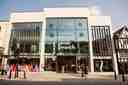
You’ll spot Fenwick Colchester directly in front of you by its grand, modern glass frontage gleaming with big windows and bold signage-just look for the contemporary building that seems to invite you in with “Come in and lose yourself” written above the door! Ah, Fenwick Colchester! Stop right there and let yourself soak up the atmosphere, because this place is more than just a shop-it’s a chapter of Colchester’s very own high street fairytale, complete with ironmongers, haberdashers, tractors, and, yes, even the occasional griffin. First, picture the early 1800s. Instead of this dazzling glass façade, there was a linen draper’s run by William Griffin at 5 and 6 Botolph Street. Imagine bolts of fabric stacked higher than your head, the scent of freshly spun cotton and the crisp click of scissors snipping through cloth. William wasn’t satisfied with just linens-soon he plunged into haberdashery, adding every button, ribbon, and spool of thread a Victorian heart could desire. His shop grew so quickly that by the 1840s, he’d expanded next door and even tried his luck on the High Street, though that shop was short-lived. You might say it wasn’t quite the “main event” just yet. When William retired in 1855, he handed the keys to his son. Now, the name “Griffin and Son” was proudly displayed. William’s family spread like sprouting ivy-one son started a rival drapery nearby, another went into auctioneering, and yet another sold houses. It was like a family game of Monopoly, each staking a corner of Colchester in a different business. Meanwhile, not far away, a chap named Herbert E. Williams was embracing a very different trade-ironmongery and agricultural machinery. Walk past the store now and imagine the clang and clatter of metal, the heavy aroma of oil and newly forged tools, and the spectacle of a tractor rolling right down the High Street! Williams & Co soon became a local fixture, known for selling everything from frying pans to radios, from TV sets to prams. On Cowdray Avenue, away from the bustle of the centre, they’d sell great gleaming tractors to local farmers, making Williams & Co just as much a part of Colchester’s fabric as the Griffins. Then, in 1963, these two family empires decided it was time to join forces. Think of it as a story where the tailor shakes hands with the blacksmith-H.L. Griffin & Co and H.E. Williams & Co merged into the now legendary Williams & Griffin. The shop became a bustling department store, echoing with footsteps across polished floors, tempting passersby with everything from elegant dresses to gleaming kitchenware. They even gobbled up local favourites like A. & E.P. Baker (a fashion spot) and Heasman & Son the jeweller. In 1969, the last echoes of Williams’ tractors faded away as the machinery business was sold off, but the Ireland family, who’d taken the reins by then, kept things fresh-opening a garden centre in the '80s, where you could browse for rose bushes, garden gnomes, and maybe a sunhat for good measure. But the real magic of Williams & Griffin was its sense of independence and local pride. In 2007, the store was crowned “Best Independent Department Store of the Year”-so picture, if you will, the local MP grinning as he collected the trophy, and the staff beaming from ear to ear. Yet change was brewing. In 2008, the Fenwick chain, famous for its elegant stores across England, took over. Williams & Griffin, a name so long on Colchester’s lips, would now become Fenwick Colchester. Today, as you stand under the shining glass frontage, you’re standing on the spot where Colchester’s shopkeeping dreams have played out for nearly two centuries. Walk inside and you’ll find beauty, fashion, toys, gifts, and housewares galore, all sparkling under modern lights. Head up to the top floor and you might even smell the rich aroma of Italian coffee wafting from Carluccio’s, mixing with the perfume of fresh flowers and leather handbags. So next time you pop in for a new outfit or a cheeky slice of cake, just imagine the echoes of all those drapers, ironmongers, and proud shopkeepers who came before. If only walls could talk, right? Maybe they’d say, “Come in and lose yourself... and by the way, don’t forget to check the fabric section!” Intrigued by the h. l. griffin & co., h. e. williams & co. or the williams & griffin? Make your way to the chat section and I'll be happy to provide further details.
Open dedicated page →- location_on12
Mercury Theatre, Colchester
Buy tour to unlock all 18 tracksYou’re looking for a low, modern brick building with lots of glass windows wrapping around the front, and a unique asymmetrical roof-just look ahead for the statue reaching up…Read moreShow less
You’re looking for a low, modern brick building with lots of glass windows wrapping around the front, and a unique asymmetrical roof-just look ahead for the statue reaching up from the roofline, and you’ve found the Mercury Theatre! Alright, now that you’ve arrived outside the Mercury Theatre, let me take you back in time-and trust me, if these walls could talk, they’d probably burst into song! Imagine the sound of footsteps on a 1970s pavement as the people of Colchester gather, clutching programmes and excited for a big opening night. The story of the Mercury Theatre starts in 1968. Back then, the folks in Colchester wanted more than just a good panto at Christmas-they wanted their very own theatre! So, the Colchester New Theatre Trust got everyone together and, after some serious searching for the perfect spot and a lot of fundraising (I bet those bake sales were dramatic), they finally commissioned Norman Downie to design this special place. With a generous grant from the Borough Council, the Mercury Theatre flung open its doors on the 10th of May, 1972. If you squint just right, you might even hear the applause from that very first show. But the Mercury didn’t just pop into existence out of thin air-in fact, it was built on the spirit of the Colchester Repertory Company, which had been performing since 1937. Imagine the echoes of all those performers: young actors taking their first steps on stage, writers furiously scribbling last-minute changes, and the odd stage manager nervously counting props. Now, this theatre may look a bit like the Salisbury Playhouse, and that’s no accident-when it was built, they were structural twins! But over time, the Mercury grew its own personality-and quite a reputation. Through the years, a line of artistic visionaries led the way: David Buxton was the founding Artistic Director, and after him came Michael Winter in 1984, who steered the creative ship for some time. There’s a bit of drama behind the scenes, too, with directors and producers changing over, each leaving their own stamp-Pat Trueman, Adrian Stokes, Dee Evans, Gregory Floy, Daniel Buckroyd, and most recently the dream team of Tracey Childs, Steve Mannix, and Ryan McBryde. Whew! That’s more shuffling than a backstage quick-change. But what’s a theatre without a bit of backstage magic? The Mercury’s walls have seen the likes of John Cleese treading the boards, Martin Clunes bringing laughter, and directors like Michael Grandage making their debuts here. There have been premieres, teary farewells, and the constant hum of artists in rehearsal. Gari Jones from the National Theatre often popped in with something new and bold-sometimes even something eyebrow-raising! And, of course, the productions! Every year, the Mercury has delivered a little bit of everything. Legendary “Made in Colchester” productions brought to life classic tales like “Jack and the Beanstalk,” “Sweeney Todd,” “Much Ado About Nothing,” “Dracula”-oh, and who could forget “Spamalot”? On frosty nights the Mercury rings with ghost stories and musicals, farces and tragedies, all echoing out into Colchester’s quiet streets. Not only that, but inside there are two auditoria to host these performances (so if you ever get lost, just follow the muffled laughter or the unmistakable rumble of a set change), plus the Digby Gallery, showcasing art by local creators-so you get a little sprinkle of culture with every ticket. Today, the Mercury is led by Steve Mannix, so if you see someone walking around with a look that says “I hope everything goes right today,” that might just be him. From its opening in 1972 right up until now, the Mercury Theatre has been a living, breathing hub for the creative spirit of Colchester-its doors ready to whisk you into a new story every night. So, take a moment, and maybe, just maybe, you’ll catch the scent of stage makeup and paint on the breeze. Ready for the next act? Let’s head on to our next adventure! Wondering about the featured artists, 2018 made in colchester productions or the 2017 made in colchester productions? Feel free to discuss it further in the chat section below.
Open dedicated page →
13Colchester Arts Centre
Buy tour to unlock all 18 tracksTo spot the Colchester Arts Centre, look for a striking old red-brick church with pointed arches, wrought iron fencing, and a tall, square medieval bell tower rising above the…Read moreShow less
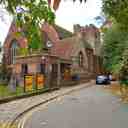
To spot the Colchester Arts Centre, look for a striking old red-brick church with pointed arches, wrought iron fencing, and a tall, square medieval bell tower rising above the trees, tucked right beside the narrow street in front of you. Right in front of you stands the Colchester Arts Centre-though today it might be alive with the sound of music, laughter, and applause, its thick brick walls have witnessed quite a dramatic history! Imagine yourself back in the early medieval days, when this spot marked the edge of the old Roman town, a peaceful corner where an ancient church clung to the city’s crumbling walls. Archaeologists even found Anglo-Saxon burials here, so folks have been gathering at this very spot for more than a thousand years! The church was first officially mentioned in 1206, owned by the Bishop of London, who also ran a little school here-many say the famous Colchester Royal Grammar School started right nearby. Local priests here didn’t hang around too long-perhaps the parish wasn’t too well-off, or maybe they just couldn’t resist the lure of a better Sunday roast elsewhere! The original medieval church had a frieze of carved shields, and the tower-believe it or not-was partly built using Roman bricks scavenged from the old city wall. Fast forward to the wild days of the English Civil War. Picture cannons thundering, smoke in the air, townsfolk ducking for cover. In 1648, this church was transformed into a battlefield fortress, with Royalist troops clambering up to the top of the bell tower, dragging a small cannon called a saker into place. From that lofty perch, a one-eyed gunner named Thompson fired down on their enemies, even lobbing cannonballs over a mile away towards Parliamentarian headquarters! But the other side was ready-they battered the tower with heavier guns until, on one explosive day, the tower was hit, the platform collapsed, and poor Thompson met his end in a rain of falling bricks and echoes of gunfire. Some locals like to spin tales that this blast was the birth of the nursery rhyme ‘Humpty Dumpty,’ but don’t let them fool you-there’s no proof, though it certainly makes for an egg-cellent story! After the siege, the church was left in ruins, with locals saying their prayers next door while St Mary’s waited for its makeover. In 1714, the congregation finally raised the money to rebuild their church-‘plain, neat, but not so substantial,’ an old historian sniffed-which meant even after a near collapse, they still took their time finishing off the bell tower! Over the years, quirky rectors came and went: one translated Aristotle, another left to join a rebellion in Ireland, and several faced fines or had to flee during England’s religious upheavals. By the Victorian era, Colchester was booming and so was the church-hundreds crammed in every Sunday, forcing a mighty rebuild with red and black bricks, a fancy new chancel, and, after an earthquake in 1884, the bell tower was rebuilt again, proudly patched together atop ancient stone. But in the late 20th century, the world changed. New roads sliced through the town, the busy dual carriageway cut St Mary’s off from its parish, and the church found itself, quite literally, left behind. In 1978, after centuries of worship, the doors closed-a final ‘amen’-and the bell, cast in 1679, went off on its own journey, eventually ringing again in a church miles away. But this story doesn’t end with silence. In 1980, the old stones shook with new life as the Arts Centre opened its doors. Since then, these walls have hosted legendary music-from early Coldplay and The Strokes to indie stars and comedy greats like Eddie Izzard and Jo Brand. The ghosts of cannon-fire have been replaced by the thump of bass, the crash of laughter, and the cheers of a new crowd. Today, Colchester Arts Centre continues to nurture fresh talent, run bustling farmers’ markets, and welcome everyone, thanks to a major renovation in 2018 that made the space accessible for all. So take a look at the quirky shields on the old tower, breathe in the stories hidden in these bricks, and know you’re standing in a place where Colchester’s history will always find a new way to take centre stage!
Open dedicated page →
14Balkerne Gate
Buy tour to unlock all 18 tracksRight in front of you, you'll spot an ancient-looking arched gateway made from rough stones and red Roman bricks-just keep an eye out for those chunky, weathered arches with a…Read moreShow less
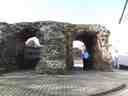
Right in front of you, you'll spot an ancient-looking arched gateway made from rough stones and red Roman bricks-just keep an eye out for those chunky, weathered arches with a cobbled floor underneath them! Welcome to the mighty Balkerne Gate, the grand finale of our Colchester adventure! Imagine yourself standing here nearly two thousand years ago when this gateway wasn’t just a lonely set of ruins but a bustling entrance into the Roman town of Camulodunum. Roman soldiers in gleaming armor would have marched through these towering arches, with traders, travelers, and all sorts of quirky characters passing by-some in togas, others carrying mysterious wares from far-off lands. The gate was a big deal. It was where the Roman road from Londinium (that's London!) met the protective town wall. And get this: it’s the largest surviving Roman gateway in Britain! That’s right, nowhere else in the country can you find a Roman gate quite as impressive. Now, let’s set the scene. The year is about 150 AD. The air is thick with the smells of campfires and cookshops. Chariots clatter along the stone roads, and the massive gate looms ahead, with its two super-wide carriageways, plus two footpaths-so four arches in all! That’s pretty rare, even by Roman standards. You’d have had guards watching from the towers, making sure no unwanted visitors snuck in (or out) after curfew. But time, as it loves to do, played a clever trick: most of the original gate was swallowed up by later buildings, including a rather cheeky 18th-century pub now called the Hole in the Wall. Only this southern arch and the ghostly remains of a guard tower stay with us, holding secrets of centuries gone by. So as you stand here, close your eyes for a second and picture the bustling life, echoing footsteps, and the sense of anticipation each time someone passed beneath these brick and flint arches-heading either to new adventures or back home for a well-earned Roman nap. And don’t worry, if the walls start whispering to you, it’s probably just the old Roman guards-and if you hear someone shouting “Halt! Who goes there?”, well, I guess the magic of Colchester caught up with us at last!
Open dedicated page →
Frequently asked questions
How do I start the tour?
After purchase, download the AudaTours app and enter your redemption code. The tour will be ready to start immediately - just tap play and follow the GPS-guided route.
Do I need internet during the tour?
No! Download the tour before you start and enjoy it fully offline. Only the chat feature requires internet. We recommend downloading on WiFi to save mobile data.
Is this a guided group tour?
No - this is a self-guided audio tour. You explore independently at your own pace, with audio narration playing through your phone. No tour guide, no group, no schedule.
How long does the tour take?
Most tours take 60–90 minutes to complete, but you control the pace entirely. Pause, skip stops, or take breaks whenever you want.
What if I can't finish the tour today?
No problem! Tours have lifetime access. Pause and resume whenever you like - tomorrow, next week, or next year. Your progress is saved.
What languages are available?
All tours are available in 50+ languages. Select your preferred language when redeeming your code. Note: language cannot be changed after tour generation.
Where do I access the tour after purchase?
Download the free AudaTours app from the App Store or Google Play. Enter your redemption code (sent via email) and the tour will appear in your library, ready to download and start.
If you don't enjoy the tour, we'll refund your purchase. Contact us at [email protected]
Checkout securely with