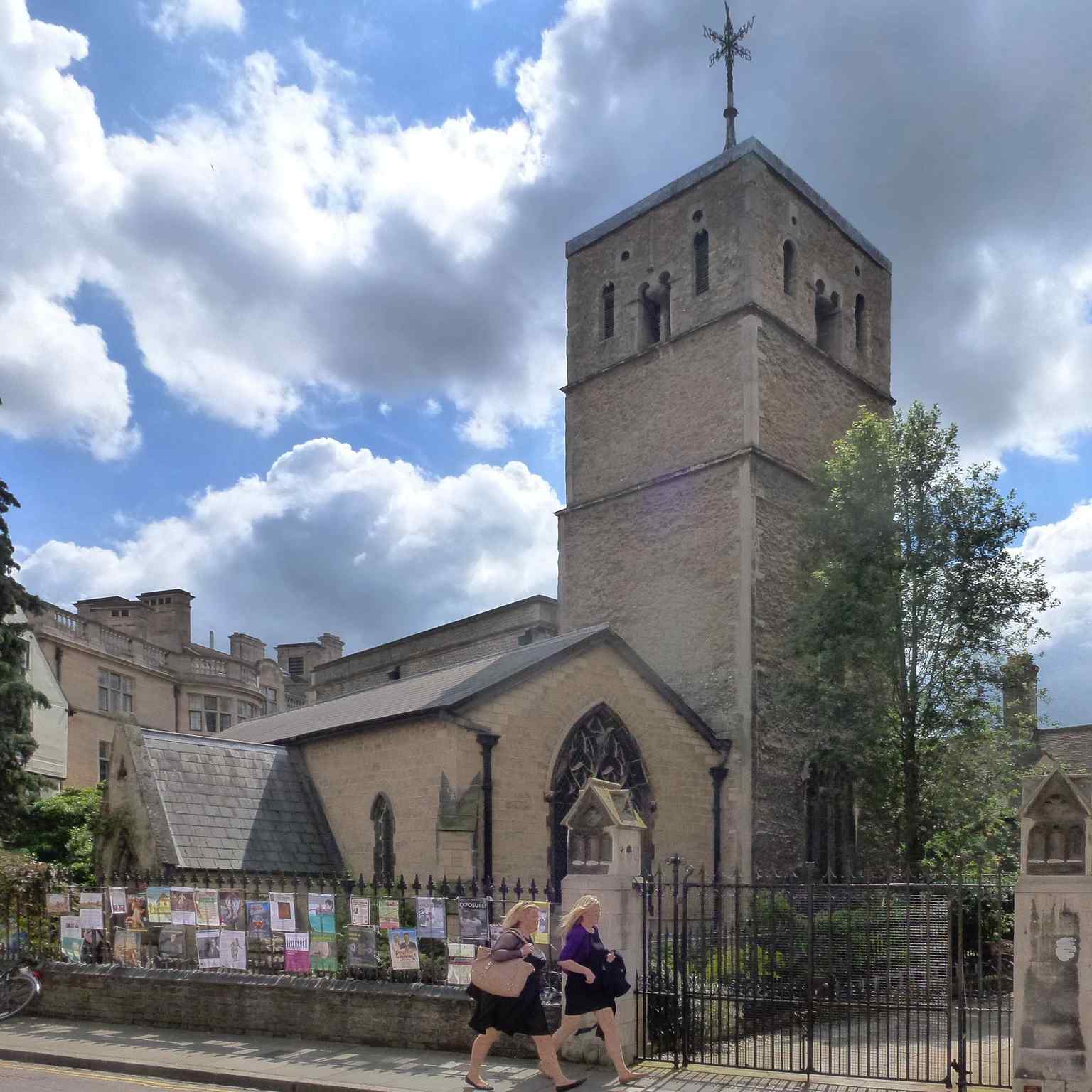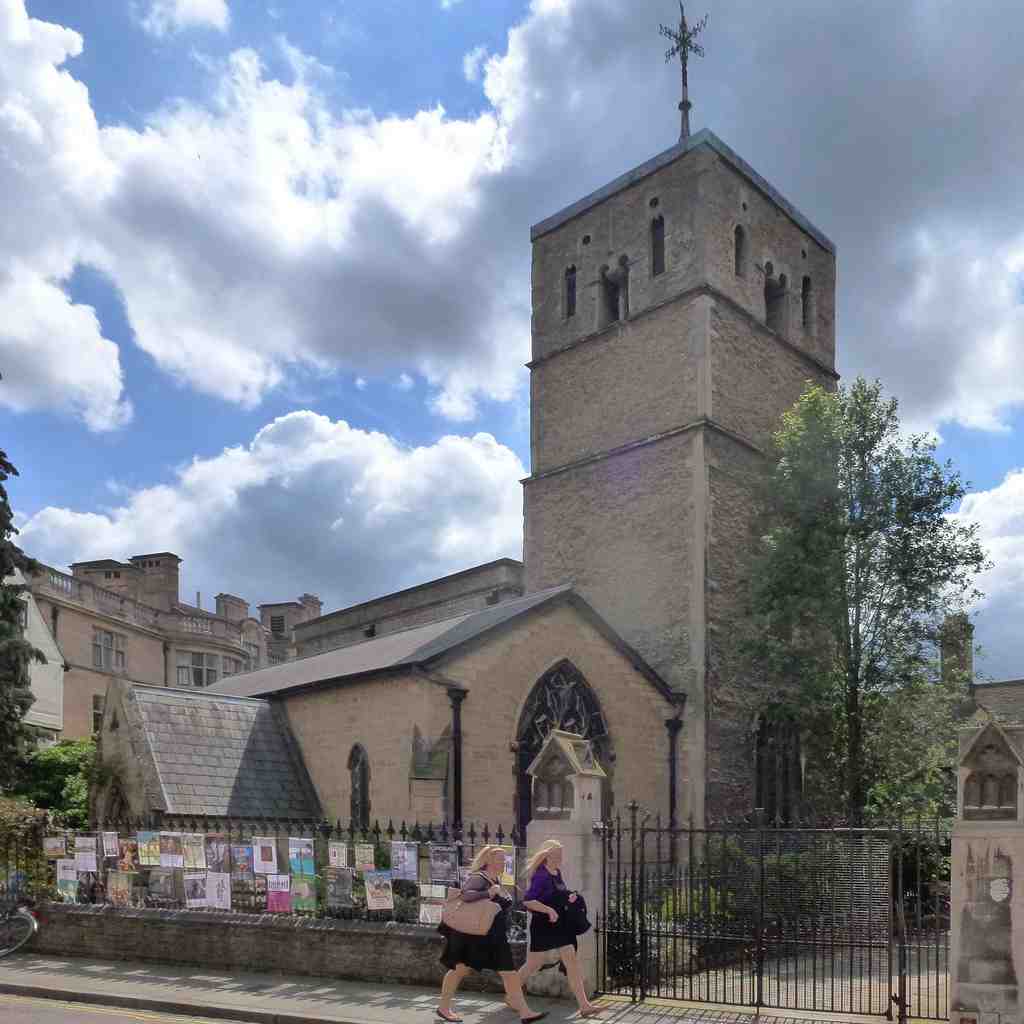
Look to your right for a sturdy, square stone tower built of rough rubble, topped with a slender metal weather vane and set behind a black iron gate. You are standing before St Bene't's Church, the absolute oldest building in Cambridge. Its roots go deep into the Anglo-Saxon earth, constructed between the years one thousand and one thousand and fifty, long before the university even existed.
If you tap your screen, you can see what hides inside, specifically the grand archway connecting the tower to the nave, which is the soaring central hall where the congregation gathers. Carved into that ancient stone are bizarre beasts, creatures resembling lions, with one tightly gripping a fish in its jaws. For nearly a millennium, these fierce monsters have served as silent guardians over the quiet prayers of scholars.
Yet, the history of this holy site is not just about pious academics and solemn rituals. Often, the polished world of the university clashed with the gritty, rebellious reality of the locals. In the thirteenth century, the local rector, a man named Alan, was absolutely furious that the newly formed university was ringing his church bells to summon students to exams without paying the parish a penny. He fiercely rebelled against this academic entitlement, complaining until the Bishop intervened and forced the university to pay an annual fee of six shillings and eight pence, which is roughly three hundred pounds in today's money.
But an even darker example of local pragmatism clashing with sacred grounds sits right outside. Beside the church entrance stands an old iron parish pump. For generations, this was a vital water source for the community. However, a profoundly morbid local legend reveals a horrifying truth about human ingenuity. A former sexton, the church officer charged with digging and maintaining the graveyard, found himself dealing with heavily waterlogged graves. He discovered a brutally efficient solution. He simply worked the handle of the parish pump until the graves drained dry. It solved his problem perfectly, but the tragic reality was that unsuspecting parishioners were filling up their daily drinking jugs with water that had been filtered directly through the rotting corpses of the cemetery. When the locals finally realized the dreadful source of their supply, they fled to find new wells.
It is a somber reminder that the pristine image of Cambridge rests upon the scars of history, shaped by ordinary people making grim choices in the shadows of greatness. If you wish to step inside and feel the weight of those ancient stones yourself, the church is open from nine in the morning until six in the evening every day of the week. Now, let us turn our attention from these thousand year old stones to a bizarre, terrifying modern mechanism just a few steps down the street, as we head towards the Corpus Clock.