
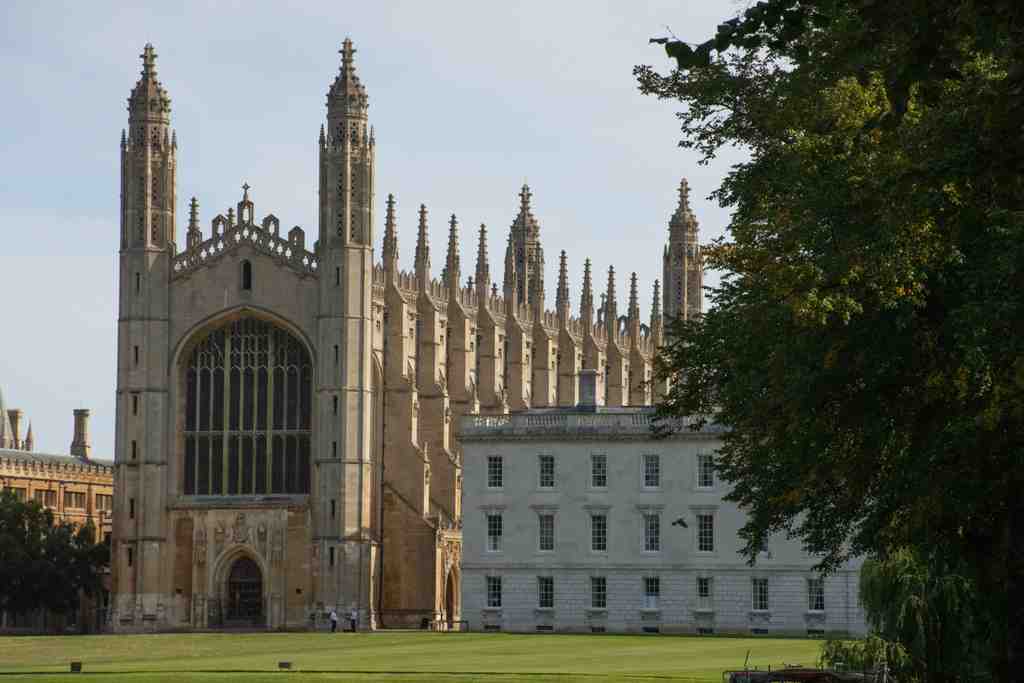
Look to your left and you will see an imposing pale stone building dominated by towering gothic spires and a magnificent, massive arched window. This is King's College, founded in fourteen forty-one by King Henry VI. He had a grand, sweeping vision for a massive scholarly community centered on a spectacular courtyard, though his ambitious plans were tragically interrupted by the Wars of the Roses and his eventual deposition, leaving his personal dream largely unfinished.
For four hundred years, the culture here was fiercely, almost absurdly, exclusive. King's operated as a closed loop known as Eton-in-Cambridge. By royal decree, only boys from the prestigious Eton College were allowed admission. It created a strange, monastery-like atmosphere. Scholars lived their entire lives without ever having to compete with the outside world, breeding a deep institutional snobbery. Undergraduates here did not even have to pass university exams to get their degrees.
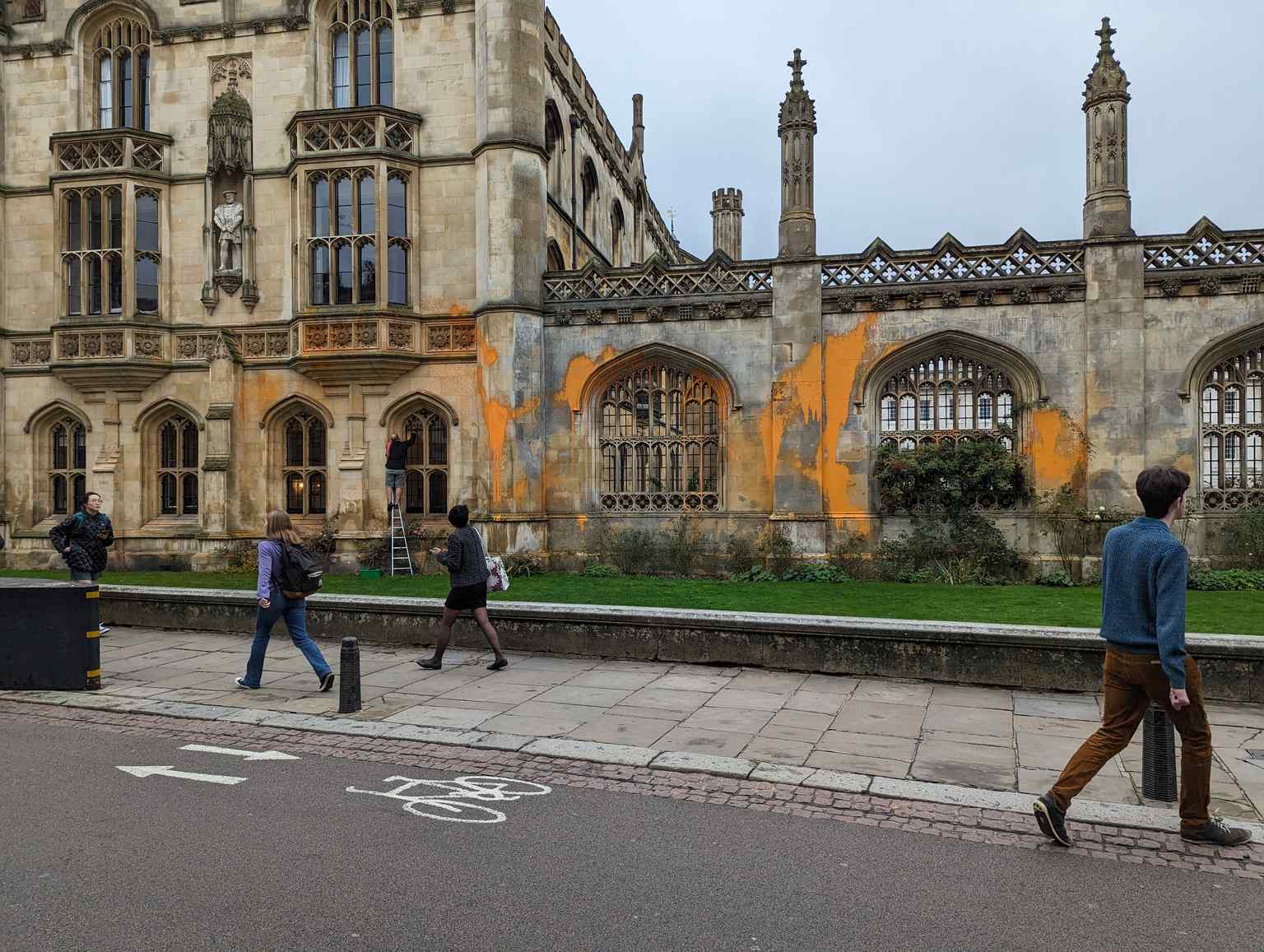
But rigid walls inevitably invite defiant minds. The college's history is defined by those who sought to break its suffocating mould. If you glance at the second image on your app, you will see the modern legacy of that rebellious spirit, showing the college walls being cleaned after a political protest in twenty twenty-three. By the nineteen sixties, the students here had earned the nickname Red King's for their fervent left-wing activism, even scaling the roof to fly protest flags from the very pinnacles you see before you.
This shift from a closed aristocracy to a radical, open community was nurtured by progressive thinkers. Look at the first image on your screen to see the famous novelist E. M. Forster having tea in nineteen twenty-four. As an honorary fellow, a highly distinguished academic resident, Forster spent decades pushing back against unfeeling traditions, encouraging students to strip away the formality and genuinely connect with one another.
That desperate need for raw, human connection reached its peak after the devastating trauma of the First World War. An army chaplain and college dean named Eric Milner-White returned from the blood-soaked trenches of the Western Front completely changed. He looked at a shell-shocked nation and realised that the heavy, rigid Victorian church services of the past offered no real comfort.
In nineteen eighteen, he decided to completely rewrite the script. He introduced the Festival of Nine Lessons and Carols, stripping away the pomp and focusing entirely on the pure, simple beauty of the choristers' voices. His absolute masterstroke was starting the service not with a booming organ or a grand procession, but with a single, lone treble, a young boy soprano, singing Once in Royal David's City. That solitary, fragile voice ringing out in a cavernous space created a hushed, shared vulnerability that helped heal a broken country, a tradition that is still broadcast to millions worldwide today.
That solitary voice echoes within the architectural marvel right in front of you. Let us now turn our full attention to that breathtaking crown jewel of the college, as we take the very short walk next door to King's College Chapel.





