
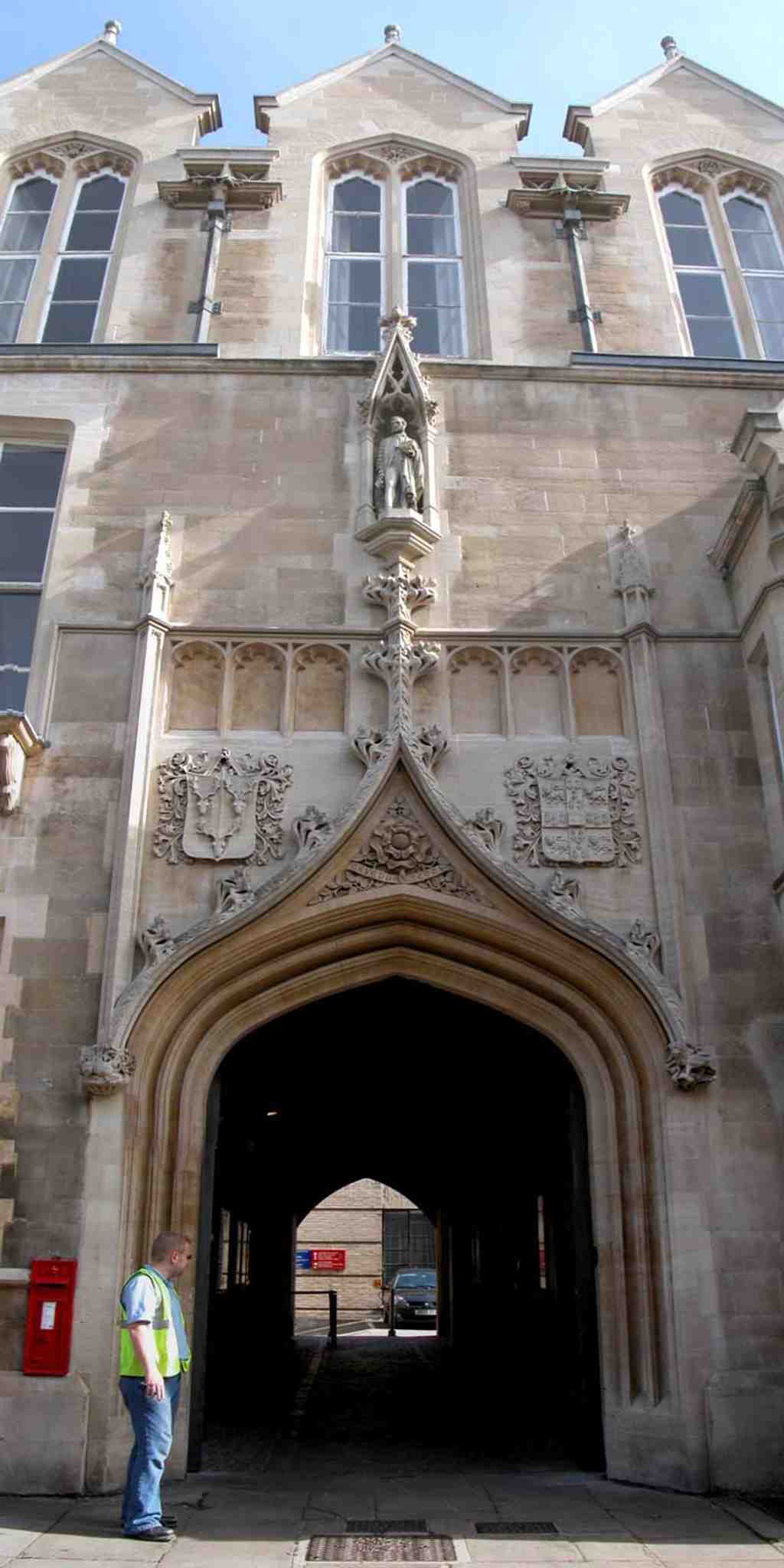
Just ahead of you stands a stone gateway that rises with a sense of authority, its pointed arch framing a dim passageway leading into the heart of the university’s past. Above, tall windows shimmer with a cold, formal clarity. You’ll notice carved shields and delicate tracery set in the pale stone, and if you look up-really up-there’s a statue perched silently, almost watching as you approach. The old, heavy atmosphere here seems to hold its breath-step close enough, and you might feel the hum of secrets inside.
As you pause before the University of Cambridge Computing Service, imagine walking through this gateway fifty years ago. The air inside might have been thick with the click and whirr of machines, engineers hurrying by, faces tense with the silent thrill of invention. This was the nerve center for technology at Cambridge for more than forty years, from 1970 to 2014. Right here, academics and students alike bent over the earliest computers-massive, humming monsters like EDSAC and Titan that filled rooms and ate punch cards for breakfast. The Computing Service wasn’t just about machines, though. It was where clever people figured out how to make computers serve the whole university, from arranging lectures to managing giant, invisible rivers of data.
Picture the sense of mystery, and perhaps a bit of pride, as ground-breaking ideas sparked into life. In these walls, the first microprogrammed CPU was born. The air must have felt charged with possibility-and risk, too, as new systems for email and wireless were dreamt up, tested, and often, crashed by the curious hands of students.
Change was relentless. By 2014, the quiet revolution that had begun here merged forward with others to create the University Information Services-a new era rising from the old. Now, if you listen, you can nearly sense the heartbeat of history behind those windows: the restless, relentless push for discovery that still echoes well beyond these stones.




