
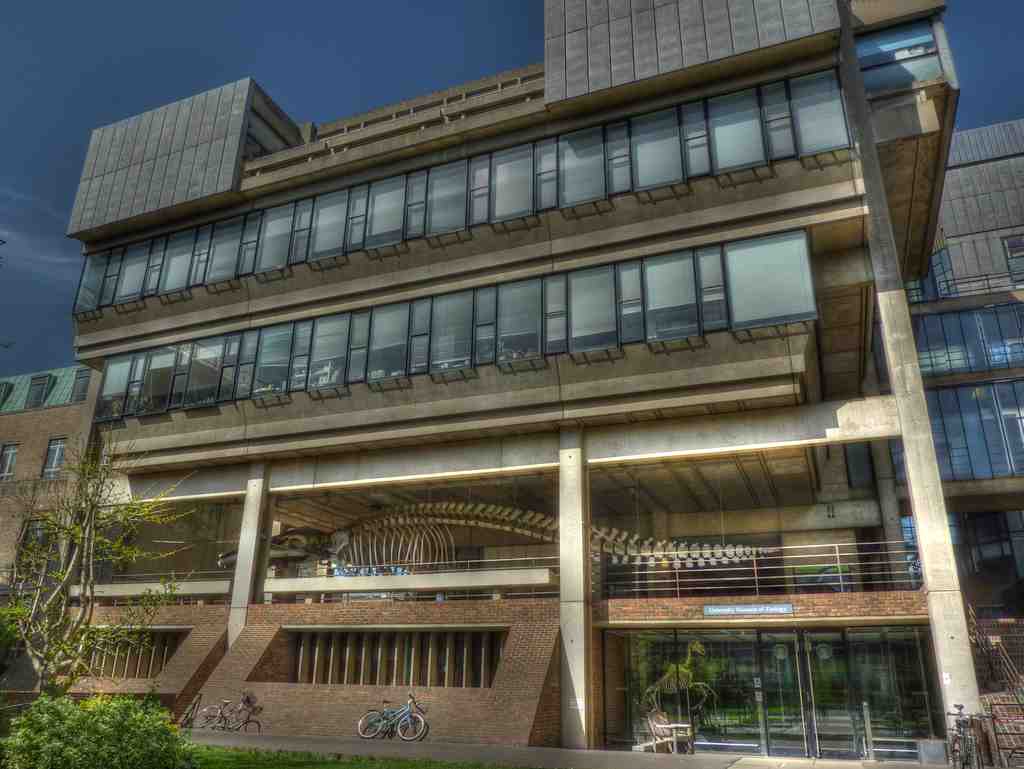
Ahead of you stands a large, modern concrete building with bold, rectangular windows that jut out across its frontage. The structure is open underneath, with tall pillars and dark-brick sections at the ground level. Right above the entrance, in a glassed-in hall, you can’t miss the enormous skeleton of a whale-its pale bones arched like a silent guardian. To spot the museum, look for the double glass doors and the sign that reads “University Museum of Zoology.” Look just above eye level and the impressive whale skeleton seems almost to float in midair-an unmistakable marker that you’ve arrived.
As you stand here, imagine the years piled up behind these walls, each filled with stories of explorers and scientists who set off from Cambridge, determined to uncover the secrets of the animal kingdom. The air inside is thick with a sense of curiosity-almost as if every creature, both preserved and skeletal, is echoing the question: what wonders remain undiscovered?
This is the University Museum of Zoology, a fitting tribute to life’s endless variety. Behind its modern face, the museum shelters treasures gathered from across the world. It houses creatures collected by brave souls and, quite literally, pieces of history-specimens collected by Charles Darwin himself during his journey on the Beagle. Many of the animals, birds, insects, and bones you find within were discovered in an era when the world bristled with tension between the known and the unknown, and naturalists faced dense jungles and stormy seas to drag back knowledge.
The museum stands proudly as the home of collections considered of outstanding historical and international importance. Among the stories, there is also humor-a touch of rivalry between collectors and the occasional case of mistaken identity. There is mystery-imagine handling the skull of a now-extinct dodo, or peering at an egg from a bird that no longer flies. There is tension, too, as scientists here once debated fiercely: what was life, and how did it change?
Inside, the air tingles with anticipation. You can peer up at the enormous finback whale skeleton-known affectionately as Bobby-suspended above you, its bones glistening after a careful and rather dramatic restoration. As sunlight flickers through the glass, you may just feel the spirit of past explorers urging you to look a little closer-at the way the feathers are arranged on a rare bird’s wing, or the delicate, dangerous teeth of a preserved fish pulled from an ocean no one else had charted.
All around you are secrets and stories, brought here by some of the sharpest minds and bravest hearts from centuries past. The museum continues to grow and change, engaging new generations, and always asking: What will you discover next?




