
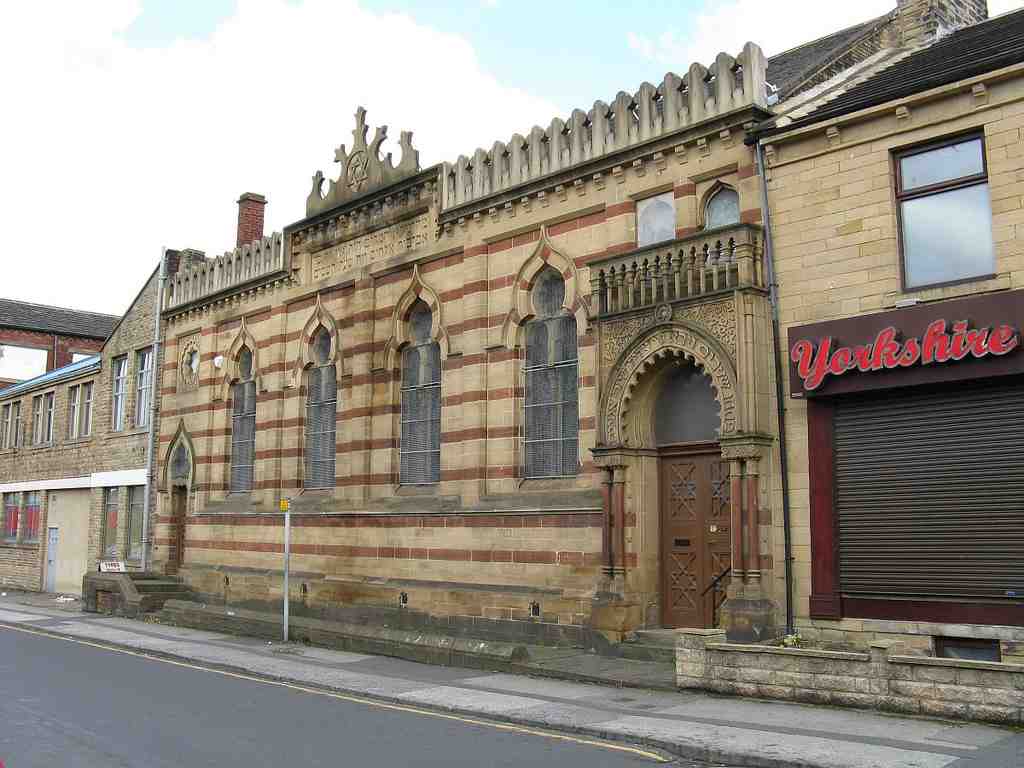
To spot the Bradford Synagogue, look for the striking striped building with tall, arched windows, an ornate doorway, and a decorative stone crown along the roof-almost as if a palace from a magical story popped up right in the middle of Bowland Street.
Now that you’re standing in front of it, let me take you back in time. Imagine it’s the late 1800s and Bradford is buzzing with the energy of wool merchants from around the world. Among them are German-born Jewish traders who, drawn by the promise of prosperity and freedom, bring with them more than just business-they bring the dream of a community. In 1873, with little more than hope, a group of these families gathered together as the first Bradford Jewish Association. Before long, inspired by the arrival of the young and optimistic Rabbi Dr Joseph Strauss, they laid the foundation stone for what would soon be the third Reform synagogue in the entire United Kingdom.
Take a breath and look around-the walls of this building have seen more stories than your favorite soap opera! Rabbi Strauss, only 28 years old when appointed, led from 1873 to 1922, guiding a community that called itself the Bradford Congregation of British & Foreign Jews. At the time, Bradford was so forward-thinking, the town had a Reform synagogue even before an Orthodox one. That’s Bradford, always a step ahead-even in the 19th century!
Let’s talk about those eye-catching stripes and shapes. The synagogue’s style is called “Oriental,” a 19th-century British fascination with far-off places and mysterious lands-not something you see every day, is it? Its arches and decorations make it one of the best-preserved examples of this style in the country. In 1989, the building earned a Grade II* listing, which basically means, “Hey, everyone! Don’t touch-this is precious!”
Of course, no good story is without a twist. As years passed, the local Jewish community got smaller, and there was a time when selling this beloved building seemed like the only option. But-plot twist!-funding came in, with help from across Bradford’s communities, including local Muslims, to keep the synagogue alive as a place of worship and heritage.
Even today, though the community is small, the synagogue comes alive for Shabbat and joyful celebrations every major festival-there’s even a Friday night dinner and a communal Passover Seder, just as there always has been. It’s a place of resilience, friendship, and the tale of a tree of life that keeps growing, even when the winds blow strongest. So as you stand here, take a moment: you aren’t just looking at a building-you’re looking at the heart of a story that’s over a century in the making.




