
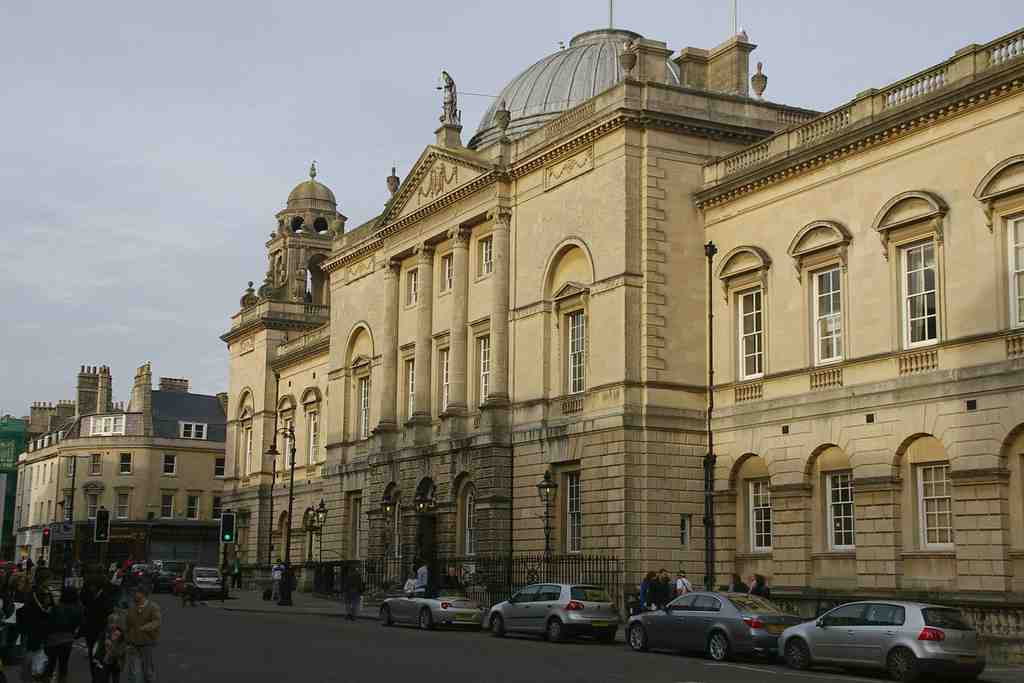
If you look straight ahead, you’ll spot the Guildhall - you really can’t miss it. It’s the big, grand Bath stone building stretching powerfully along the street, with huge arched doorways at street level and tall windows above, all framed by striking columns. Look up and you’ll see a dome perched on top of the building, a little like a fancy crown, and at the very center, standing proudly over the entrance, is a statue of Justice, holding her scales. The decorations along the roofline are classic Bath - elegant and impressive.
Now, pause outside the Guildhall for a moment and just imagine: the year is 1359. There’s no traffic, but the noise is still incredible - the calls of traders, the clatter of horses on stone, the shuffle of people in heavy cloaks heading for the old medieval guildhall that once stood right behind where you are now. That structure had creaky timber beams, a tiled roof, and, I confess, probably not the modern luxury of central heating.
Over the centuries, this place has witnessed more action than a Netflix drama. It’s changed its outfit a few times: from timber-framed, to Jacobean chic with its own armoury (ideal for when those neighborly disputes got a little too heated), and later into the grand neoclassical style you see today, thanks to a fellow named Thomas Baldwin, who had a real knack for creating beautiful buildings. Step back a bit to take in the four mighty Ionic columns at the front - the sort of thing you’d expect to see on a palace. The statue of Justice overhead keeps an eye on things, making sure everyone follows the rules - or at least tries to.
Inside, if you could peek in, you’d find a banqueting hall that’s been graced by royalty (yes, even the Queen had lunch here). Chandeliers sparkle above grand portraits, and you can almost hear the echo of old concerts and festive gatherings. These walls have seen everything from council decisions, to wedding vows, to secret plans (who knows, maybe even a ghost or two lurking about).
Now, for a dash of suspense: in 1972, flames leapt up behind the Guildhall in the historic market, rattling the nerves of everyone nearby. But the market survived, much like the building itself, adapted and alive for centuries.
While you’re outside, imagine the swirl of cloaks, the clang of old bells, echoes of legal debates, and a scent of fresh bread from the market behind. This is where Bath’s magic and history meet - not bad for a spot to stand and breathe, right?
Ready to move on?




