On your left, look for a broad honey-colored stone hall with a curved front, tall rectangular windows, and an eight-sided cupola rising from the middle of the roof.
This is the Sheldonian Theatre, and despite the name, it spent most of its life doing almost everything except drama. Christopher Wren designed it between sixteen sixty-four and sixteen sixty-nine, and this was only his second major work. Gilbert Sheldon, the Archbishop of Canterbury and Oxford’s chancellor, backed the project so heavily that the building took his name... and, frankly, his wallet. He first gave one thousand pounds, then ended up covering almost the full cost of fourteen thousand four hundred and seventy pounds, worth several million today.
Why bother? Because Oxford needed a proper home for degree ceremonies. Those had been happening in the University Church of Saint Mary the Virgin, and the university authorities had decided that mixing worship with noisy academic celebration was a bit too much Apollo in God’s front room. Scholars, as it turns out, do not always behave like saints.
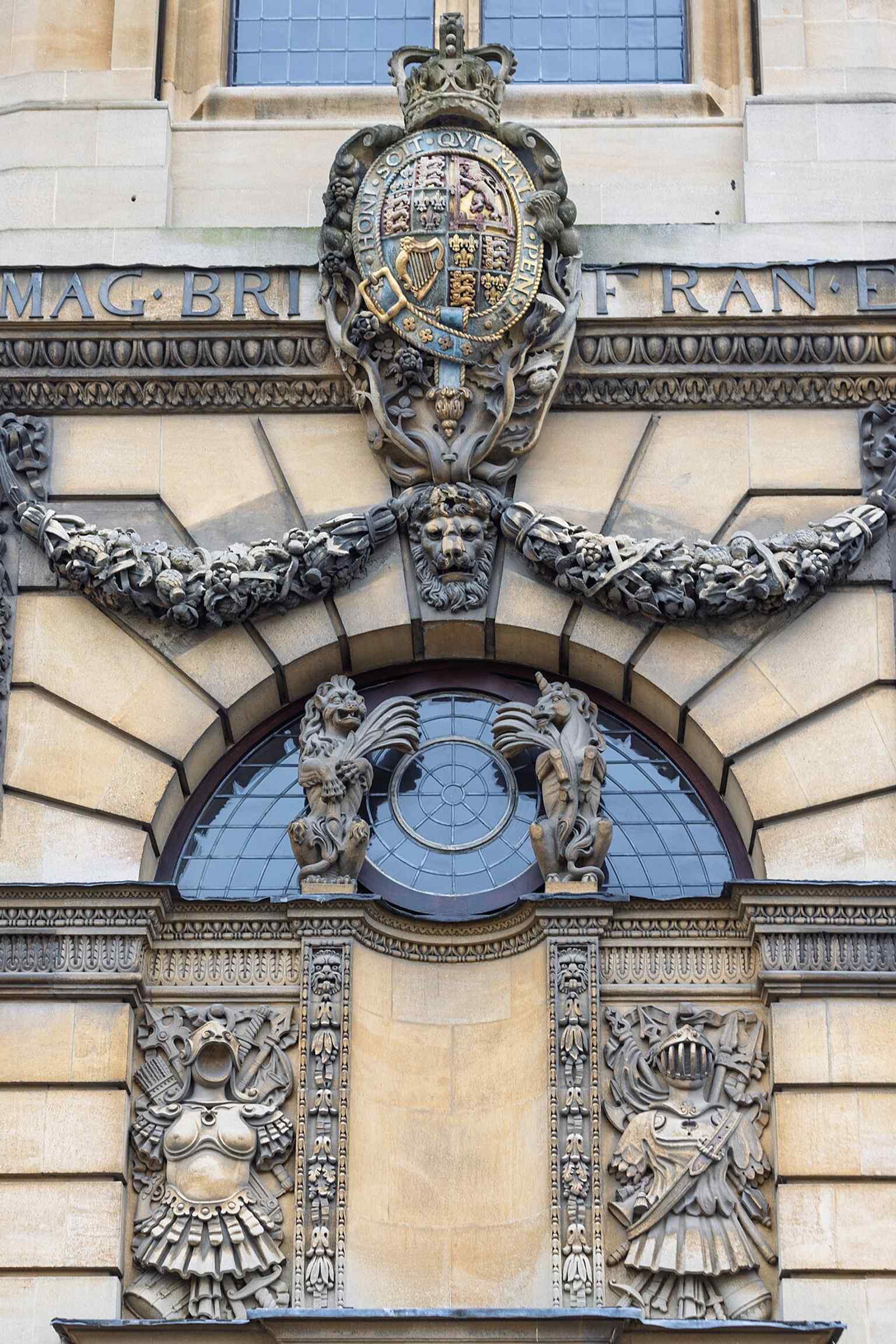
Wren gave Oxford something startlingly different from its Gothic colleges. If you study the stonework on your screen, you can see that crisp Classical style quite clearly. He borrowed the basic idea from the ancient Roman Theatre of Marcellus, using a D-shaped plan - curved at one end, straight at the other.
The real headache was the roof. The span stretched more than seventy feet, and no timber in England could neatly cross it. Wren refused the obvious medieval solution and turned instead to a structural system worked out by Oxford mathematician John Wallis: a grid of shorter timbers, locked together with iron bolts and plates. It was so strong that the University Press later stored books above it. When surveyors inspected the roof in seventeen twenty, they expected trouble and found the opposite: slight sagging from the weight, yes, but a structure they thought could last another one or two centuries. Understatement ages very well in Oxford.
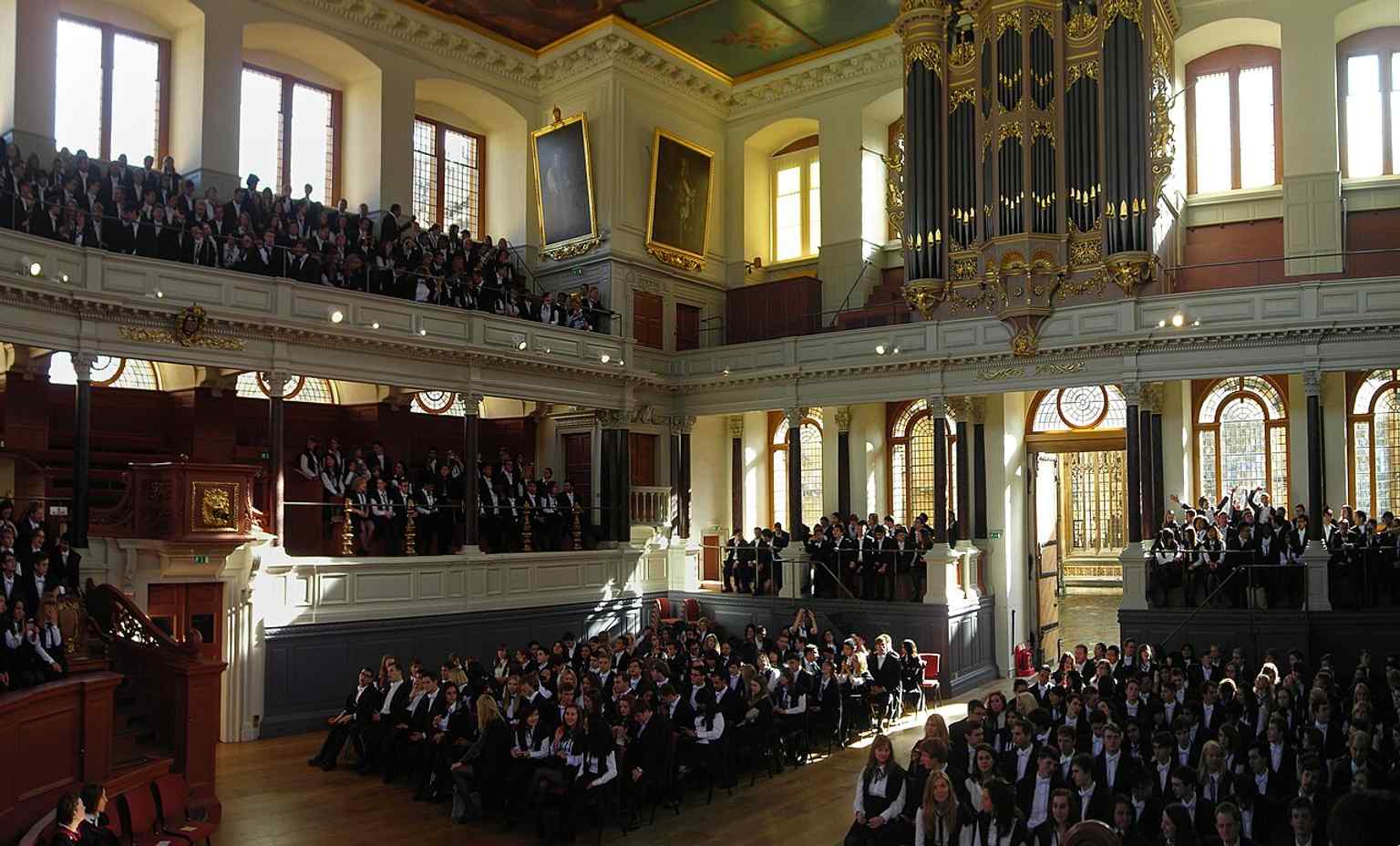
Inside, the theatre still seats about seven hundred and remains one of the university’s great ceremonial rooms. Have a look at the interior image in the app. This is where students matriculate - that is, formally join the university - and where many return for graduation. It also hosts lectures and concerts. Handel conducted his oratorio Athalia here in seventeen thirty-three. Yet actual staged drama did not arrive until two thousand and fifteen, which is such a perfectly fussy Oxford detail that it barely needs improving.
Above the audience, Robert Streater painted a ceiling where Truth descends on the Arts and Sciences and drives out Ignorance. Ambitious, yes, but universities do enjoy a grand mission statement.
If you want to visit the cupola, the theatre usually opens daily from ten in the morning to four thirty in the afternoon.
The Sheldonian is Oxford showing off, but with real brains behind the performance.
When you’re ready, carry on toward the Bridge of Sighs.